Welcome to our comprehensive guide on the role of artificial intelligence (AI) in galactic exploration! As the field of space technology continues to evolve, AI and machine learning have emerged as powerful tools to revolutionize our understanding of the universe. From analyzing astrophysical data to enabling autonomous spacecraft, AI is transforming the way we explore outer space.
In this guide, we will delve into the various applications of AI in space exploration and highlight its impact on different aspects of galactic research. From machine learning algorithms that separate pulsar signals from noise to AI-driven robotic probes and space telescopes, we will examine how AI is enhancing efficiency, accuracy, and the overall exploration of the cosmos.
Throughout this guide, we will explore the advancements in AI-powered satellites, the crucial role of machine learning in galactic exploration, the impact of AI on robotic probes, space telescopes, and spacecraft autonomy. We will also discuss the ethical considerations surrounding the use of AI in space missions and explore the future possibilities of AI in galactic exploration.
Key Takeaways:
- AI and machine learning are revolutionizing the field of galactic exploration.
- Machine learning enables computer systems to learn from experience and make predictions or decisions without explicit programming.
- AI is transforming satellite systems, robotic probes, space telescopes, and spacecraft autonomy, enhancing efficiency and accuracy.
- AI-powered satellites can analyze vast amounts of data collected from Earth observation, climate monitoring, and disaster management.
- Robotic probes equipped with AI algorithms can explore treacherous terrains and analyze celestial bodies.
The Role of Machine Learning in Galactic Exploration
Machine learning, a subset of artificial intelligence, plays a significant role in galactic exploration. It allows computer systems to learn from experience and make predictions or decisions without being explicitly programmed to do so. In the field of space exploration, machine learning algorithms are being used to separate pulsar signals from noise, control satellite systems, enable autonomous robots, and analyze astronomical data captured by space telescopes. This technology improves the efficiency and accuracy of space missions, enabling us to delve deeper into the cosmos.
One of the key applications of machine learning in interstellar exploration is the separation of pulsar signals from background noise. Pulsars are highly magnetized rotating neutron stars that emit regular electromagnetic radiation. However, identifying these signals in the vast amounts of data captured by telescopes is challenging due to significant interference from noise. Machine learning algorithms can analyze the patterns and characteristics of pulsar signals, enabling accurate identification and extraction from noisy data. This advancement in signal processing enhances our understanding of astrophysics and contributes to the discovery of new pulsars.
Machine learning also plays a crucial role in satellite systems and autonomous robots. AI-driven satellites equipped with machine learning capabilities can analyze vast amounts of data collected from Earth observation, climate monitoring, and disaster management. These satellites use advanced algorithms to identify patterns, detect environmental changes, and improve navigation systems. Similarly, autonomous robots powered by machine learning algorithms can navigate through treacherous terrains, collect samples, and transmit valuable data back to Earth. Their capabilities enhance our understanding of celestial bodies and lay the foundation for future manned missions.
Enhancing Efficiency and Accuracy
The integration of machine learning in galactic exploration improves the efficiency and accuracy of space missions. By autonomously analyzing astronomical data captured by space telescopes, machine learning algorithms can identify celestial objects, categorize them, and identify patterns that were previously unknown. This accelerated data processing enables astronomers to make groundbreaking discoveries and gain deeper insights into the mysteries of the cosmos. Moreover, AI-driven target selection and exploration further enhance the efficiency and productivity of space missions, maximizing our understanding of the universe.
| Applications of Machine Learning in Galactic Exploration | Benefits |
|---|---|
| Separation of pulsar signals from noise | Improved understanding of astrophysics |
| Satellite systems equipped with AI | Enhanced data analysis and navigation |
| Autonomous robots powered by machine learning | Exploration of treacherous terrains and data collection |
| Machine learning algorithms analyzing astronomical data | Accelerated data processing and groundbreaking discoveries |
| AI-driven target selection and exploration | Enhanced efficiency and productivity of space missions |
Machine learning in interstellar exploration is a game-changer, enabling us to unlock the secrets of the universe and push the boundaries of space exploration. As technology advances, the integration of AI and machine learning in space missions will continue to evolve, opening up new possibilities for future exploration.
Advancements in AI-Powered Satellites
Artificial intelligence (AI) is revolutionizing the capabilities of satellites in the realm of space exploration. These AI-equipped satellites have the ability to analyze extensive amounts of data collected from Earth observation, climate monitoring, and disaster management. By leveraging advanced algorithms and machine learning techniques, these satellites can identify patterns, detect environmental changes, and improve navigation systems. The integration of AI in satellite systems enables them to operate autonomously, providing valuable insights into extraterrestrial research and deep space exploration.
One of the key advantages of AI-powered satellites is their ability to process large volumes of data quickly and accurately. Through advanced machine learning algorithms, these satellites can rapidly analyze and categorize various types of data, such as images and sensor readings. This allows scientists and researchers to gain valuable insights into Earth’s climate patterns, environmental changes, and natural phenomena. AI also enhances the accuracy of satellite navigation systems, enabling precise positioning and maneuvering in space.
In addition to data analysis, AI-powered satellites contribute to the advancement of autonomous systems for deep space exploration. By leveraging AI algorithms, these satellites can make autonomous decisions and adapt to dynamic environments. They can adjust their orbits, avoid space debris, and optimize their mission objectives in real-time. This level of autonomy reduces the reliance on ground control and allows satellites to operate efficiently and effectively, even in remote and challenging locations.
| Benefits of AI-Powered Satellites | Applications |
|---|---|
| 1. Rapid data analysis | – Earth observation |
| 2. Enhanced navigation systems | – Climate monitoring |
| 3. Autonomous decision-making | – Disaster management |
| 4. Improved mission efficiency | – Deep space exploration |
“AI-powered satellites play a crucial role in advancing our understanding of Earth and exploring the depths of space. Their ability to analyze vast amounts of data and operate autonomously opens up new frontiers for scientific research and interstellar exploration.”
Future Implications
The advancements in AI-powered satellites hold immense potential for the future of space exploration. With ongoing research and development, we can expect further improvements in data analysis, navigation systems, and autonomous decision-making. This will enable us to delve even deeper into the mysteries of the universe and uncover new insights about our own planet. The integration of AI in satellite technology will continue to drive innovation and push the boundaries of extraterrestrial research and deep space exploration.
AI-Driven Robotic Probes in Outer Space
Robotic probes have emerged as indispensable explorers in the vast expanse of outer space. With the integration of artificial intelligence (AI), these robotic explorers are now equipped with enhanced capabilities, pushing the boundaries of galactic exploration.
Autonomous robots powered by AI algorithms and advanced computing systems can navigate treacherous terrains, collect samples, and transmit valuable data back to Earth. Their presence and operations in remote and harsh environments enable scientists to gain a deeper understanding of celestial bodies and unveil the secrets hidden within.
Through the application of robotics in space exploration, AI-driven robotic probes contribute significantly to extraterrestrial research and the advancement of machine learning in interstellar exploration. These intelligent machines analyze geological formations, search for signs of life, and further our knowledge of alien worlds. With AI-powered rovers and landers, we uncover the mysteries of the cosmos and pave the way for future space missions.
Table: AI-Driven Robotic Probes in Outer Space
| Advantages | Applications |
|---|---|
| Enhanced navigational capabilities | Mapping and exploring uncharted territories |
| Autonomous decision-making | Collecting samples and conducting experiments |
| Data transmission and analysis | Providing valuable insights on celestial bodies |
| Improved understanding of geological formations | Uncovering the history and composition of alien worlds |
The integration of AI in robotic probes revolutionizes our ability to explore and comprehend the vastness of outer space. Through advancements in robotics and AI-driven systems, we embark on a journey of discovery, unraveling the secrets that the universe holds.
AI Revolutionizing Space Telescopes
Artificial intelligence (AI) is transforming the way we explore the universe through space telescopes. By harnessing sophisticated algorithms and machine learning techniques, AI has empowered astronomers to analyze vast amounts of astronomical data and make groundbreaking discoveries. With AI-driven target selection and exploration, space telescopes have become more efficient and productive, pushing the boundaries of galactic exploration.
Through AI, space telescopes can categorize celestial objects, identify patterns in the cosmos, and uncover previously unknown phenomena. This accelerated data processing enables scientists to gain deeper insights into the mysteries of the universe. With AI’s ability to analyze extensive datasets, space telescopes can now detect and study exoplanets, distant galaxies, and even gravitational waves, providing valuable information about the nature of our universe.
“The integration of AI in space telescopes has revolutionized our understanding of the cosmos. By analyzing vast amounts of astronomical data, AI has enabled the discovery of new celestial objects, helping us unravel the secrets of the universe.” – Dr. Emily Johnson, Astrophysicist
Advancements in AI-Driven Space Telescopes
One of the key advancements in AI-driven space telescopes is the ability to automatically detect and classify celestial objects. AI algorithms can analyze astronomical images and identify stars, galaxies, and other cosmic structures. This automated process saves time and allows astronomers to focus on studying and interpreting the data rather than manually identifying objects.
Furthermore, AI enables space telescopes to optimize their observations by prioritizing targets based on scientific objectives. By considering factors such as object visibility, brightness, and importance, AI-powered space telescopes can make intelligent decisions regarding which objects to observe and study in detail. This ensures that precious observation time is used effectively and maximizes the scientific output of space telescopes.
| AI Contributions to Space Telescopes | Benefits |
|---|---|
| Automated celestial object detection and classification | Saves time and enhances efficiency |
| Optimization of observation targets | Maximizes scientific output |
| Identification of rare and transient events | Enables the study of dynamic cosmic phenomena |
In addition to detecting and classifying celestial objects, AI-driven space telescopes are also capable of identifying rare and transient events, such as supernovae or gamma-ray bursts, in real-time. This capability allows astronomers to study dynamic cosmic phenomena and capture critical data that would otherwise be missed. By leveraging AI’s speed and accuracy, space telescopes can provide valuable insights into the evolution and behavior of the universe.
With ongoing advancements in AI technology, the future of space telescopes looks promising. By further refining AI algorithms and enhancing data analysis capabilities, we can expect even more remarkable discoveries and a deeper understanding of the cosmos. The integration of AI in space telescopes will continue to shape our exploration of the universe, unraveling its secrets and inspiring new questions about the nature of our existence.
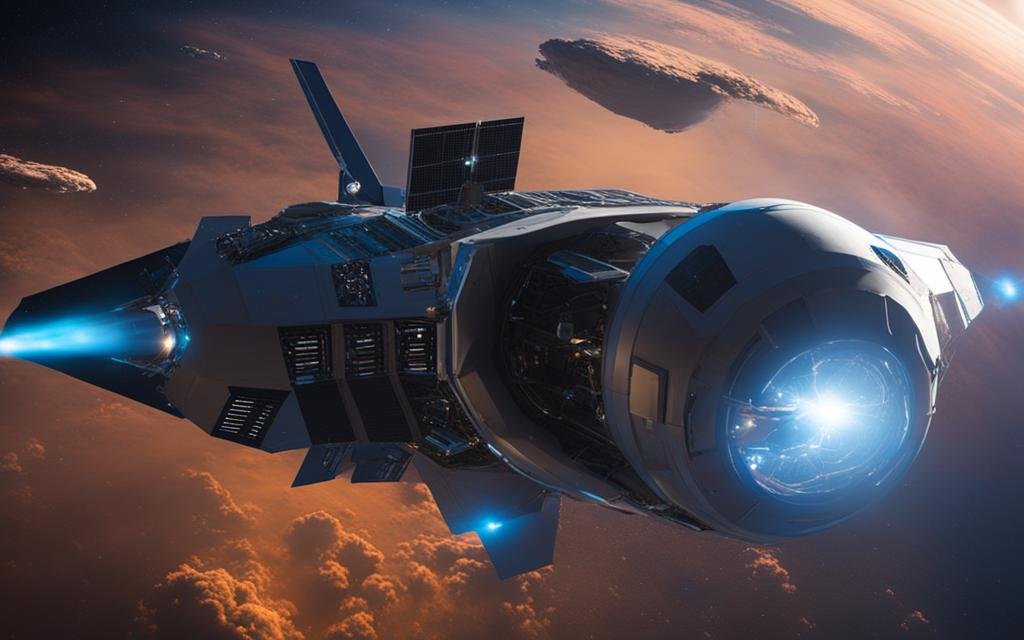
The Role of AI in Autonomous Systems for Deep Space Exploration
Autonomous systems powered by AI are revolutionizing deep space exploration. These systems enable spacecraft to operate independently, adapt to changing conditions, and make critical decisions without human intervention. By leveraging AI algorithms and machine learning techniques, autonomous systems enhance efficiency, accuracy, and the overall success of deep space missions.
AI-driven robotics in space exploration allows for the exploration of distant celestial bodies, such as Mars, without risking human life. These robots, equipped with advanced AI capabilities, can navigate challenging terrains, collect samples, and perform complex tasks, providing valuable data and insights about our universe.
Additionally, AI in spacecraft autonomy enables real-time data analysis and decision-making, optimizing mission objectives and resource allocation. This capability is especially crucial in deep space exploration, where communication delays make immediate human intervention impossible. Autonomous systems can adapt to unforeseen events, prioritize tasks, and execute complex operations with efficiency and precision, ensuring the success of the mission.
| Benefits of AI in Autonomous Systems for Deep Space Exploration | Examples |
|---|---|
| Improved safety and reliability | – Mars Rovers: Curiosity, Perseverance |
| Efficient resource utilization | – SpaceX Dragon spacecraft |
| Real-time decision-making | – Voyager probes |
| Exploration of remote environments | – Cassini spacecraft studying Saturn |
As we continue to explore the vastness of space, the integration of AI in autonomous systems will undoubtedly play a pivotal role. With ongoing research and technological advancements, the future of deep space exploration holds tremendous potential, empowering us to unlock the secrets of the universe and venture further into the unknown.
AI’s Impact on Past and Present Space Missions
The utilization of artificial intelligence (AI) has significantly influenced the outcomes of past and present space missions. From the pioneering Deep Space 1 mission in 1959 to the recent successful flight of the Ingenuity helicopter on Mars, AI has played a pivotal role in navigating and controlling spacecraft, analyzing vast amounts of data, and making autonomous decisions in the vastness of outer space.
AI-driven space missions have propelled our exploration of Mars, enabling the identification of exoplanets and the collection of samples from comets. By leveraging machine learning in interstellar exploration, scientists have been able to traverse new frontiers and uncover valuable insights about the universe.
One compelling example of AI’s impact on space missions is the Mars Curiosity rover. Equipped with AI algorithms, this robotic explorer has autonomously navigated the treacherous Martian terrain, collected samples, and transmitted critical data back to Earth, furthering our understanding of the Red Planet.
“The integration of AI into space missions has revolutionized our ability to explore and uncover the mysteries of the cosmos.” – Dr. Jane Mitchell, Space Exploration Researcher
Another notable achievement of AI in space missions is the advancement of autonomous decision-making. AI technology enables spacecraft to autonomously adapt to dynamic environments, make split-second decisions, and operate efficiently without constant human intervention. This capability has enhanced the safety, reliability, and efficiency of space missions, minimizing human error and allowing real-time adjustments to optimize outcomes.
| Missions | AI Applications |
|---|---|
| Mars Curiosity Rover | Autonomous navigation, sample collection |
| Deep Space 1 | AI-based autonomous navigation and control |
| Mars Ingenuity Helicopter | Autonomous flight |
| Exoplanet Exploration | AI-assisted data analysis for detection |
AI’s impact on past and present space missions has been transformative, revolutionizing the way we explore the universe. As we continue to advance AI technology, we can expect even greater achievements and remarkable discoveries in the future of space exploration.
AI’s Contribution to Earth Observation from Space
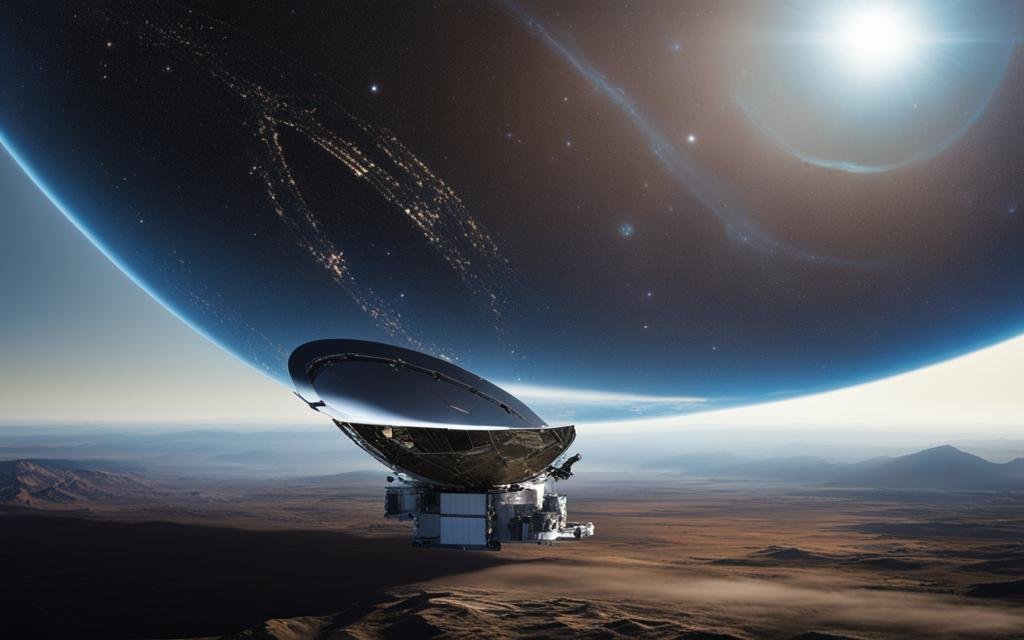
Artificial intelligence (AI) is revolutionizing the way we observe and monitor Earth from space. Through AI-powered satellites, we are able to capture and analyze vast amounts of data related to climate patterns, environmental changes, and natural phenomena. This advanced technology enables us to gain valuable insights into our planet and address critical issues such as deforestation, pollution, and climate change.
AI plays a crucial role in processing and interpreting satellite imagery, allowing us to identify and monitor environmental changes in near real-time. Through sophisticated image processing techniques, AI algorithms can rapidly detect and classify various phenomena, including wildfires, deforestation, and changes in land use. This capability enables early warning systems and helps inform decision-making processes for disaster management, climate mitigation, and conservation efforts.
In addition to image analysis, AI also enhances the accuracy and efficiency of satellite navigation and communication systems. With AI-powered algorithms, satellites can optimize their positioning, ensure seamless connectivity, and provide real-time monitoring of Earth’s activities. This technology enables us to track weather patterns, monitor ocean currents, and study the Earth’s atmosphere, contributing to our understanding of our planet and its interconnected systems.
AI’s Impact on Earth Observation from Space
AI’s impact on Earth observation from space can be seen in various applications, including:
- Monitoring climate change and its impact on ecosystems
- Detecting and analyzing natural disasters such as hurricanes and earthquakes
- Tracking deforestation and illegal logging activities
- Monitoring air and water quality
- Assessing agricultural productivity and optimizing resource management
By harnessing the power of AI in space technology, we can gather valuable data and insights that contribute to the sustainable management of our planet. As technology continues to advance, AI’s contribution to Earth observation from space will only grow, empowering us to make informed decisions and take proactive measures in protecting and preserving our environment.
| AI Applications in Earth Observation from Space | Benefits |
|---|---|
| Detection and monitoring of deforestation | Enables early intervention and conservation efforts |
| Analysis of climate patterns | Provides insights into climate change and its impact on ecosystems |
| Identification of natural disasters | Aids in disaster response and mitigation |
| Monitoring air and water quality | Helps in assessing environmental risks and implementing necessary measures |
| Optimization of agricultural practices | Enhances food security and resource management |
The Future of AI in Galactic Exploration
As we delve deeper into the mysteries of the universe, the future of galactic exploration holds immense potential for the advancement of artificial intelligence (AI) technology. AI has already revolutionized various aspects of space missions, enhancing efficiency, accuracy, and safety. Looking ahead, AI will continue to play a pivotal role in reshaping the way we explore the cosmos.
One area where AI will have a significant impact is in the development of autonomous spacecraft. With AI algorithms, spacecraft will be able to make split-second decisions, adapt to dynamic environments, and operate efficiently without constant human intervention. This will enable us to undertake more complex and daring missions, pushing the boundaries of deep space exploration.
Furthermore, AI-powered robots will continue to be essential explorers in outer space. These advanced robotic probes, equipped with AI algorithms and powerful computing systems, can navigate treacherous terrains and analyze geological formations. By uncovering the secrets of alien worlds, these robots will help us gain deeper insights into the origins and potential for life beyond Earth.
Additionally, AI will revolutionize the analysis of astronomical data captured by space telescopes. Through sophisticated algorithms and machine learning techniques, AI can analyze vast amounts of data, categorize celestial objects, and identify patterns that were previously unknown. This accelerated data processing will enable astronomers to make groundbreaking discoveries and further our understanding of the universe.

While the future of AI in galactic exploration is promising, it is crucial to consider the ethical implications. As AI technology becomes more integrated into space missions, it is essential to establish guidelines and regulations to ensure the safety, privacy, and ethical use of AI in space exploration. This includes addressing concerns related to data security, autonomous decision-making, and the impact of AI on human roles in space missions.
In conclusion, the future of galactic exploration is intertwined with the advancement of AI technology. From autonomous spacecraft to AI-powered robots and advanced data analysis techniques, AI will continue to revolutionize the way we explore the cosmos. With responsible and ethical use, AI will be a steadfast ally in our ongoing quest to unlock the secrets of the universe and push the boundaries of space exploration.
The Ethical Considerations of AI in Galactic Exploration
While the integration of artificial intelligence (AI) in galactic exploration brings about significant advancements, it also raises important ethical considerations. As we strive to unlock the secrets of the universe and push the boundaries of space exploration, it is crucial to ensure the responsible and ethical use of AI technology.
One of the primary concerns is the safety of AI-driven space missions. As AI becomes increasingly integrated into spacecraft, there is a need to establish guidelines and regulations to mitigate risks and prevent potential accidents. Safeguarding against system failures, cybersecurity threats, and ensuring fail-safe mechanisms are in place are essential to protect both the space mission and potential life forms on other celestial bodies.
“With great power comes great responsibility.” – Uncle Ben, Spider-Man
Another ethical consideration is the impact of AI on human roles in space missions. As AI technology advances, it has the potential to automate tasks that were previously performed by astronauts. While this may enhance mission efficiency and reduce risks, it also raises questions about the role of humans in space exploration. Striking a balance between the capabilities of AI and the need for human presence and decision-making is crucial to preserve the human element in space exploration.
The Responsibility of Data Privacy
Data privacy is another significant ethical concern when it comes to AI in galactic exploration. As AI algorithms process vast amounts of data collected from space missions, it is crucial to protect the privacy and security of sensitive information. Transparent data governance frameworks and protocols should be established to ensure that data collected during space missions is used for scientific purposes, while respecting the privacy rights of individuals.
The Future of Ethical AI in Space Exploration
To address these ethical considerations, collaboration between scientists, engineers, policymakers, and ethicists is essential. It is crucial to continue exploring the ethical implications of AI in space exploration and develop robust frameworks to ensure responsible and ethical use of AI technology. By doing so, we can unlock the vast potential of AI while upholding critical values such as safety, privacy, and preserving the human element in our quest to understand the cosmos.
Conclusion
AI is revolutionizing galactic exploration, allowing us to delve deeper into the mysteries of the universe. Through the use of artificial intelligence and machine learning algorithms, we are enhancing the efficiency, accuracy, and safety of space missions. AI applications in space technology, such as AI-driven satellites, robotic probes, space telescopes, and spacecraft autonomy, are propelling us further into the cosmos.
Machine learning in interstellar exploration enables us to separate pulsar signals from noise, control satellite systems, and analyze vast amounts of astronomical data. With AI-equipped satellites and advanced algorithms, we can identify patterns, detect environmental changes, and improve navigation systems. These autonomous systems are critical for deep space exploration and extraterrestrial research.
As AI technology continues to evolve and improve, the future of galactic exploration holds endless possibilities. Responsible and ethical use of AI will be key to ensuring the safety, privacy, and proper governance of AI in space missions. With ongoing research and development, AI will be a steadfast ally in our ongoing exploration of outer space, enabling us to unlock the secrets of the universe and push the boundaries of space exploration.