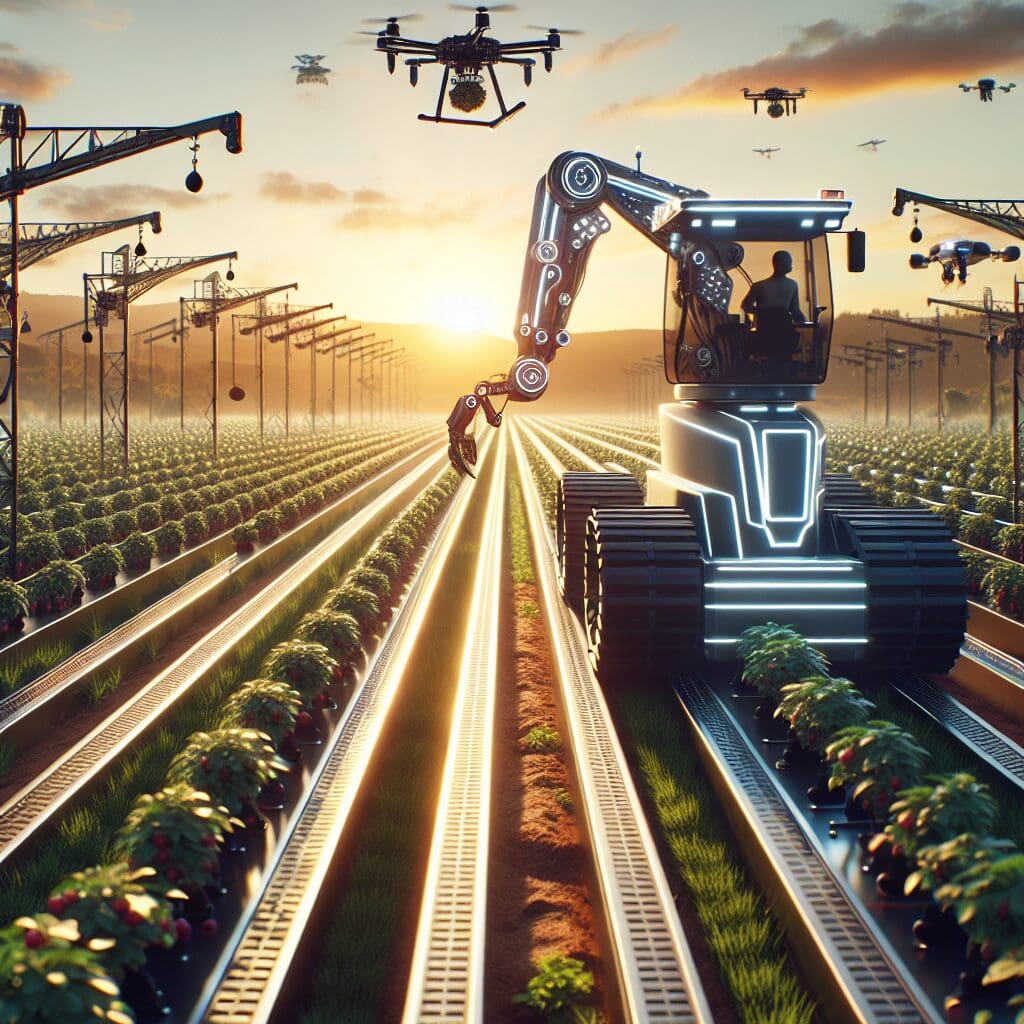
The Power of Agricultural Yield Optimization with AI
In the face of rising global food demand and mounting sustainability pressures, agricultural yield optimization with AI stands at the forefront of innovation. Today’s farmers and agribusinesses are embarking on a journey where artificial intelligence is becoming indispensable for maximizing production, reducing resource consumption, and building a resilient, future-ready food system.
With global food demand predicted to surge by up to 56 percent by 2050, traditional farming methods alone are no longer sufficient to feed a growing population. The adoption of advanced AI technologies is ushering in a new era of precision, efficiency, and sustainability—poised to redefine how crops are grown, monitored, and harvested around the world.
This article explores the cutting-edge applications of AI in agricultural yield optimization, examines its economic and environmental impact, and provides practical insights for farmers, agribusiness leaders, and technology enthusiasts seeking to stay ahead in an evolving agriculture landscape.
How AI is Revolutionizing Agricultural Yield Optimization
The integration of artificial intelligence into agriculture is not just a futuristic vision—it is happening now, transforming farms into intelligent ecosystems. Here are the key areas where AI is making the most profound impact on optimizing crop yields:
1. Predictive Yield Analytics
At the heart of AI-powered agriculture is predictive yield analytics. Sophisticated machine learning algorithms process vast datasets from soil sensors, weather stations, satellite imagery, and historical crop yields. These deep neural networks, sometimes optimized by genetic algorithms, are capable of explaining up to 92 percent of the observed variance in crop yields. This level of predictive accuracy is empowering farmers to make more informed decisions about planting, cultivation, and harvesting.
By analyzing these multidimensional data sources, AI models can forecast crop performance weeks or even months ahead. This enables early identification of potential risks like disease outbreaks or adverse weather, and offers recommendations for interventions that will have the greatest impact on yields.
Practical Takeaway:
Farmers should consider integrating soil sensors and IoT devices into their operations, as these tools feed valuable data into AI models for more accurate yield predictions.
2. Smart Irrigation and Fertilization
Water and nutrient management have traditionally been areas of significant inefficiency for farmers. AI-driven irrigation and fertilization systems are turning this on its head. By continuously analyzing real-time soil moisture levels and plant health data, these intelligent systems determine not only the optimal amount of water and fertilizer needed but also the precise timing for application.
The results are remarkable: a typical AI-optimized farm experiences a 10 to 15 percent boost in yields, a 20 to 30 percent reduction in water usage, and a 15 to 25 percent savings in fertilizer costs. These improvements translate to higher profitability and represent a sizeable contribution to environmental sustainability, dramatically reducing resource wastage and preventing nutrient runoff.
Practical Takeaway:
Operators can boost efficiency by connecting automated irrigation systems with AI-based monitoring platforms, ensuring water and nutrients reach crops only when and where needed.
3. Remote Sensing and Monitoring
AI-driven remote sensing technologies are among the most visible and impactful innovations on the modern farm. Drones, satellites, and densely distributed sensor networks work in concert with machine learning algorithms to monitor crops and soil health at scale. These systems can instantly detect signs of disease, pest infestations, or nutrient deficiencies, enabling earlier interventions—often before problems become visible to the naked eye.
Furthermore, AI’s rapid image processing capabilities enable real-time assessments of plant growth stages and overall field health, ensuring resources are deployed precisely where needed.
Practical Takeaway:
Invest in accessible remote sensing tools, such as drone-based imagery, to get early warnings about crop stress and implement corrective actions quickly.
4. Precision Farming
Perhaps the most transformative value of agricultural yield optimization with AI is realized through precision farming. AI systems synthesize historical data, real-time environmental monitoring, and agronomic insights to enable hyper-localized management decisions. This includes selecting crop varieties tailored to micro-climates within a field and dynamically adjusting planting densities on the fly.
Precision farming unlocks new possibilities for maximizing output on every square meter of land while minimizing input costs. It helps take the guesswork out of critical farm decisions and supports a shift toward sustainable, data-driven agriculture.
Practical Takeaway:
Incorporate precision farming software that can generate tailored recommendations for seed selection, planting patterns, and in-season management based on localized data.
The Economic and Environmental Advantages of AI-Driven Yield Optimization
As AI solutions become increasingly embedded in agricultural practices, both economic gains and positive environmental outcomes are accelerating.
Boosting Profitability
The direct impact on farm profitability cannot be overstated. Studies indicate that farms adopting AI-based crop management systems report up to a 49 percent improvement in economic profit. This surge is attributed to simultaneous increases in productivity and notable reductions in operational costs such as water, fertilizers, and labor.
AI enables a more precise allocation of all farm inputs, allowing resources to be focused where they will yield the best returns. For large-scale operations and smallholders alike, this means getting more value from every dollar invested.
Actionable Advice:
Set clear performance benchmarks and monitor the return on investment as you transition to AI-powered management, ensuring continuous improvement.
Improving Resource Efficiency
Conventional farming techniques often result in significant resource wastage; inefficient watering, over-fertilization, and unnecessary pesticide application are common problems. AI-based precision agriculture addresses this by optimizing the use of water, fertilizers, and pesticides.
According to recent statistics, farms harnessing AI can save tens of thousands of gallons of water annually and significantly reduce chemical runoff, directly supporting both economic and environmental objectives.
Actionable Advice:
Integrate sensors and AI analysis platforms to track input usage in real time and highlight areas for further efficiency improvements.
Supporting Sustainable Growth
Sustainability is more than a buzzword in agriculture—it is a requirement for long-term success. AI’s role in achieving sustainable yield optimization is becoming clearer each year. By reducing dependency on scarce resources and minimizing ecological impact, AI helps create farming systems resilient to climate variability and shifting market conditions.
Actionable Advice:
Stay informed about new technologies and best practices evolving in the field of sustainable AI agriculture, from energy-efficient sensor networks to closed-loop input systems.
Market Trends: Accelerated Adoption and Future Outlook
The global market for AI in agriculture is on a rapid upward trajectory. In 2024, the sector is valued at $1.8 billion, with a projected increase to $2.4 billion by 2025. This explosive growth reflects mounting recognition among farmers, agribusinesses, and investors of AI’s capacity to drive productivity and sustainability.
- Global food demand is set to rise by up to 56 percent by 2050, underscoring the necessity of innovative solutions for yield maximization.
- AI-driven systems yield a 10 to 15 percent increase in crop output while simultaneously lowering water usage by 20 to 30 percent and reducing fertilizer needs by up to 25 percent.
- Economic profits can rise by nearly 50 percent for adopters of comprehensive AI crop management.
These statistics signal a fundamental shift in how food is produced globally. AI is not merely a supporting technology; it is actively shaping strategy and outcomes across the agricultural value chain.
Challenges and Considerations for AI Adoption in Agriculture
While the benefits of agricultural yield optimization with AI are clear, adoption is not without obstacles. Successful implementation requires careful planning, investment, and adaptation.
1. Initial Costs and Technical Complexity
The upfront costs of acquiring AI-capable equipment, installing sensors, and training staff can be considerable, especially for small to mid-sized farms. Many advanced solutions often demand skilled technicians or ongoing support, which may be scarce or costly in certain regions.
Actionable Advice:
Start small by piloting one AI solution—such as automated irrigation—before expanding across the operation. Leverage grants and industry partnerships to offset initial investments.
2. Data Quality and Availability
AI’s effectiveness hinges on the quality and completeness of input data. In many emerging markets or in smallholder settings, reliable historical data and robust sensor networks may be unavailable. Without a strong data foundation, AI models cannot deliver on their promise.
Actionable Advice:
Begin by collecting and digitizing basic farm information. As more sensors are added over time, datasets improve, and the AI system’s predictive accuracy grows.
3. Scalability Across Diverse Operations
Large agribusinesses are generally best positioned to capitalize on AI advancements due to greater economies of scale and access to technical resources. Scaling these technologies for the benefit of smallholders and resource-constrained farmers remains a challenge—one that must be addressed to unlock the full potential of AI in agriculture.
Actionable Advice:
Advocate for collaborative platforms where data and AI tools can be shared among local farmers, cooperatives, and agricultural extension agents.
Real-World Examples: AI in Action on the Modern Farm
To showcase the tangible impact of AI in agriculture, let’s look at how farmers and enterprises are applying these technologies:
“Smart” Irrigation on Large Citrus Farms
A citrus grower in California adopted an AI-based irrigation controller that receives hourly data from soil moisture sensors and climate stations. By automatically adjusting watering schedules based on predicted plant needs and weather patterns, the operation has reduced water use by 28 percent in a single season—while experiencing a 12 percent increase in output.
Drone-based Disease Detection in Wheat
In India, smallholder wheat farmers are partnering with agtech startups using drones and AI image analysis to detect early signs of rust outbreaks. These interventions allow for timely application of biological treatments, stopping the spread before it devastates entire fields—resulting in yield recoveries that are 10 to 15 percent higher than conventional treatment methods.
AI-Assisted Precision Planting in Corn
Iowa corn growers are leveraging precision planting guides generated by AI systems. These tools analyze historical yield data, soil maps, and satellite imagery to create dynamic seed planting prescriptions for every part of the field. The outcome: denser planting in fertile patches and less in weaker zones, optimizing both resource use and yields.
Takeaway for Readers:
These examples demonstrate that regardless of farm size or crop type, integrating even a single layer of AI technology can have rapid and measurable effects on yields, resource efficiency, and profitability.
Bringing AI Yield Optimization to Your Farm: Practical Steps
-
Inventory Your Current Data:
Identify what digital records, sensor networks, or imaging capabilities already exist on your farm. -
Define Your Optimization Goals:
Set clear targets for yield improvement, resource savings, or specific input reductions. -
Select a Pilot Project:
Choose one area—such as irrigation automation or drone-based crop monitoring—that offers quick returns and valuable learnings. -
Invest in Training:
Build digital and technical skills among your staff, or partner with agricultural extension services that offer AI training. -
Monitor, Evaluate, and Scale:
Use data dashboards to track progress, adjust parameters as needed, and expand successful approaches to other parts of the operation.
Actionable Advice:
Start with solutions that match your scale and budget, and build on early wins to secure additional funding or support.
Looking Ahead: The Future of AI in Agriculture
The journey toward widespread agricultural yield optimization with AI is well underway, driven by relentless demand for smarter, more sustainable food production. As the technology matures, the most successful farmers will be those who view AI not just as a set of tools, but as a strategic partner in navigating an increasingly complex agricultural landscape.
Those who embrace data-driven management will unlock new levels of productivity, environmental stewardship, and economic resilience—securing their role in feeding the world for generations to come.
Whether you are a grower seeking to optimize a single field or a technology leader shaping industry solutions, the path to a more prosperous and sustainable agricultural future is clear.
For more in-depth insights and the latest breakthroughs on AI’s transformative influence across various sectors, including agriculture, explore our collection of articles at AI Best Site’s AI Applications section.
Agricultural yield optimization with AI is more than a trend—it is the blueprint for resilient, productive, and sustainable farming in the 21st century.