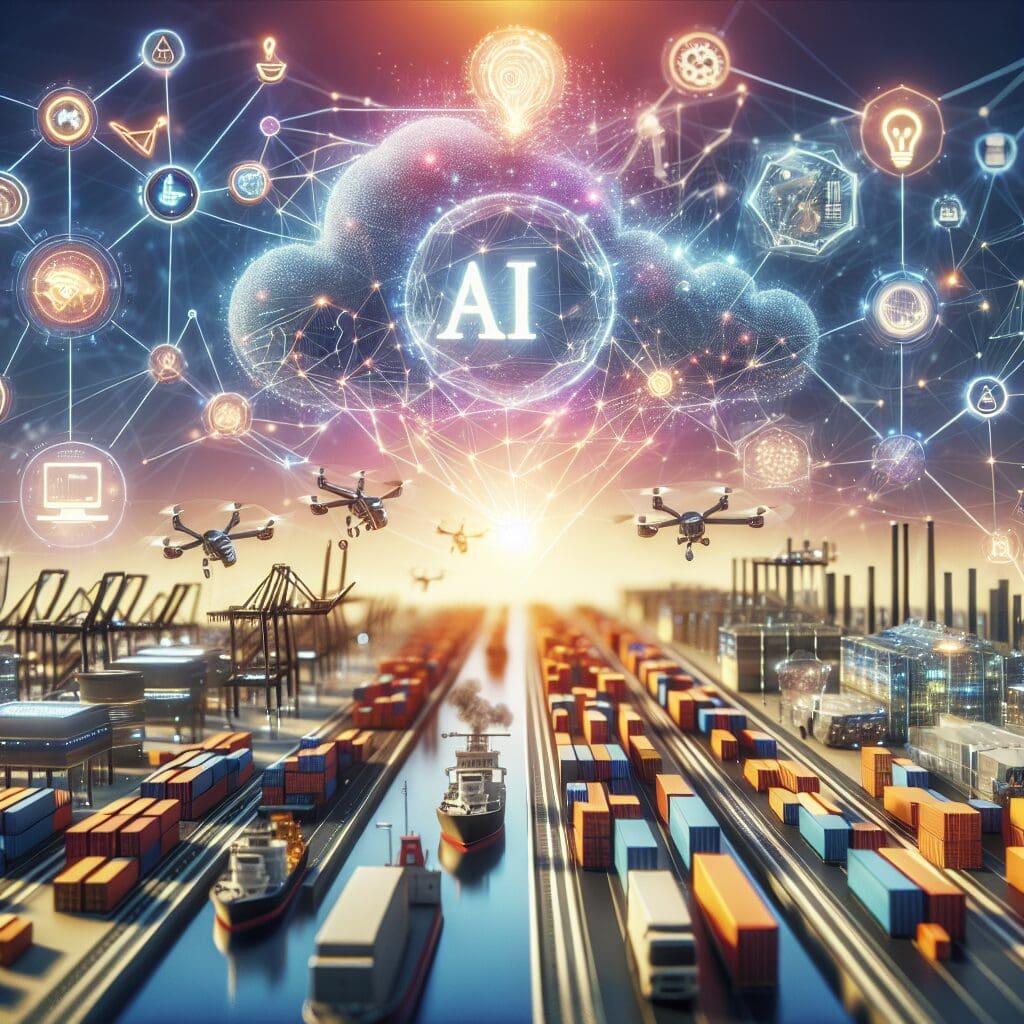
In an unpredictable global economy shaped by economic shocks, geopolitical tensions, and escalating climate catastrophes, building resilient supply chains is no longer a strategic advantage—it is an imperative for survival and growth. AI for supply chain resilience has rapidly emerged as a transformative technology, helping organizations navigate these volatile environments with agility, insight, and foresight. As we progress through 2025, the integration of artificial intelligence in supply chain management is redefining industry standards and setting new benchmarks for operational excellence.
This article explores how AI is fundamentally changing supply chain resilience, the most impactful applications driving this transformation, the challenges organizations must overcome, and actionable steps for organizations looking to leverage AI for a competitive edge.
AI for Supply Chain Resilience: Shaping the Future of Global Commerce
Artificial intelligence has become the bedrock of supply chain resilience in 2025. With supply chains under constant threat from new and evolving disruptions, organizations are turning to AI not only for stability but for dynamic growth. The adoption rate speaks volumes: by the end of this year, AI use in supply chains is forecasted to surge by an impressive 45.55 percent compared to previous periods, and investment in generative AI among supply chain leaders is set to soar from a modest 16 percent in 2024 to a transformative 89 percent by 2025.
Why such rapid adoption? Leading companies have already demonstrated that AI is not hype, but a game-changer. Early adopters have achieved remarkable outcomes: logistics costs reduced by 15 percent, inventory levels slashed by 35 percent, and significant mitigation of revenue risks. Global pharmaceutical giant Sanofi, for example, has harnessed AI to manage and optimize its supply chain, successfully averting €300 million in revenue risks and forecasting 80 percent of low inventory threats before they escalate.
These results are not isolated. They are a testament to the immense potential of AI-powered supply chain resilience for organizations aiming to not just survive but thrive in uncertain times.
Key Applications of AI Revolutionizing Supply Chain Resilience
The real power of artificial intelligence lies in its ability to provide real-time insights, anticipate risks, and optimize complex, multi-layered processes that define modern supply chains. Let’s examine the most impactful AI applications shaping today’s resilient supply networks.
Real-time Visibility and Prediction for Unmatched Transparency
In a world where market conditions can shift in minutes, real-time visibility is an indispensable asset. AI systems now offer deep, granular insights into inventory and the movement of goods along every supply chain node. This enhanced traceability allows companies to react instantly to disruptions or opportunities, from supplier delays to unexpected spikes in demand.
By 2025, 68 percent of supply chain organizations have already embedded AI tools to bolster traceability and visibility. The result? A staggering 22 percent average boost in operational efficiency, as teams collaborate seamlessly while relying on data-driven, up-to-the-minute information. With AI, silos are broken down, enabling all organizational functions—from procurement to sales—to make fast and effective decisions.
Practical takeaway: Review your current supply chain tracking processes and invest in AI-powered visibility solutions that aggregate data from RFID tags, IoT sensors, and logistics platforms to create a unified, real-time overview.
Predictive Analytics: The Crystal Ball for Risk Management
One of AI’s standout contributions is its ability to forecast risks before they become costly crises. By leveraging predictive analytics, organizations can anticipate fluctuations in demand, foresee supplier vulnerabilities, and proactively mitigate the impact of geopolitical events or natural disasters.
Sophisticated algorithms analyze tons of structured and unstructured data—from market trends and shipment logs to social media signals and evolving climate patterns. These systems generate highly accurate predictions about future disruptions and recommend optimal responses. For example, an apparel retailer might use AI-powered demand forecasting to adjust inventory ahead of a projected weather event or supply shortage, minimizing lost sales and excess stock.
Practical takeaway: Combine external datasets such as weather forecasts and geopolitical newsfeeds with your internal supply chain data. Implement AI-driven forecasting tools to model multiple risk scenarios and pre-plan mitigation strategies.
Process Optimization: Unlocking Opportunities by Eliminating Bottlenecks
Operational complexity is endemic in global supply chains. However, AI offers a panoramic view of every process—procurement, production, logistics, and delivery—enabling organizations to see not just individual bottlenecks but system-wide inefficiencies.
AI identifies patterns, detects bottlenecks, and flags anomalies in real time. In 2025, more businesses than ever are depending on continuous AI-driven process monitoring across both internal teams and external partners. This capability allows immediate intervention when exceptions occur, whether it is a critical machine failure, supplier delay, or route disruption in logistics. AI systems do not just flag the problem; they often recommend the most effective solution based on previous outcomes and predictive modeling.
Practical takeaway: Map your end-to-end supply chain processes. Deploy AI-powered process mining applications that interpret event logs to provide recommendations for eliminating waste, optimizing flows, and reducing both lead times and operational costs.
Overcoming the Challenges of Implementing AI in Supply Chains
While the promise of AI for supply chain resilience is clear, turning potential into reality is not without its obstacles. As organizations accelerate their digital transformation journeys in 2025, several key challenges must be addressed to fully harness AI’s benefits.
Data Readiness: Ensuring High-Quality, Structured Data
AI is only as effective as the quality of data it processes. For many companies, legacy IT systems and fragmented data sources present considerable hurdles. Organizations are coming to realize that clean, well-structured, and integrated data is the foundation for effective AI-powered supply chain solutions.
“AI-ready data” has become a top priority, prompting investments in data cleaning, harmonization, and integration. This is especially critical when merging data from legacy platforms that were not originally designed to interact with modern AI tools.
Actionable advice: Audit current data infrastructures and processes. Prioritize initiatives that consolidate and standardize data, and collaborate with key suppliers upstream and downstream to ensure data consistency across the supply chain.
Integration Through SaaS: Connecting the Digital Ecosystem
No supply chain operates in a vacuum. To maximize AI’s impact, different departments, platforms, and partners need to be securely connected. The shift toward software-as-a-service (SaaS) applications is accelerating, as organizations leverage cloud-based solutions to unite disparate systems into a digitally integrated ecosystem.
AI acts as the connective tissue in this new SaaS-driven architecture, orchestrating seamless data flows, automating cross-functional processes, and delivering intelligence across every screen in the organization. This integrated approach is shortening the time to value and delivering tangible return on investment.
Actionable advice: Assess supply chain technology stack for integration gaps. Explore SaaS solutions that offer built-in AI capabilities, robust APIs, and compatibility with other essential business systems.
Human-AI Collaboration: Upskilling for the Future
The rise of AI does not spell the end of human involvement in supply chain management. Far from it. The future is about fostering symbiotic human-AI collaboration, where machines automate routine, repetitive tasks and humans focus on judgment, creativity, and exception management.
In 2025, the most resilient supply chains are those run by upskilled teams that leverage AI tools to amplify their decision making, rather than replace it. Organizations that pilot new AI platforms and combine them with traditional management wisdom tend to unlock the greatest optimization gains.
Actionable advice: Design and implement targeted training programs to upskill teams in AI, data analytics, and change management. Encourage a culture of experimentation and continuous learning, empowering employees to develop new capabilities and adapt to evolving technology landscapes.
The New Standard: AI as a Necessity for Resilient Supply Chains
AI is no longer a futuristic nice-to-have for supply chain leaders. It is now an essential pillar for organizational resilience and long-term success. As advanced technologies drive end-to-end digitalization of supply chains, the industry is witnessing a fundamental transformation in how products and services are produced, distributed, and consumed.
In this new era, organizations embracing AI for supply chain resilience can expect:
- Significantly improved agility in responding to disruptions and market opportunities
- Accelerated decision-making based on data-driven insights instead of intuition
- Optimized inventory and logistics, leading to cost savings and customer satisfaction
- Stronger risk management through proactive identification and mitigation of vulnerabilities
- A more empowered workforce equipped to leverage AI as a strategic ally, not a replacement
Moreover, as data ecosystems continue to mature, and as SaaS and cloud platforms become the norm, scalable AI adoption will become more straightforward and less resource-intensive. As a result, supply chain resilience will depend less on size or budget, and more on a company’s ability to adapt, collaborate, and innovate with AI at its core.
Practical Steps for Building Resilient, AI-Driven Supply Chains
Technology is only as transformative as the strategy behind it. To realize the full potential of AI in fortifying your supply chain resilience, consider the following practical steps:
- Establish a Clear AI Roadmap
- Align AI initiatives with business goals, focusing on areas where resilience makes the biggest impact—such as demand forecasting, supplier risk management, or logistics optimization.
- Invest in Data Quality and Integration
- Audit existing data pipelines for gaps or silos, and prioritize investments in data cleansing and integration. Partner with vendors that offer easy-to-use data aggregation tools.
- Start with High-Impact Pilot Projects
- Deploy AI solutions in critical supply chain segments with clear metrics for success. Use these early wins to build momentum for broader transformation.
- Cultivate Cross-Functional Collaboration
- Break down departmental silos and encourage collaboration between IT, operations, procurement, and logistics. AI-driven resilience is most powerful when information flows freely across your entire ecosystem.
- Prioritize Change Management and Talent Development
- Prepare your workforce for the shift by investing in change management and upskilling. Involve teams early and ensure ongoing support as new AI systems are rolled out.
- Establish Partnerships with Technology Providers
- Choose partners with proven expertise in supply chain AI solutions. Leverage their experience to accelerate deployment and maximize ROI.
Embrace the Future: Take the Next Step With AI for Supply Chain Resilience
The journey toward truly resilient, future-ready supply chains is underway, and AI is at the helm. As 2025 progresses, organizations that prioritize AI adoption will not only weather unexpected challenges but also capitalize on new opportunities. They will operate with a level of transparency, agility, and foresight that sets them apart in fast-changing markets.
Are you ready to join this transformation? Explore more insightful articles about the most innovative AI applications influencing supply chains and beyond on AIBest.Site’s pillar page. Unlock new ideas, stay ahead of industry trends, and lead your organization with confidence into the AI-powered future.
In summary: AI for supply chain resilience is no longer a luxury—it is a necessity for any company aiming to thrive in uncertainty and complexity. Harness its power to build smarter operations, anticipate risks, optimize processes, and empower your teams for the next era of global business. The future of resilient supply chains begins today.