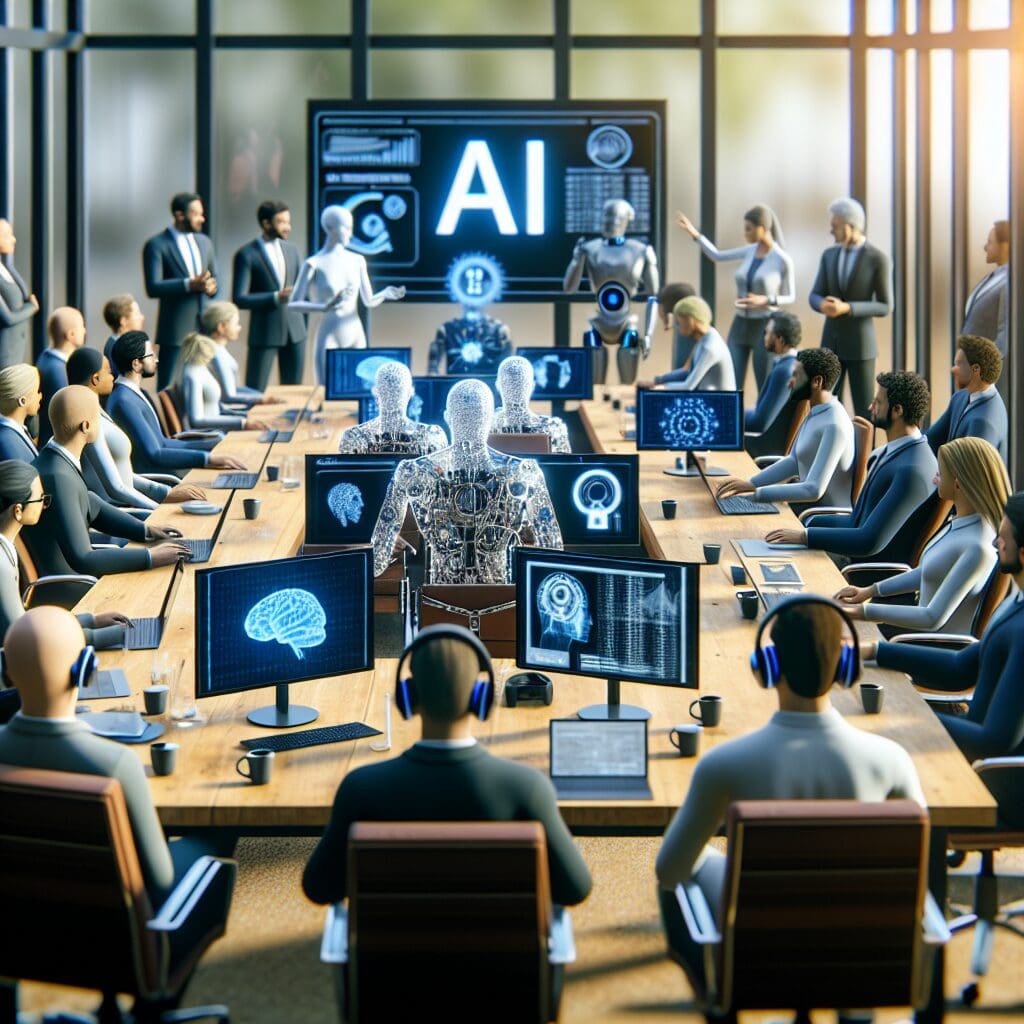
As artificial intelligence continues to accelerate its transformation of the global economy, understanding AI workforce demographic trends has become crucial for business leaders, policymakers, and jobseekers alike. The landscape in 2025 reflects more than just a tug-of-war between job displacement and creation; it is a complex interplay of shifting employer demands, evolving skill sets, and profound impacts across regions, age groups, and sectors. Staying ahead of these trends isn’t just about keeping pace with technology—it’s about anticipating and adapting to the new realities of work.
AI Workforce Demographic Trends: What’s Changing in 2025?
The promise and disruption of artificial intelligence are not abstract—they are being felt daily by workers, employers, and entire industries. AI workforce demographic trends in 2025 shed light on both the opportunities for growth and the challenges of adaptation.
At the heart of these shifts are several key dynamics:
- Employers are adjusting their workforces as automation becomes mainstream.
- New jobs are emerging across tech and non-tech sectors, while traditional entry-level positions become scarcer.
- The value placed on education and certain skills is evolving rapidly.
- Geographic and sectoral boundaries are more fluid, intensifying competition and altering the global labor map.
Let’s unpack these trends in detail, exploring their implications for different demographic groups and the actionable steps individuals and organizations can take to thrive.
The Push and Pull of AI: Job Creation, Displacement, and Reskilling
Artificial intelligence is redefining the meaning of “the workforce.” While headlines often focus on jobs lost to automation, the reality is equally driven by roles being transformed or newly created.
By 2025, about 40 percent of employers are planning to reduce workforce size in positions that can be handled by AI. This does not mean a straightforward cut—many jobs are being reimagined rather than removed. According to the latest projections, AI and advanced information technologies are expected to create 11 million new jobs and simultaneously displace 9 million in the coming years.
The kinds of jobs being affected are not limited to coding or data science. Nearly 50 million American jobs might be touched by AI automation—either reshaped or eliminated entirely. Entry-level roles are at particular risk; many open positions are now “upskilled” and enhanced by AI, with new hires expected to quickly adapt. This often comes with lower starting salaries, reflecting a shift in what employers are willing to pay for baseline experience.
Hiring trends also tell an interesting story: While US hiring overall shows signs of slowing, recruitment for AI-related roles continues to expand, notably in creative, security, finance, and leisure sectors. The message to jobseekers is clear: understanding and leveraging AI matters in more ways and professions than ever before.
Demographic Impacts: Who is Feeling the Change?
No workforce evolution occurs in a vacuum. AI’s impact is uneven, shaped by factors like age, education, income, location, and industry. By looking at the data, we gain valuable insight into which groups are most affected—and how the overall demographic picture is shifting.
Age: Generational Perspectives and Concerns
Despite persistent stereotypes about generational technology adoption, anxiety over AI’s workplace impact crosses every age group. While seasoned professionals may worry about redundancy or the pace of change, younger workers are not immune. Many wonder whether their skills or educational choices will remain relevant as AI takes over foundational job tasks.
Education: Rethinking the Value of a Degree
Perhaps nowhere is the changing dynamic more apparent than in education. Nearly half—49 percent—of Gen Z job seekers now feel that AI has reduced the value of a college degree when competing for jobs. Employers are prioritizing AI-adjacent skills and adaptability over traditional credentials. As the demand for more technical and flexible skill sets intensifies, both students and educational institutions are being forced to reassess the pathways to employment.
Income and Geography: The Race for Skills and Savings
AI is globalizing talent competition at an accelerated pace. US and European firms, seeking to access skilled labor at lower costs, are expanding operations in countries like India. While this can spur economic growth abroad, it raises concerns about eroding social mobility and shrinking opportunities for white-collar workers in high-income countries. Geographic disparities—between urban and rural regions, high- and low-income areas—are likely to widen as AI amplifies both the reach and ruthlessness of global outsourcing.
Sectoral Shifts: AI Moves Beyond Tech
No longer confined to Silicon Valley or data science teams, AI-related roles are proliferating in some of the most dynamic parts of the economy. Creative production, media, security, and personal services are all seeing a rise in AI-driven demand. These new roles, while exciting, blend technical literacy with creative or interpersonal talent—reshaping expectations across industries and opening doors for workers willing to adapt.
The Equity Equation: Entry-Level Decline and Barriers to Access
For many, the decline of accessible entry-level positions is among the most concerning AI workforce demographic trends. These jobs have long served as stepping stones for young people, recent graduates, and those without extensive experience. As they become more scarce—or are replaced with “AI-enhanced” positions requiring complex skill blends—entry into the workforce becomes more difficult.
The results are far-reaching:
- Young and less-experienced workers may find themselves boxed out of traditional pathways.
- The talent pipeline could narrow, reducing overall diversity and access.
- Long-term equity issues could intensify, as barriers to upward mobility mount for marginalized groups or those without access to technical training.
In addition, the wave of AI-driven outsourcing and labor arbitrage may shift the demographic composition of workforce populations in developed economies. Domestically, opportunities will increasingly cluster in higher-skilled, AI-integrative roles, while more routine jobs move overseas. This has the potential to reshape the very structure of the labor market in ways that persist for decades.
The New Skills for a Resilient Workforce
The question on the minds of workers and employers alike is simple: what does it take to thrive in the age of AI?
While technical knowledge remains important, the skills premium is increasingly awarded to those who can blend domain expertise with adaptability and strong interpersonal abilities. Some of the top capabilities needed include:
- Adaptability to new technology: Comfort with rapid change, willingness to experiment, and openness to lifelong learning have become baseline requirements.
- AI literacy and usage capabilities: Regardless of a profession’s technical depth, the ability to understand, interact with, and leverage AI tools offers a significant edge.
- Strategic and creative problem-solving: As routine tasks get automated, value creation shifts toward novel, resourceful solutions and critical thinking.
- Technical skills with “soft skills”: Mastery of a given field is no longer enough; communication, collaboration, and leadership are essential to translating AI’s potential into results.
Regional and Global Labor Dynamics
Another essential dimension of AI workforce demographic trends is the shifting global landscape of employment. The increasing willingness of companies to search for talent beyond their borders means that competition for jobs—especially those that can be performed remotely—will not be confined to any one country or region.
In practical terms:
- Workers in high-income regions: Face greater competition from lower-cost, highly skilled professionals abroad. Resilience comes from differentiation through specialized skills or sector expertise.
- Emerging market professionals: Have more access to global employment opportunities, especially in AI-integrative roles. However, the flip side is the need for continual upskilling to remain competitive.
- Urban versus rural areas: Urban workers may find more opportunities in sectors heavily influenced by AI, while rural economies risk being left behind unless strategies are adopted to bridge the gap.
Sector Rotation: Where to Expect AI-Driven Growth
Traditionally, “AI jobs” were closely tied to computer science, engineering, or highly technical fields. The latest data for 2025 reveal that this is no longer the whole picture.
- Media and creative production: The creative sector is seeing a surge in AI-infused roles—content generation, digital marketing, design, audio/visual production, and more. Human creativity paired with AI augmentation is increasingly in demand.
- Security and personal safety: As technology permeates daily life, new opportunities are arising in cybersecurity, surveillance, and risk management, all powered by advanced AI capabilities.
- Leisure and personal services: The service sector is adapting, with AI impacting everything from hospitality and tourism to fitness, entertainment, and retail.
For jobseekers, this means that understanding the possibilities of AI—and how to make use of its strengths in any sector—will become a powerful differentiator.
Practical Takeaways: Thriving Amidst AI Workforce Shifts
Adapting to profound changes in the employment landscape can feel overwhelming. However, individuals, businesses, and educators can take clear steps to turn these challenges into opportunities.
For Individuals
- Prioritize versatile skills: Blend technical knowledge with strategic, creative, and communication skills. Seek out training in AI literacy regardless of your field.
- Invest in lifelong learning: Regularly update your skills portfolio. Take online courses, participate in workshops, and pursue certifications that are recognized in your industry.
- Seek AI-adjacent experiences: Even if your current role is not in tech, find ways to work alongside AI tools—process automation, analytics platforms, or digital marketing software.
- Network across sectors: As AI blurs traditional industry boundaries, building a broad professional network can reveal unexpected opportunities.
For Businesses
- Redesign talent pipelines: Reconsider entry-level roles or create new, supportive on-ramps for early-career talent. Focus on upskilling and reskilling your workforce.
- Embrace diversity in hiring: Recruiting from a broader demographic base can bring fresh perspectives and greater adaptability amid rapid change.
- Leverage global talent thoughtfully: Expand into new markets but maintain a strategy for developing and retaining domestic skills.
For Educators
- Rethink curriculum design: Modernize programs to emphasize technical adaptability, critical thinking, and real-world problem solving.
- Strengthen industry partnerships: Collaborate with employers to ensure graduates possess the skills in highest demand.
- Promote inclusivity: Create pathways for underrepresented groups to access technical education and AI-related training.
Looking Ahead: The Future of Work Is Adaptive
AI is not just a tool; it is rapidly becoming a partner in every dimension of our working lives. The AI workforce demographic trends of 2025 highlight both the disruption and dynamism at the heart of this transformation.
- For young professionals and recent graduates, the days of easy entry through junior roles may be fading—but new opportunities are available for those who adapt quickly and think creatively.
- For established workers, the key to remaining relevant will be continual reinvention, embracing technology rather than resisting it.
- For businesses and policymakers, the imperative is not merely to ride the AI wave but to shape policies and practices that foster equity and resilience in a more competitive, interconnected labor market.
If you want to gain a deeper understanding of how these demographic shifts will continue to evolve and what strategies leading organizations are deploying, be sure to check out our comprehensive overview of AI job market trends in 2025.
Final Thoughts
Artificial intelligence is writing the next chapter of the global workforce with striking speed and complexity. Its influence is both creative and disruptive—delivering new jobs and career paths while rendering others obsolete or less accessible. For workers, a proactive approach to skill development and adaptability is essential. For organizations, investing in the ongoing education and well-being of employees will be the foundation of long-term success.
While entry-level roles may be contracting and the value of traditional credentials comes under scrutiny, the future remains bright for those who can embrace change, develop a mix of technical and human-centered skills, and think globally.
Stay curious, stay agile, and let AI be your catalyst for growth—no matter where you stand on your career journey. Explore more insights, strategies, and expert perspectives on AI’s impact at AIBest.Site, and prepare yourself for a workforce that is as dynamic as the technology driving it.