
In today’s hyper-competitive business environment, businesses need to find creative ways to stand out and connect with customers on a personal level. That’s where personalized marketing with AI comes in. By harnessing the power of AI-driven personalization, businesses can enhance customer engagement, improve retention, increase sales and revenue, allocate resources efficiently, and gain valuable data-driven insights.
Real-world examples from industry leaders like Netflix, Amazon, and Spotify demonstrate the effectiveness of AI in personalization. But implementing AI-driven personalization requires a strategic approach, focusing on data collection and integration, AI-powered analytics, segmentation, personalized content and recommendations, A/B testing, and privacy and security considerations. The future of AI-driven personalization holds even greater promise, with trends like hyper-personalization, voice and conversational AI, AI-enhanced customer service, and ethical AI shaping the marketing landscape.
Key Takeaways:
- Personalized marketing with AI enhances customer engagement, retention, and sales.
- Real-world examples from Netflix, Amazon, and Spotify showcase the effectiveness of AI-driven personalization.
- Implementing AI-driven personalization requires a focus on data, analytics, segmentation, and privacy.
- The future of AI-driven personalization includes hyper-personalization, voice and conversational AI, and ethical considerations.
- A successful AI implementation in marketing can unlock business growth and competitiveness.
The Power of Personalization
Personalization in marketing and sales has become a game-changer for businesses, and the power of personalization has reached new heights with the advent of AI-driven strategies. AI-driven personalization allows businesses to offer highly tailored experiences at scale, resulting in enhanced customer engagement. By analyzing vast amounts of customer data, AI can deliver personalized recommendations, offers, and content that resonate with individual customers, leading to improved customer retention.
But personalization is not just about making customers feel special; it also drives tangible results. AI-powered personalization increases sales and revenue by delivering targeted recommendations and marketing campaigns that are more likely to convert customers. Additionally, AI helps businesses allocate their resources more efficiently by focusing on customers who are more likely to engage and make a purchase. This targeted approach reduces wasted ad spend and maximizes the impact of marketing efforts.
Furthermore, AI-driven personalization provides businesses with valuable data-driven insights into customer behavior and preferences. By analyzing and understanding this data, businesses can make informed decisions about product development, marketing strategies, and overall business direction. The power of personalization lies in its ability to create a deeper connection with customers, drive results, and unlock new opportunities for growth.
The Impact of Personalization in Marketing and Sales
| Traditional Marketing | AI-Driven Personalization | |
|---|---|---|
| Customer Engagement | Generalized messaging | Highly personalized experiences |
| Customer Retention | Challenging to build long-term relationships | Tailored recommendations and content that keep customers coming back |
| Sales and Revenue | One-size-fits-all marketing campaigns | Targeted recommendations and campaigns that increase conversions |
| Resource Allocation | Wasted ad spend on ineffective targeting | Efficient allocation of resources to high-value customers |
| Data-Driven Insights | Limited understanding of customer behavior | Valuable insights for informed decision-making |
As AI continues to advance, the power of personalization in marketing and sales will only grow stronger. With trends like hyper-personalization, voice and conversational AI, AI-enhanced customer service, and ethical AI shaping the marketing landscape, businesses have an opportunity to further optimize their personalized marketing efforts. The future of AI-driven personalization holds immense promise for businesses seeking to stand out in a crowded marketplace and establish long-lasting connections with their customers.
Benefits of AI-Driven Personalization
AI-driven personalization offers numerous benefits to businesses operating in the marketing and sales sphere. Its ability to analyze vast amounts of customer data enables businesses to deliver tailored experiences that enhance customer engagement and increase conversion rates. By identifying the most relevant products or content for each customer, AI-driven personalization significantly improves the likelihood of conversions. This personalized approach not only strengthens customer engagement but also serves to build long-term relationships, leading to improved customer retention.
The impact of AI-driven personalization is not limited to customer engagement and retention; it also directly contributes to increased sales and revenue. By providing targeted recommendations and delivering personalized marketing campaigns, businesses can boost conversion rates and drive revenue growth. Additionally, AI-driven personalization allows businesses to allocate resources more efficiently by focusing their marketing efforts on customers who are more likely to convert, reducing wasted ad spend.
Furthermore, AI-driven personalization provides valuable data-driven insights into customer behavior and preferences. By analyzing customer data, businesses can gain valuable information that informs product development, marketing strategies, and overall business decisions. These insights allow businesses to stay ahead of market trends, provide better customer experiences, and optimize their marketing strategies for maximum impact.
Key Benefits of AI-Driven Personalization:
- Enhanced customer engagement
- Improved customer retention
- Increased sales and revenue
- Efficient resource allocation
- Data-driven insights into customer behavior and preferences
By leveraging AI-driven personalization, businesses can unlock a range of benefits that lead to long-term success and growth in the competitive marketing and sales landscape.
| Benefits of AI-Driven Personalization: |
|---|
| Enhanced customer engagement |
| Improved customer retention |
| Increased sales and revenue |
| Efficient resource allocation |
| Data-driven insights into customer behavior and preferences |
Real-Life Examples of AI-Driven Personalization
When it comes to AI-driven personalization, real-life examples from prominent companies like Netflix, Amazon, and Spotify illustrate the power and effectiveness of this approach. These companies have successfully leveraged AI algorithms and technologies to deliver personalized experiences and drive customer engagement.
Netflix
Netflix, the leading streaming service, has mastered the art of personalization with AI. By analyzing user behavior and preferences, Netflix’s AI algorithms recommend personalized content to each subscriber. These recommendations are based on factors such as viewing history, ratings, and genre preferences. The result is a highly tailored content selection that keeps users engaged and coming back for more, ultimately leading to increased retention and customer satisfaction.
Amazon
As one of the world’s largest e-commerce platforms, Amazon has long been at the forefront of AI-driven personalization. Their recommendation engine, powered by AI, analyzes customers’ browsing and purchase history to provide personalized product recommendations. By tailoring suggestions based on individual preferences, Amazon increases the likelihood of conversions and drives sales. This personalized approach has been a key factor in Amazon’s success and customer loyalty.
Spotify
Spotify, the popular music streaming platform, utilizes AI to deliver personalized playlists to its users. Features like “Discover Weekly” and “Release Radar” leverage AI algorithms to analyze users’ listening habits and preferences, curating custom playlists tailored to each individual. By providing music that resonates with users’ specific tastes, Spotify keeps its subscribers engaged and satisfied, leading to increased retention and active usage of their platform.
These real-life examples demonstrate how AI-driven personalization can transform the customer experience and drive business success. Through tailored recommendations, content, and experiences, companies like Netflix, Amazon, and Spotify have harnessed the power of AI to deliver exceptional value and build strong customer relationships.
| Company | Description | Key Benefits |
|---|---|---|
| Netflix | Streaming service that uses AI algorithms to recommend personalized content based on user behavior and preferences. |
|
| Amazon | E-commerce platform with an AI-powered recommendation engine that provides personalized product recommendations based on customer browsing and purchase history. |
|
| Spotify | Music streaming platform that uses AI algorithms to curate personalized playlists based on users’ listening habits and preferences. |
|
Implementing AI-Driven Personalization
When it comes to implementing AI-driven personalization, businesses need to follow a strategic approach that encompasses various key elements. The first step is data collection and integration, which involves gathering relevant data from sources like website analytics, CRM systems, and social media platforms. This data serves as the foundation for implementing AI-powered analytics, allowing businesses to process and analyze the collected data to identify patterns and trends that can inform personalized marketing strategies.
Segmentation is another crucial aspect of implementing AI-driven personalization. AI algorithms can automatically identify clusters of customers with similar preferences, enabling businesses to tailor marketing efforts to specific customer segments. This targeted approach ensures that personalized content and recommendations are delivered to the right audience, enhancing engagement and conversion rates.
Creating personalized content and recommendations requires leveraging AI algorithms to determine the most relevant products or content for each customer segment. This personalized approach helps businesses provide a tailored experience for their customers, increasing the likelihood of conversions. A/B testing and optimization play a vital role in continuously improving personalized marketing campaigns using AI-driven insights. By testing different variations and optimizing based on the results, businesses can maximize the effectiveness of their marketing efforts.
Finally, privacy and security considerations are paramount in implementing AI-driven personalization. Businesses must prioritize the responsible handling of customer data, ensuring compliance with regulations and building trust with their customers. By implementing robust privacy and security measures, businesses can instill confidence in their customers and create a positive experience throughout the personalized marketing journey.
Table: Key Steps in Implementing AI-Driven Personalization
| Step | Description |
|---|---|
| Data Collection and Integration | Gather relevant data from various sources and integrate it for analysis. |
| AI-Powered Analytics | Process and analyze collected data using AI algorithms to identify patterns and trends. |
| Segmentation | Automatically identify customer segments with similar preferences for targeted marketing. |
| Personalized Content and Recommendations | Leverage AI algorithms to create tailored content and recommendations for each customer segment. |
| A/B Testing and Optimization | Continuously test and optimize personalized marketing campaigns based on AI-driven insights. |
| Privacy and Security Considerations | Ensure responsible handling of customer data and compliance with regulations. |
The Future of AI-Driven Personalization
The future of AI-driven personalization is filled with exciting possibilities as technology continues to advance. Several key trends are shaping the future of AI in personalization, paving the way for enhanced customer experiences and more effective marketing strategies.
Hyper-personalization
One of the emerging trends in AI-driven personalization is hyper-personalization. This approach goes beyond traditional personalization by leveraging AI algorithms to gain a deeper understanding of individual preferences and delivering real-time, highly tailored experiences. With hyper-personalization, businesses can provide customers with the content, products, and recommendations that are most relevant to their unique needs and interests, resulting in increased engagement and customer satisfaction.
Voice and Conversational AI
Voice and conversational AI are also set to play a significant role in the future of AI-driven personalization. With the growing popularity of voice assistants and smart speakers, businesses have the opportunity to engage with customers through voice interfaces. AI-powered voice technology can understand and interpret natural language, enabling more conversational interactions and personalized content delivery. This trend has particular relevance in sectors like e-commerce and entertainment, where voice and conversational AI can enhance the customer experience and make interaction more intuitive and convenient.
AI-Enhanced Customer Service
Another area where AI is poised to make a significant impact is customer service. AI-powered chatbots and virtual assistants are increasingly being used to automate customer support processes and provide personalized assistance. These AI-enhanced customer service solutions can handle routine inquiries, provide product recommendations, and offer real-time support, improving response times and overall customer satisfaction. By leveraging AI in customer service, businesses can deliver personalized experiences that make customers feel valued and understood.
The future of AI-driven personalization also demands a focus on ethics. As concerns around data privacy and AI ethics grow, businesses must prioritize responsible and transparent AI usage. Striking the right balance between personalization and privacy will be crucial in building and maintaining trust with customers. By embracing these trends and addressing the associated challenges, businesses can unlock the full potential of AI-driven personalization and stay ahead in the dynamic marketing landscape.
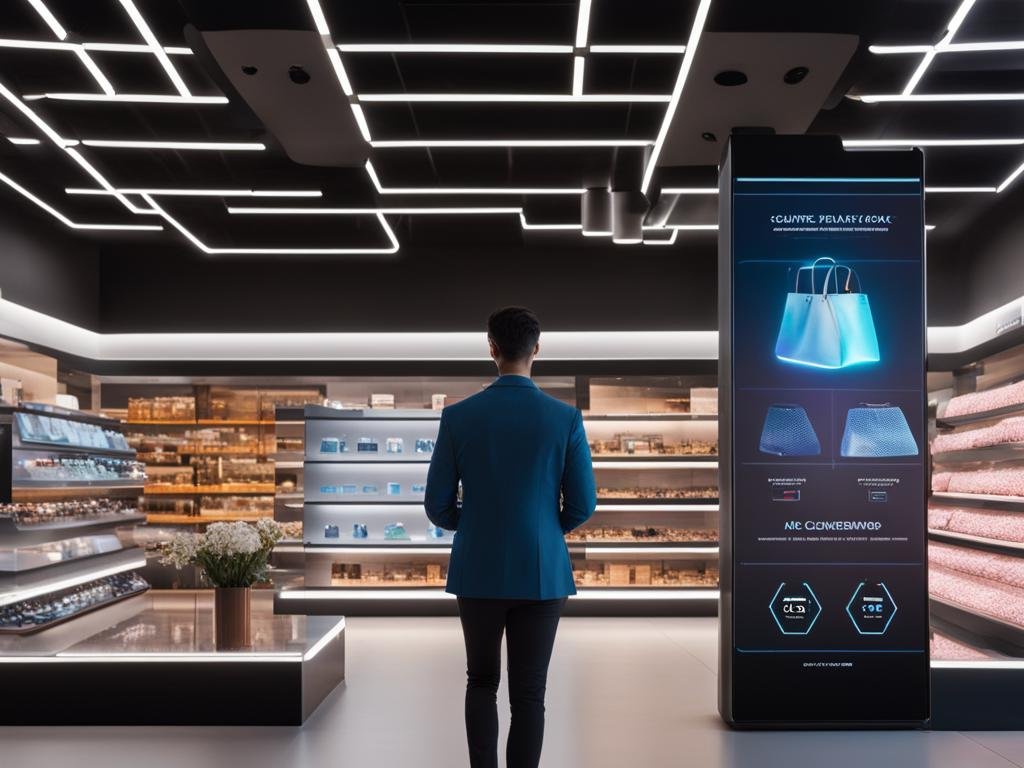
The Impact of AI on Marketing
AI has revolutionized marketing, bringing about a significant transformation in the way businesses reach and engage with their audience. With the power of AI, marketers can unlock a wealth of data and analytics, enabling more effective and targeted strategies. By leveraging AI technology, businesses can analyze customer data and preferences, identify purchase patterns, and analyze behavior, leading to personalized and targeted content delivery.
One of the key impacts of AI on marketing is personalized advertising. AI enables marketers to reach their target audience more effectively by tailoring messages based on individual characteristics and preferences. This level of personalization allows businesses to connect with customers on a deeper level, increasing the likelihood of engagement and conversions.
Predictive analytics is another valuable application of AI in marketing. With AI-powered tools, companies can anticipate customer needs and preferences, enabling them to create more targeted and effective marketing campaigns. This data-driven approach helps businesses optimize their strategies for better engagement and ROI, ensuring that marketing efforts are focused on the most promising opportunities.
Furthermore, AI brings automation to customer service, enhancing efficiency and effectiveness. AI-powered chatbots and virtual assistants can handle customer inquiries and provide personalized support, reducing response times and improving overall customer satisfaction. With AI, businesses can streamline their marketing operations, automate tasks such as data analysis and customer segmentation, and save time and resources for marketers.
In conclusion, the impact of AI on marketing is undeniable. It revolutionizes the way businesses understand and engage with their customers, enabling personalized experiences, targeted advertising, and efficient marketing operations. By embracing AI technology, businesses can unlock the potential for growth, increased revenue, and improved customer satisfaction in today’s competitive market.
Benefits of Using AI in Marketing
AI technology has revolutionized the field of marketing, offering numerous advantages for businesses seeking to stay competitive in today’s digital landscape. By harnessing the power of AI, marketers can unlock new opportunities and achieve greater success in their campaigns. Here are some key benefits of using AI in marketing:
- Enhanced Accuracy in Targeting: AI enables marketers to identify potential customers with precision, allowing for more effective targeting and personalized messaging. By analyzing vast amounts of data, AI algorithms can identify patterns and trends, helping businesses deliver the right message to the right audience at the right time.
- Improved Efficiency and Time Savings: Automation powered by AI can streamline marketing operations, freeing up valuable time and resources for marketers. By automating tasks such as data analysis and customer segmentation, marketers can focus on strategic planning and creative initiatives that drive results.
- Personalized Customer Experiences: AI-driven personalization allows businesses to provide tailored experiences to their customers, resulting in higher engagement and satisfaction. By analyzing customer data and preferences, AI can deliver personalized recommendations, offers, and content, creating a more engaging and memorable customer journey.
- Data-Driven Insights: AI-powered analytics provide marketers with valuable insights into customer behavior and preferences. By analyzing data in real-time, marketers can make informed decisions and optimize their strategies for better engagement and return on investment. These insights help businesses refine their targeting, messaging, and overall marketing approach.
“AI allows marketers to unlock new opportunities and achieve greater success in their campaigns.”
AI in Marketing: Advantages at a Glance
Table 1: Advantages of Using AI in Marketing
| Advantages | Description |
|---|---|
| Enhanced Accuracy in Targeting | AI enables precise audience targeting based on data analysis and customer segmentation. |
| Improved Efficiency and Time Savings | Automation powered by AI streamlines marketing operations, saving time and resources. |
| Personalized Customer Experiences | AI-driven personalization allows for tailored experiences, increasing engagement and satisfaction. |
| Data-Driven Insights | AI-powered analytics provide valuable insights for informed decision-making and optimization. |
In conclusion, leveraging AI in marketing offers a multitude of benefits for businesses seeking to thrive in the digital age. From enhanced targeting accuracy to improved efficiency and personalized customer experiences, AI empowers marketers to drive better results and achieve their goals. As technology continues to evolve, the role of AI in marketing will only grow in importance, offering new and exciting opportunities for businesses to connect with their audience and stay ahead of the competition.
Challenges in Implementing AI in Marketing Strategies
Implementing AI in marketing strategies presents several challenges that businesses must address to ensure a successful and effective implementation. These challenges include:
- Data Privacy Concerns: Collecting and handling sensitive customer data requires strict adherence to privacy regulations and ethical standards. Businesses must prioritize data security and ensure responsible handling of customer information.
- Integration with Existing Technology: Integrating AI technologies with existing marketing systems can be complex. It requires compatibility, seamless operation, and thorough testing to ensure smooth integration without disrupting existing processes.
- Respecting Customer Privacy: Personalization efforts must prioritize customer privacy and consent. Businesses need to be transparent about data collection and use, allowing customers to control their personal information and preferences.
- Avoiding Over-Reliance on AI Automation: While AI automation enhances efficiency, human oversight is crucial to identify and address potential issues. It is important to strike a balance between automation and maintaining a human touch in marketing to preserve personal connections with customers.
Addressing these challenges requires a strategic approach that combines robust data privacy measures, seamless integration, transparent communication with customers, and a careful balance between AI automation and human involvement.
Guidelines for Implementing AI in Marketing
Implementing AI in marketing requires careful planning and strategic execution. Here are some guidelines to follow:
- Secure leadership buy-in: Gain support from top-level management to ensure sufficient resources and commitment to AI implementation in marketing.
- Understand the limits of AI: Recognize that AI is a tool and not a panacea. Understand its capabilities and limitations to make informed decisions and mitigate risks.
- Respect customer privacy: Prioritize data protection and privacy by adhering to legal regulations and ethical standards. Transparency and consent are essential in building trust with customers.
- Maintain human oversight: Although AI automation is powerful, human intervention is necessary to monitor the accuracy and appropriateness of AI-generated content and recommendations.
- Preserve the human touch: While AI can personalize marketing efforts, maintaining a human connection is crucial. Incorporate human creativity, empathy, and intuition to add authenticity and build stronger customer relationships.
By following these guidelines, businesses can harness the power of AI in marketing while ensuring ethical practices and achieving maximum results.

Benefits of Implementing AI in Marketing
Implementing AI in marketing can yield several benefits:
- Greater accuracy in targeting: AI enables businesses to identify and reach their target audience with precision, resulting in more effective marketing efforts.
- Improved efficiency: Automating tasks such as data analysis and segmentation saves time and resources, allowing marketers to focus on strategic planning and creative execution.
- Enhanced customer experience: AI-powered personalization provides tailored and convenient interactions, resulting in higher customer satisfaction and loyalty.
- Data-driven insights: AI analysis provides valuable insights into customer behavior and preferences, helping marketers make informed decisions and optimize marketing strategies.
Overall, integrating AI into marketing efforts can contribute to increased revenue, improved customer satisfaction, and streamlined operations.
Leveraging AI in Marketing Functions
AI is revolutionizing marketing functions, providing businesses with new opportunities to accelerate growth and refine their strategies. By leveraging AI in various areas of marketing, companies can enhance their efficiency, improve customer experiences, and drive better results. Let’s explore the role of AI in different marketing functions and how it can be leveraged to achieve these goals.
Content Creation:
AI-powered tools can significantly speed up the content creation process. From generating creative campaign ideas to producing first drafts of marketing copy and email headlines, AI can streamline the content creation workflow. By utilizing AI in content creation, marketers can save time and resources while ensuring consistent quality and relevance.
Customer Engagement:
AI can automate customer engagement and provide personalized experiences at scale. Chatbots and virtual assistants powered by AI can handle customer interactions, resolve common queries, and deliver targeted recommendations. This enhances overall customer satisfaction by providing immediate and tailored support, even outside regular business hours.
Data Analysis:
Data analysis is a critical component of marketing success, and AI can greatly enhance this capability. By utilizing AI algorithms to analyze customer data, marketers can gain valuable insights into customer behavior and preferences. This helps in optimizing marketing strategies, identifying trends, and making data-driven decisions for better engagement and ROI.
| Marketing Function | Role of AI |
|---|---|
| Content Creation | AI-powered tools can speed up content creation, generate ideas, and produce drafts. |
| Customer Engagement | AI automates customer interactions, provides personalized recommendations, and improves overall satisfaction. |
| Data Analysis | AI enhances data analysis, providing valuable insights for optimizing marketing strategies. |
By leveraging AI in marketing functions, businesses can unlock new levels of efficiency, personalization, and data-driven decision-making. From content creation to customer engagement and data analysis, AI has the potential to transform marketing operations, driving better results and enhancing the overall customer experience.
Conclusion
In conclusion, personalized marketing powered by AI is a game-changer in today’s competitive business landscape. By leveraging AI technology, businesses can connect with customers on a personal level, resulting in enhanced engagement, improved customer retention, increased sales and revenue, efficient resource allocation, and data-driven insights. Real-world examples from companies like Netflix, Amazon, and Spotify demonstrate the effectiveness of AI-driven personalization in driving customer satisfaction and business success.
To implement AI-driven personalization effectively, businesses need to focus on key areas such as data collection and integration, AI-powered analytics, segmentation, personalized content and recommendations, A/B testing and optimization, and privacy and security considerations. These pillars lay the foundation for successful implementation and ensure responsible handling of customer data in compliance with regulations.
The future of AI-driven personalization looks promising, with trends such as hyper-personalization, voice and conversational AI, AI-enhanced customer service, and ethical AI shaping the marketing landscape. As businesses continue to harness the power of AI, they can unlock the potential of personalized marketing and stay competitive in today’s dynamic market.
FAQ
What are the benefits of AI-driven personalization in marketing?
The benefits of AI-driven personalization in marketing include enhanced customer engagement, improved customer retention, increased sales and revenue, efficient resource allocation, and data-driven insights.
Can you provide real-world examples of AI-driven personalization?
Yes, companies like Netflix, Amazon, and Spotify have successfully implemented AI-driven personalization in their platforms, resulting in increased customer engagement, sales, and retention.
How can businesses implement AI-driven personalization effectively?
To implement AI-driven personalization effectively, businesses must focus on data collection and integration, AI-powered analytics, segmentation, personalized content and recommendations, A/B testing and optimization, and privacy and security considerations.
What does the future hold for AI-driven personalization?
The future of AI-driven personalization holds even greater promise, with trends like hyper-personalization, voice and conversational AI, AI-enhanced customer service, and ethical AI shaping the marketing landscape.
What is the impact of AI on marketing?
AI has revolutionized marketing by unlocking a wealth of data and analytics, enabling more effective and targeted strategies, improving accuracy in targeting audiences, enhancing efficiency in marketing operations, and providing personalized customer experiences.
What are the benefits of using AI in marketing?
Using AI in marketing offers advantages such as greater accuracy in targeting audiences, improved efficiency in marketing operations, enhanced customer experience, valuable data insights for decision-making, and increased revenue and customer satisfaction.
What challenges are involved in implementing AI in marketing strategies?
Implementing AI in marketing strategies can present challenges such as data privacy concerns, integration with existing technology, ethical considerations, and avoiding over-reliance on AI automation.
What are the guidelines for implementing AI in marketing?
The guidelines for implementing AI in marketing include securing leadership buy-in, understanding the limits and drawbacks of AI, prioritizing customer privacy, balancing AI automation with human oversight, and preserving the human touch in marketing efforts.
How can AI be leveraged in various marketing functions?
AI can be leveraged in various marketing functions for idea generation, persona development, content generation, design, customer engagement automation, and data analysis to drive better engagement, ROI, and operational efficiency.
What is the conclusion of personalized marketing with AI strategies?
Personalized marketing with AI strategies offers businesses the opportunity to unlock success by delivering tailored experiences, enhancing customer engagement, improving sales and revenue, and gaining valuable data-driven insights.