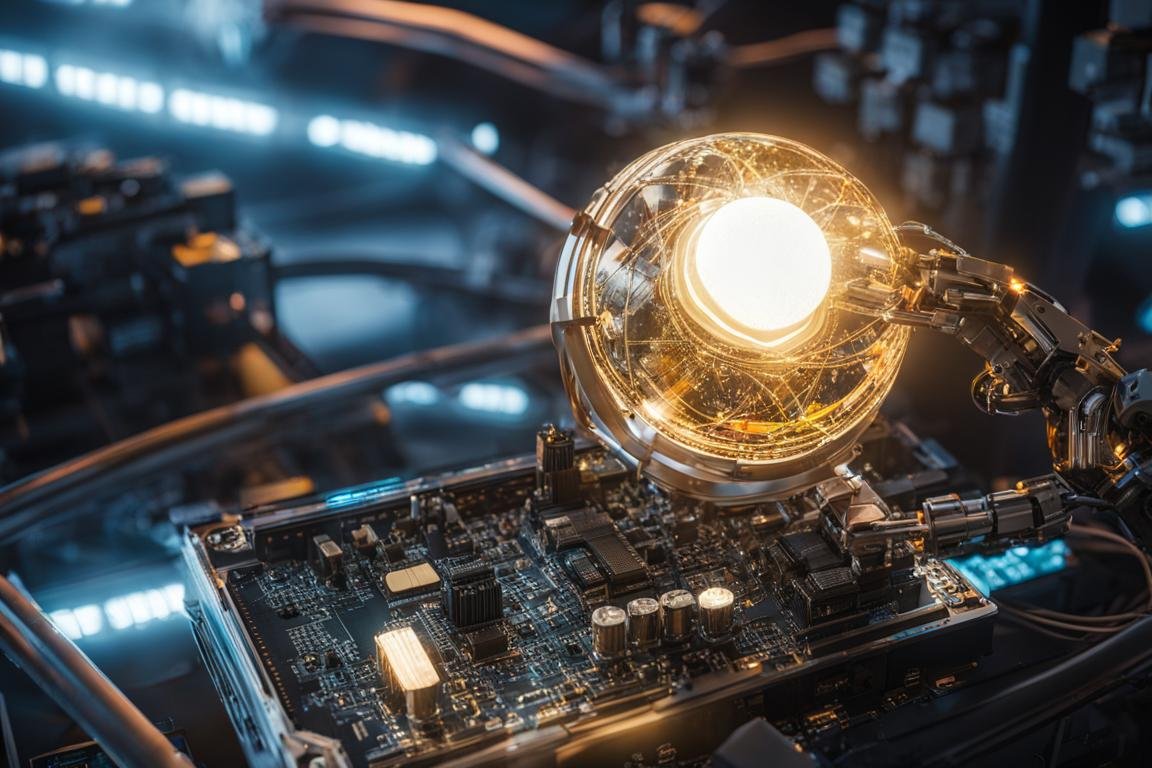
Robotics and Artificial Intelligence (AI) have emerged as transformative technologies that are revolutionizing various industries and shaping the future of humanity. With advancements in robotics technology and the widespread adoption of AI applications, we are witnessing a profound impact on our society and the way we live and work. From automation to intelligent decision-making, robotics and AI are driving innovation and pushing the boundaries of what is possible.
Key Takeaways:
- Robotics and AI technologies are rapidly evolving and have the potential to transform multiple industries.
- Integration of robotics and AI enables the development of intelligent robots and automation solutions.
- Robotics and AI applications encompass various sectors, including manufacturing, healthcare, education, media, and customer service.
- While concerns exist about job displacement, AI can serve as a tool to amplify human creativity and innovation.
- The future possibilities of robotics and AI are vast, and their impact on society is expected to be profound.
The Impact of AI on Technology
Artificial Intelligence (AI) has had a profound impact on the field of technology, particularly in computing. With its ability to process and analyze vast amounts of data, AI has revolutionized the way computers make decisions and discoveries. From sequencing RNA for vaccines to modeling human speech, AI has shown tremendous progress and advancements in various applications.
The capabilities of AI continue to grow at a rapid pace, driving innovation and pushing the boundaries of what technology can achieve. AI’s impact on computing has allowed for faster and more intelligent decision-making, enabling computers to perform tasks that would have been impossible for humans alone.
As AI continues to advance, it opens up new opportunities for technological breakthroughs. With its ability to process and analyze data at scale, AI is poised to transform industries and drive advancements in fields such as healthcare, manufacturing, transportation, and beyond. The potential of AI in technology is vast, and the possibilities are endless.
AI’s Influence on Industries
The widespread adoption and integration of AI technology have had a profound impact on various industries. From transportation to healthcare, AI has revolutionized the way businesses operate, making processes more efficient and customer experiences more personalized. Let’s explore how AI has influenced different sectors:
Transportation
In the transportation industry, AI is driving the development of autonomous vehicles and smart transportation systems. Self-driving cars equipped with AI algorithms and sensors can navigate roads, make real-time decisions, and reduce the risk of accidents. AI-powered travel planners also help commuters optimize their routes, saving time and minimizing congestion.
Manufacturing
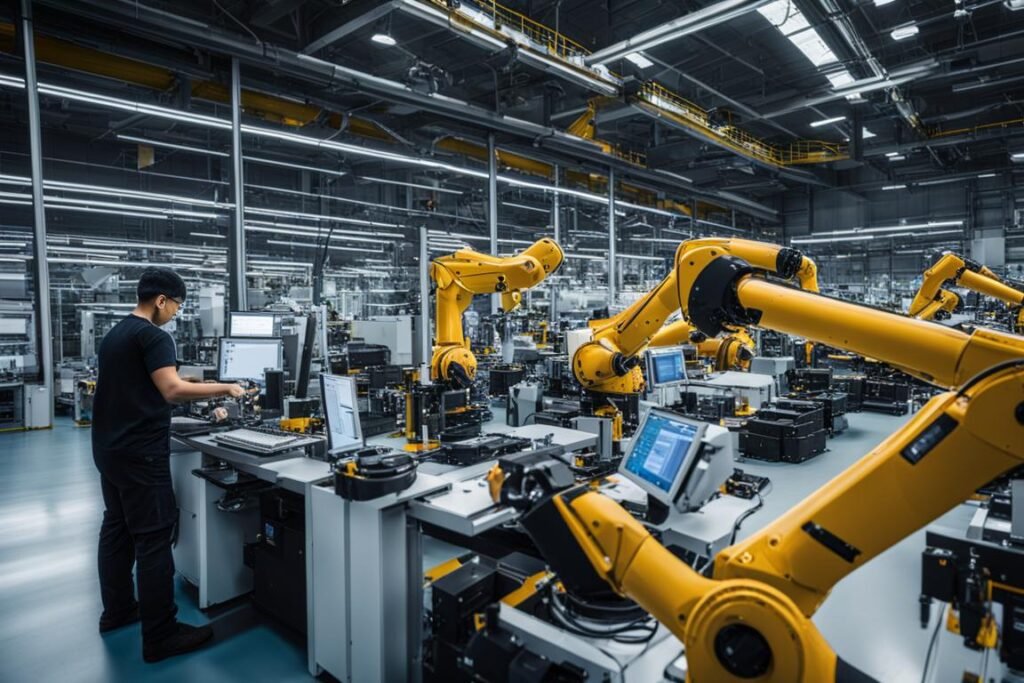
AI has transformed the manufacturing sector by enabling automation and predictive analysis. Robots powered by AI algorithms and machine learning algorithms can perform complex tasks with precision and speed, improving productivity and reducing errors. Additionally, AI-driven predictive analysis sensors help manufacturers optimize production, minimize downtime, and enhance overall operational efficiency.
Healthcare
AI has made significant contributions to the healthcare industry, aiding in disease identification, diagnostics, and personalized treatment plans. With AI-powered tools, healthcare professionals can analyze large datasets, identify patterns, and make accurate predictions. From early detection of diseases to drug discovery, AI is revolutionizing the way healthcare is delivered and improving patient outcomes.
Education, Media, and Customer Service
In the education sector, AI is enhancing personalized learning experiences through adaptive learning platforms. AI algorithms analyze student data to identify individual strengths and weaknesses and provide tailored educational content. In the media industry, AI technologies are automating content generation, enabling faster and more efficient production. AI-powered chatbots and virtual assistants are also transforming customer service, providing quick and accurate responses to customer queries and improving overall customer satisfaction.
As AI continues to advance, its impact on industries will only grow. From enhancing efficiency to improving customer experiences, AI has the potential to drive further innovation and reshape the way businesses operate.
The Future of AI in the Workforce
As AI continues to advance, its impact on the workforce is a topic of discussion and concern. Many fear that AI automation will lead to job displacement, as routine and repetitive tasks become automated. While these concerns are valid, it is important to note that AI lacks creativity and compassion, making it a tool to amplify human creativity rather than replace it. As new jobs are created and roles evolve, humans will still be needed to provide the innovative and imaginative thinking that AI cannot replicate.
Retraining and education will play a crucial role in preparing individuals for the changing workforce. As certain jobs become at risk of being displaced, it is essential to provide opportunities for retraining and upskilling to ensure workers can adapt to new roles that align with AI technology. By investing in the development of new skills and fostering a growth mindset, individuals can navigate the transition between jobs and seize the opportunities created by AI advancements.
“The future belongs to those who can leverage the power of AI while embracing creativity and adaptability.”
Historically, societies have adjusted and adapted to technological advancements, and the integration of AI into the workforce will be no different. While the transition may not be painless, it is important to recognize that AI has the potential to enhance productivity, improve efficiency, and open up new avenues for innovation. By harnessing the power of AI and combining it with human ingenuity, we can create a future where humans and AI work together in harmony, driving progress and shaping a better world.
Table: Jobs Impacted by AI Automation
| Industry | Jobs at Risk |
|---|---|
| Manufacturing | Assembly line workers |
| Retail | Cashiers |
| Transportation | Delivery drivers |
| Customer Service | Call center operators |
| Finance | Data entry clerks |

The Future of Robotics and AI Integration
The integration of robotics and AI holds immense potential for the future. As these technologies continue to advance, their collaboration allows for the development of intelligent robots that can perform tasks with efficiency and accuracy. The synergy between robotics and AI opens up new possibilities for automation and human-robot collaboration, transforming various industries.
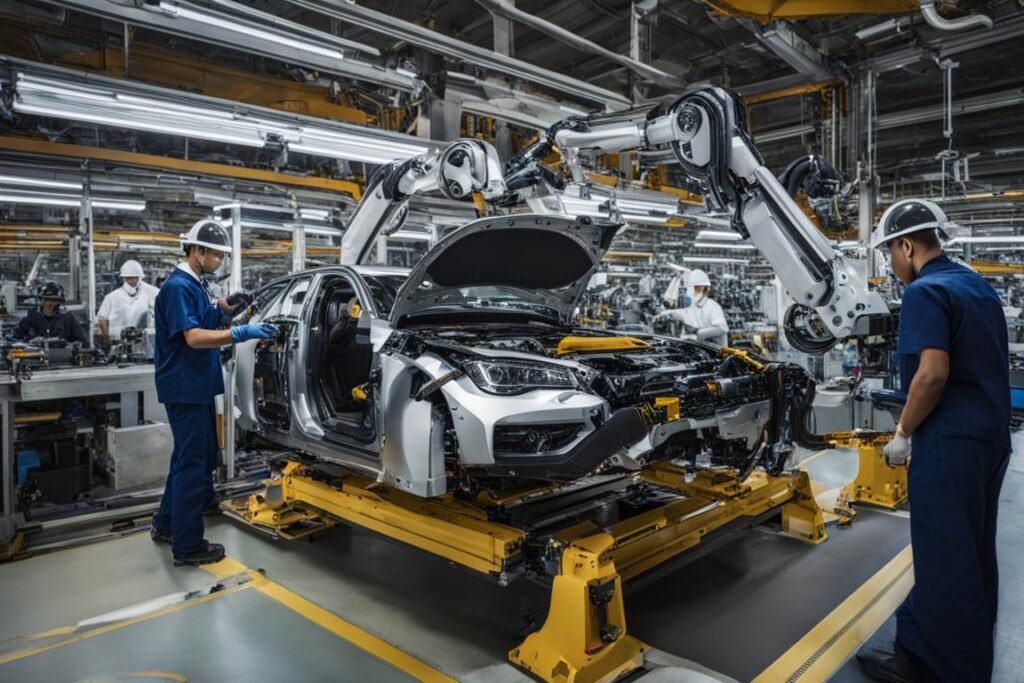
In manufacturing, the integration of robotics and AI has already revolutionized production processes. AI-driven robots equipped with advanced sensors and algorithms can optimize workflows, increase productivity, and reduce costs. These intelligent robots work alongside human workers, enhancing efficiency and precision in tasks like assembly and quality control.
In healthcare, the integration of robotics and AI has the potential to improve patient care and revolutionize medical procedures. AI-powered robots can assist in surgeries, automate repetitive tasks, analyze patient data for accurate diagnoses, and even provide companionship to elderly patients. The collaboration between robotics and AI in healthcare could lead to faster, more accurate diagnoses and personalized treatment plans.
Transportation is another industry where the integration of robotics and AI is transforming the future. Self-driving cars and AI-powered traffic management systems are paving the way for safer and more efficient transportation. The combination of robotics and AI enables vehicles to make real-time decisions based on environmental data, reducing the risk of accidents and optimizing traffic flow.
Table: Examples of Robotics and AI Integration
| Industry | Examples |
|---|---|
| Manufacturing |
|
| Healthcare |
|
| Transportation |
|
These examples just scratch the surface of what is possible with the integration of robotics and AI. As technology continues to advance, we can expect even more innovative applications and advancements. From revolutionizing manufacturing processes to improving healthcare outcomes and transforming transportation, the future of robotics and AI integration has the potential to reshape the way we live and work.
The Role of Robotics and AI in Manufacturing
Manufacturing has long been a beneficiary of robotics and AI. The integration of these technologies has revolutionized the industry, leading to increased efficiency, precision, and productivity. AI-enabled robotic arms and automation have been widely adopted, allowing for faster and more accurate production processes.
Robots work alongside humans in tasks like assembly and stacking, reducing the risk of human error and improving overall quality control. The use of AI technologies in manufacturing also enables predictive maintenance, ensuring machines are operating optimally and reducing downtime. This combination of robotics and AI-driven efficiency has transformed the manufacturing landscape by streamlining operations and reducing costs.
To illustrate the impact of robotics and AI in manufacturing, let’s consider the following table:
| Year | Robotic Automation Level | Production Efficiency (in %) | Cost Savings (in %) |
|---|---|---|---|
| 2015 | Low | 70 | 10 |
| 2020 | Medium | 85 | 20 |
| 2025 | High | 95 | 30 |
The table showcases the advancements in robotic automation over the years and their corresponding impact on production efficiency and cost savings. As the level of robotic automation increases, the manufacturing process becomes more streamlined and precise, resulting in higher efficiency and significant cost reductions.
In conclusion, robotics and AI have revolutionized the manufacturing industry by increasing efficiency, accuracy, and productivity. The integration of these technologies has enabled automation and predictive maintenance, leading to improved operations, quality control, and cost savings. As technology continues to advance, the role of robotics and AI in manufacturing will undoubtedly expand, driving further innovations and advancements.
AI Applications in Healthcare
AI is revolutionizing the healthcare industry, transforming the way we diagnose, treat, and care for patients. With its ability to analyze vast amounts of data, AI-powered tools are improving the speed and accuracy of disease identification. AI in diagnostics enables healthcare professionals to make more informed decisions, leading to better patient outcomes.
One of the remarkable applications of AI in healthcare is in drug discovery. AI algorithms can analyze large datasets and identify patterns that humans may miss, accelerating the process of developing new drugs and treatments. This has the potential to revolutionize the pharmaceutical industry, reducing the time and cost associated with bringing new medications to market.
AI is also enhancing patient care by enabling remote monitoring and personalized medicine. With AI-powered devices, patients can receive continuous monitoring and real-time feedback, allowing for early detection of health issues and proactive interventions. Additionally, AI algorithms can analyze individual patient data to tailor treatment plans and medications to each person’s specific needs, improving the effectiveness and efficiency of healthcare delivery.
| AI Applications in Healthcare | Benefits |
|---|---|
| AI in diagnostics | – Faster and more accurate disease identification – Early detection of health issues |
| AI in drug discovery | – Accelerated development of new drugs and treatments – Reduced time and cost for pharmaceutical research |
| AI in patient care | – Continuous monitoring and real-time feedback – Personalized treatment plans and medications |
AI’s impact on healthcare is just beginning to be realized, and the potential for further advancements is immense. As technology continues to evolve, AI will play a critical role in improving healthcare outcomes, increasing efficiency, and advancing personalized medicine.
AI in Education and Media
AI technology is transforming the fields of education and media, opening up new possibilities and enhancing existing processes. In education, AI is revolutionizing personalized learning experiences, detecting plagiarism, and providing valuable insights into student performance. With the use of machine learning and natural language processing, AI-powered tools are able to adapt to individual student needs, facilitating a more tailored educational approach.
In media, AI is playing a significant role in content generation. Automated systems can analyze vast amounts of data and generate high-quality content, such as news articles, reports, and even creative works. This not only increases efficiency in content creation but also raises questions about the role of human creativity and the ethical considerations surrounding AI-generated content.
AI in education and media is a double-edged sword. While it offers immense potential for personalized learning and streamlined content creation, it also raises concerns about data privacy, algorithm bias, and the impact on human creativity. Striking a balance between the benefits of AI and the preservation of human ingenuity is crucial.
“The integration of AI technology in education enhances personalized learning experiences and provides valuable insights into student performance.”
The Role of AI in Personalized Learning
One of the most significant impacts of AI in education is its ability to facilitate personalized learning experiences. AI-powered tools can analyze vast amounts of data, such as student performance, learning styles, and preferences, to create customized learning paths for individual students. This tailoring of educational content and delivery helps students learn at their own pace and in ways that are most effective for them.
| Benefits of AI in Education | Challenges of AI in Education |
|---|---|
|
|
While personalized learning through AI has many benefits, it also poses challenges. Data privacy concerns arise when sensitive student data is collected and analyzed. Algorithm bias can perpetuate inequalities in education, as AI systems may unintentionally favor certain groups. Additionally, the reduced human interaction in AI-driven learning environments raises questions about social and emotional development in students.
In media, AI-powered content generation holds potential for increased efficiency and productivity. However, it also raises ethical concerns regarding the authenticity and originality of the generated content. The balance between AI and human creativity is crucial to maintain quality standards and preserve the unique perspectives and voices of journalists and creators.
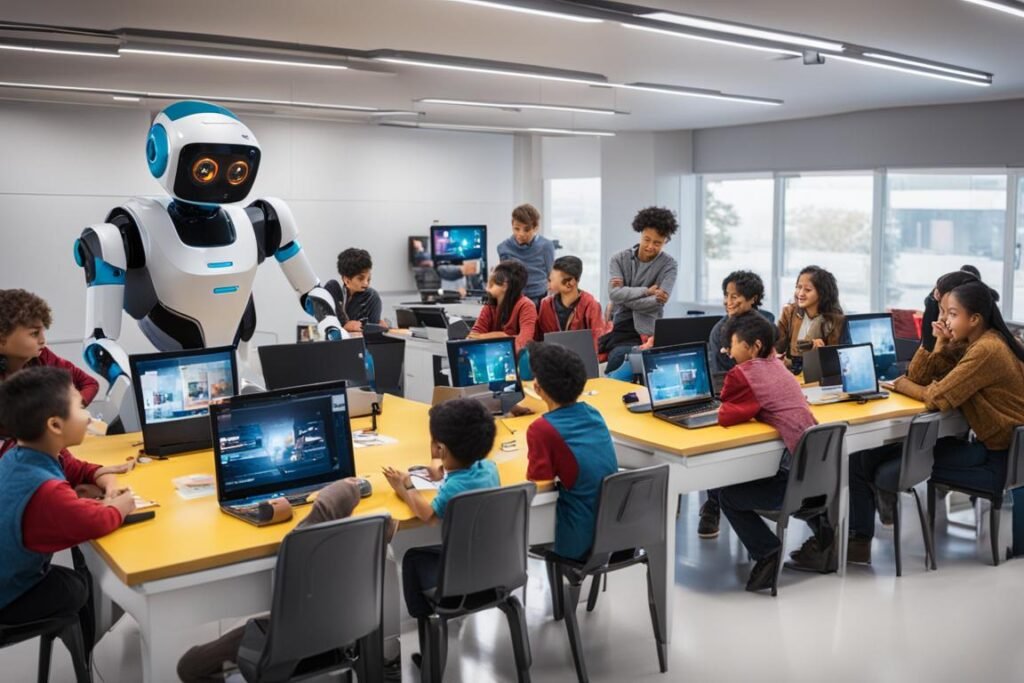
AI’s influence in education and media is undeniable, with its potential to revolutionize personalized learning experiences and automate content creation. However, careful consideration must be given to the implications and challenges that come with integrating AI into these fields. Striking a balance between the benefits of AI and the preservation of human creativity will be crucial in leveraging the true potential of these technologies.
AI in Customer Service
AI has had a significant impact on customer service, revolutionizing the way businesses interact with their customers. AI-powered tools, such as chatbots and virtual assistants, have become essential in providing efficient and personalized support to consumers.
Chatbots, powered by AI, have the ability to understand and respond to customer queries in real-time, providing instant and accurate solutions. They can handle a wide range of inquiries, from product information to troubleshooting, and can even assist in processing transactions. With 24/7 availability, chatbots ensure that customers receive support whenever they need it, improving overall customer satisfaction.
Virtual assistants, another application of AI in customer service, utilize natural language processing to understand and interpret customer requests. They can provide personalized recommendations, based on customer preferences and past interactions, enhancing the customer experience. Virtual assistants also have the ability to handle complex tasks, such as scheduling appointments or resolving complaints, further streamlining the customer service process.
| Benefits of AI in Customer Service | Examples |
|---|---|
| Improved efficiency | Chatbots handling a high volume of customer inquiries simultaneously. |
| Enhanced customer experience | Virtual assistants providing personalized recommendations based on customer preferences. |
| 24/7 support | Chatbots available round the clock to assist customers at any time. |
AI in customer service has become a crucial tool for businesses, allowing them to provide efficient and personalized support to their customers. As AI technology continues to advance, we can expect even more sophisticated and intelligent customer service solutions.
The Future Possibilities of Robotics and AI
The future of robotics and AI holds immense potential for innovation and transformation across various industries. As technology continues to advance, we can expect to see groundbreaking advancements and applications that will shape the way we live and work.
One of the key areas where robotics and AI have the potential to revolutionize is healthcare. With AI-powered tools, we can expect more accurate disease identification, personalized treatment plans, and drug discovery. The integration of robotics can enhance surgical procedures and patient care, leading to improved outcomes and a more efficient healthcare system.
In the manufacturing industry, the combination of robotics and AI automation will continue to drive efficiency and productivity. AI-enabled robotic arms and predictive analysis sensors can optimize production processes, reduce costs, and increase output. The use of robotics and AI in manufacturing will pave the way for smart factories and streamlined operations.
Another area where robotics and AI hold great promise is transportation. The development of self-driving cars and AI-powered travel planners will revolutionize the way we commute and travel. This integration of robotics and AI in transportation can lead to safer roads, reduced traffic congestion, and improved overall transportation systems.
The Future Possibilities of Robotics and AI in Key Industries
| Industry | Potential Applications |
|---|---|
| Healthcare | AI-powered disease identification, personalized treatment plans, surgical assistance |
| Manufacturing | AI-driven automation, smart factories, predictive maintenance |
| Transportation | Self-driving cars, AI travel planners, improved transportation systems |
These are just a few examples of the potential future applications of robotics and AI. As technology advances and new breakthroughs are made, we can expect even more innovative and transformative uses in various industries. From education to customer service, robotics and AI will continue to revolutionize the way we live and work, enhancing efficiency, productivity, and overall quality of life.
The Impacts and Benefits of Robotics and AI
The rapid advancements in robotics and AI have had profound impacts on various aspects of our society. From revolutionizing industries to transforming the way we live and work, these technologies offer numerous benefits that can shape a better future for all.
One of the key benefits of robotics and AI is the improvement in efficiency and productivity. By automating routine and repetitive tasks, humans can focus on more creative and complex work, leading to higher job satisfaction and innovation. This not only enhances the overall output but also allows individuals to utilize their unique skills and talents.
Moreover, robotics and AI have the potential to address pressing global issues. For instance, they can play a crucial role in combating climate change by optimizing energy consumption, improving waste management, and enabling more sustainable practices in various industries. This contribution to environmental sustainability is essential for creating a better future for generations to come.
“The benefits of robotics and AI extend beyond economic and environmental aspects. These technologies offer the promise of a more equitable society, where everyone has the opportunity to reach their full potential.”
The impact of robotics and AI on society goes beyond economic and environmental aspects. These technologies have the potential to create a more equitable society, where everyone has equal access to education, healthcare, and opportunities. AI-driven innovations can enable personalized education, improve healthcare outcomes through accurate diagnosis and treatment, and bridge the gap between urban and rural areas by providing access to essential services.
As we continue to explore the potential of robotics and AI, we must also address the challenges and concerns that arise. Ethical considerations, privacy, and data security are important aspects that need to be addressed to ensure responsible implementation and usage of these technologies. By doing so, we can maximize the benefits and minimize the risks, paving the way for a future where robotics and AI positively impact every aspect of our lives.
| Impacts of Robotics and AI | Benefits of Robotics and AI | Robotics and AI in Society |
|---|---|---|
| Improved efficiency and productivity | Addressing global issues like climate change | Creating an equitable society |
| Automation of routine tasks | Higher job satisfaction and innovation | Equal access to education and healthcare |
| Enhanced output and reduced costs | Optimization of energy consumption | Accessible services for all |
| Personalized experiences and services | Improved waste management | Ethical considerations and responsible usage |
Conclusion
As we conclude our exploration of robotics and artificial intelligence (AI), it’s clear that these technologies are shaping our future in profound ways. The integration of robotics and AI holds immense potential and opens up new possibilities for automation and human-robot collaboration. From manufacturing to healthcare, education to customer service, robotics and AI are revolutionizing industries and changing the way we live and work.
Looking ahead, the future of robotics and AI is promising. Advancements in these technologies will continue to drive innovation and transform various industries. The potential benefits of robotics and AI, such as improved efficiency, automation of repetitive tasks, and enhanced productivity, are expected to have far-reaching implications on society.
However, it’s important to address the concerns and challenges associated with the widespread adoption of robotics and AI. Job displacement and ethical considerations are among the key areas that require attention. Retraining and education are crucial to help individuals in jobs at risk of being displaced by AI, ensuring a smooth transition and minimizing the impact on the workforce.
In conclusion, robotics and AI have the potential to revolutionize our world, making it more innovative, efficient, and equitable. Embracing these technologies and their integration will allow us to unlock their full potential while ensuring ethical practices. The future of robotics and AI is bright, and it is up to us to harness their power responsibly and shape a better future for humanity.
FAQ
What industries are influenced by AI?
AI has influenced multiple industries, including transportation, manufacturing, healthcare, education, media, and customer service.
How does AI impact computing?
AI allows computers to process and analyze large amounts of data, enabling them to make intelligent decisions and discoveries faster than humans.
What is the future of AI in the workforce?
AI automation can improve efficiency and productivity, but there are concerns about job displacement. Retraining and education are crucial for individuals in jobs at risk of being replaced by AI.
How are robotics and AI integrated in manufacturing?
Robotics and AI are used in manufacturing to improve efficiency and precision. AI-enabled robotic arms and automation enhance production and predictive maintenance.
How does AI impact healthcare?
AI-powered tools in healthcare aid in disease identification, drug discovery, patient monitoring, and surgical procedures, leading to improved outcomes and personalized care.
What are the applications of AI in education and media?
AI technologies enable personalized learning experiences, plagiarism detection, and content generation in education. In media, AI has implications for automated content creation and journalism.
How does AI enhance customer service?
AI-powered tools like chatbots and virtual assistants improve customer interactions by providing data-driven support, personalized recommendations, and enhanced overall experiences.
What are the future possibilities of robotics and AI?
The integration of robotics and AI holds immense potential, enabling the development of intelligent robots and further advancements in automation and human-robot collaboration.
What are the impacts and benefits of robotics and AI?
Robotics and AI improve efficiency, automate tasks, enhance productivity, and have the potential to solve global issues. They also offer the promise of a more equitable society and increased innovation.