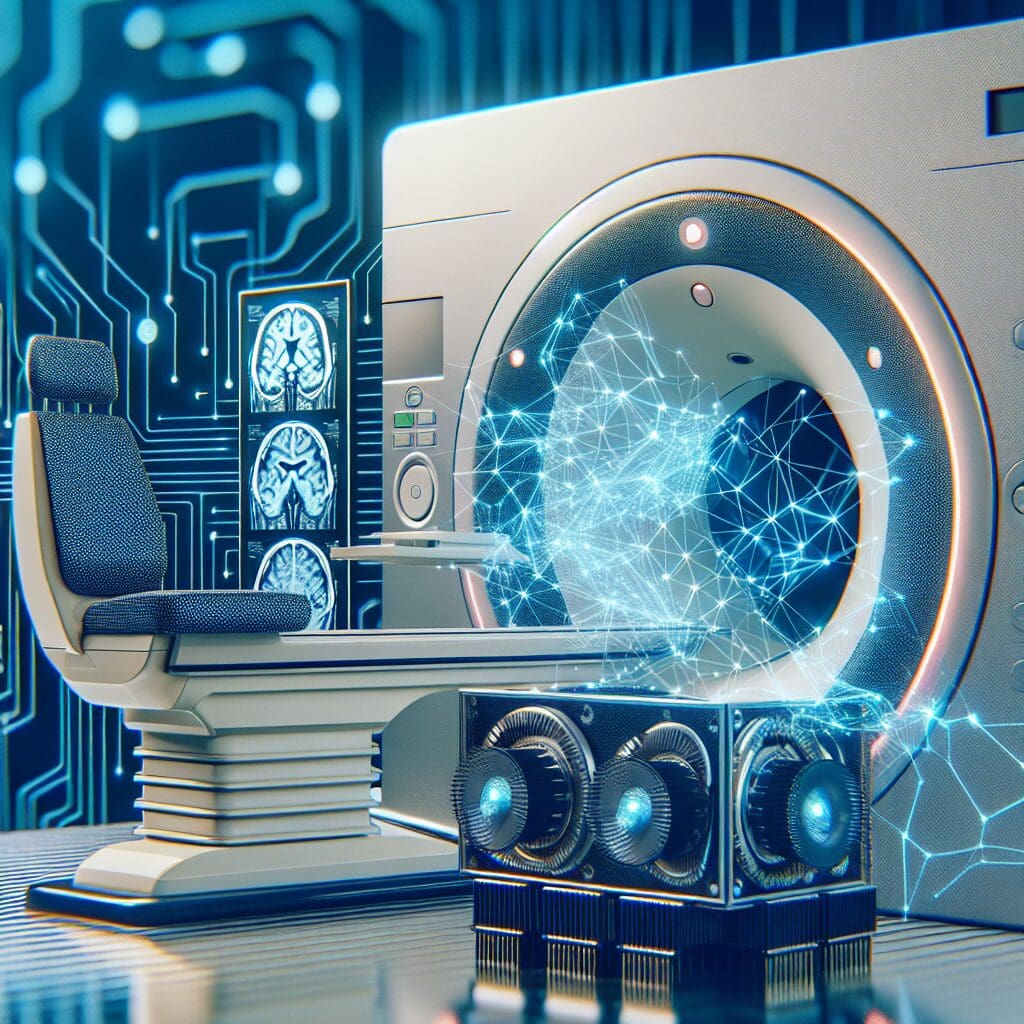
Advancements in artificial intelligence are rapidly transforming industries worldwide, and healthcare stands at the forefront of this revolution. One of the most groundbreaking fields is machine learning for medical imaging analysis, where algorithms are redefining what’s possible in diagnostics, clinical workflows, and patient outcomes. At AIBest.Site, we explore how these cutting-edge technologies are shaping the future of medicine, offering insights, advice, and a look at the innovations leading the way.
How Machine Learning for Medical Imaging Analysis Is Changing Healthcare
Medical imaging is an essential pillar of modern healthcare, supporting everything from routine screenings to complex disease management. Traditionally, radiologists and medical professionals have relied on their expertise to interpret images and make critical decisions. With the advent of machine learning, especially through deep learning models, this process is becoming faster, more accurate, and far more efficient.
In this post, we’ll dive deep into the ways machine learning is revolutionizing medical imaging analysis, explore real-world achievements, discuss ongoing challenges, and offer practical takeaways for clinicians, technologists, and stakeholders. If you’re interested in the broader impact of AI in healthcare, don’t miss our in-depth article: AI in Healthcare 2025: Transforming Medicine.
Machine Learning in Medical Imaging: Enhanced Diagnostic Power
Unmatched Pattern Recognition and Abnormality Detection
Machine learning, and deep learning in particular, excels where the human eye and conventional computer algorithms may fall short—recognizing extremely subtle patterns and abnormalities in complex, high-dimensional data. Today’s leading algorithms, such as convolutional neural networks (CNNs), are purpose-built for processing visual information.
Whether it’s an X-ray, CT scan, MRI, or ultrasound image, these models are trained to:
- Distinguish tiny deviations and lesions that might remain hidden even from seasoned radiologists.
- Generalize across various imaging modalities, patient demographics, and disease types.
- Continuously improve their diagnostic reach as they are exposed to larger and more diverse databases.
This leap in pattern recognition capacity means earlier and more reliable detection of conditions such as tumors, micro-bleeds, lesions, and irregular tissue formations. The result is clear—patients receive more accurate and timely diagnoses, leading to better outcomes.
Automated Segmentation and Feature Extraction
Medical imaging involves more than just detecting anomalies—it often requires precise isolation of organs, tissues, or regions of interest (like tumors, blood vessels, or lesions) for diagnosis and treatment planning. ML models perform this segmentation with remarkable precision, highlighting boundaries and structures that manual analysis can miss or take hours to delineate.
Key advantages include:
- Automated extraction of diagnostically relevant features from raw imaging data.
- Elimination of human variability in image interpretation.
- Streamlined preparation for subsequent analysis, such as quantitative measurement or 3D reconstruction.
The ability to quickly and reproducibly extract features supports not only diagnoses but also monitoring changes over time, essential for chronic conditions or evaluating treatment response.
Transforming Workflow and Clinical Practice
Lightning-Fast Diagnostic Support
One of the most compelling benefits of machine learning for medical imaging analysis is its capacity to quickly turn around results. Traditional workflows—especially in high-volume hospitals and imaging centers—can bottleneck as specialists meticulously review scans. Machine learning changes this paradigm by:
- Processing thousands of images in a fraction of the time it would take a human expert.
- Highlighting cases needing urgent attention.
- Offering preliminary reads to support rapid clinical decision-making.
This speed is not just a technological wonder; it translates directly into critical healthcare advances, such as reducing diagnostic delays, enabling quicker interventions, and improving patient triage during emergencies.
Continuous Learning and Algorithmic Improvement
Deep learning models thrive on data. The more annotated (labeled) medical images they are trained on, the smarter they become. These datasets contain expert-assigned findings—what abnormality is present, its location, size, and other relevant factors. As training datasets expand and become more diverse, models:
- Improve their diagnostic accuracy across conditions and imaging types.
- Become more generalizable to different patient populations.
- Reduce diagnostic errors and inconsistencies stemming from variability among human interpreters.
This ongoing process of learning ensures that machine learning tools in medical imaging are not static, but evolve in tune with real-world clinical demands and the ever-growing complexities of medical data.
Computer-Aided Diagnosis Systems
Today’s healthcare enterprises are adopting computer-aided diagnosis (CAD) platforms powered by machine learning. These systems have become a trusted collaboration partner for radiologists and clinicians, helping to:
- Screen vast numbers of scans for disease indicators automatically.
- Flag ambiguous or borderline cases for manual review.
- Standardize diagnostic reporting across diverse teams and institutions.
By utilizing ML in this context, healthcare facilities are achieving greater consistency in care, fewer missed diagnoses, and more balanced workloads for their professionals.
Evidence and Achievements: The Numbers Behind the Revolution
Matching or Exceeding Human Expertise
One of the most headline-grabbing developments in recent years has been the demonstration, through rigorous research, that deep learning models can match or surpass human radiologists in various diagnostic tasks. Key achievements include:
- Lung Nodule Detection: Deep learning models analyzing chest X-rays now detect suspicious lung nodules with sensitivity and specificity rivaling or exceeding experienced radiologists. This is a game-changer for early lung cancer detection, critical for patient survival.
- Brain Tumor Segmentation: In MRI brain scans, ML algorithms provide highly precise delineation of brain tumor margins, guiding surgeons and oncologists in treatment planning and offering more accurate predictions of patient outcomes.
- Diabetic Retinopathy Identification: AI systems trained on retinal images can catch the earliest stages of diabetic retinopathy, enabling preventive treatment and reducing the risk of blindness.
Efficiency and Workload Reduction
The efficiency gains offered by ML for medical imaging analysis are equally impressive:
- Massive image datasets, which could overwhelm radiology departments, are now processed and interpreted swiftly.
- The risk of oversight in busy clinical settings is dramatically reduced, as ML systems act as an ever-vigilant second pair of eyes.
- Health systems can better allocate specialist time to complex or ambiguous cases, rather than routine screenings that automation can handle with high reliability.
Real-World Applications: Practical Examples of Machine Learning in Action
The true measure of progress in AI is in its tangible benefits for clinicians and patients. Let’s explore some specific areas where machine learning is actively reshaping medical imaging:
Lung Nodule Detection and Lung Cancer Screening
Early-stage lung cancer often hides as faint, tiny nodules on a chest X-ray or CT scan. Machine learning models trained on vast libraries of imaging data can now:
- Automatically flag suspicious nodules with a high degree of confidence.
- Provide quantitative measurements (size, shape, growth) to aid in monitoring or surgical planning.
- Reduce false negatives and positives, improving both overdiagnosis and underdiagnosis risks.
Brain Tumor Segmentation for MRI
Accurately outlining the borders of brain tumors is critical for neurosurgeons and oncologists. ML algorithms excel at:
- Segmenting tumors, edema, and adjacent brain tissue on multi-modal MRI scans.
- Supplying volumetric data, growth rates, and risk assessments.
- Supporting personalized treatment regimens and more informed prognostic counseling.
Diabetic Retinopathy and Ophthalmology
Retinal imaging is essential for managing diabetes-related vision loss. AI-powered systems:
- Analyze retinal photographs in seconds, spotting early changes invisible to the unassisted eye.
- Empower screening programs, especially in underserved regions with few ophthalmologists.
- Prompt timely referrals to prevent blindness and reduce the burden on specialists.
Challenges and Next Steps: Navigating the Road Ahead
While the promise of machine learning for medical imaging analysis is remarkable, the road to seamless integration is not without obstacles. A few central challenges must be met to fully realize the technology’s potential:
The Need for Large and Diverse Annotated Datasets
Machine learning, especially deep learning, requires immense amounts of high-quality labeled data. Challenges include:
- Gathering sufficiently varied datasets across geographies, ages, disease types, and imaging modalities.
- Overcoming privacy and regulatory barriers that can restrict data sharing between institutions or countries.
- Harmonizing labeling standards so that model training is consistent and generalizable.
Takeaway: Institutions and AI companies should prioritize collaborative data-sharing frameworks and privacy-preserving technologies such as federated learning. Clinicians can participate in annotation projects that advance both research and clinical practice.
Interpretability and Trust
For all their accuracy, deep learning models are often viewed as “black boxes.” Ensuring clinicians and regulators trust ML interpretations is vital. Key issues involve:
- Developing explanation tools that show exactly why an algorithm flagged a region as abnormal.
- Enabling user-friendly visualizations within clinical interfaces.
- Maintaining transparency in model development, validation, and updates.
Takeaway: Radiologists and care teams should integrate AI as an assistive, not replacement, tool and actively engage with teams designing interfaces. Open discussions between AI developers and medical professionals are central to building trust and utility.
Integration Into Clinical Workflows
Even the best algorithms offer little value if they’re not woven into the natural flow of patient care. Integration challenges include:
- Ensuring compatibility with hospital information systems and picture archiving and communication systems (PACS).
- Reducing alert fatigue by focusing on relevant, high-confidence findings.
- Maintaining security and compliance with health data regulations.
Takeaway: IT leaders and clinical managers must evaluate and pilot solutions that seamlessly augment current practices. When choosing vendors or platforms, prioritize flexibility, interoperability, and ongoing support.
Looking Forward: The Future of Machine Learning in Medical Imaging
Multi-disciplinary research teams worldwide, such as Stanford’s Machine Intelligence for Medical Imaging (MIMI) group, are tackling these challenges to unlock the full power of ML for medical imaging. Their focus is on:
- Developing more efficient, scalable models that require less annotated data and are robust to variability.
- Studying methods for continual AI model updating and adaptation to new clinical practices.
- Exploring new imaging biomarkers discoverable only through advanced machine learning techniques, potentially leading to earlier or even pre-symptomatic detection of disease.
In the near future, expect to see:
- Even more accurate and nuanced diagnostic support systems.
- Real-time, bedside imaging analysis on mobile platforms.
- Widespread adoption of ML tools in a broad array of specialties, from oncology and cardiology to orthopedics and obstetrics.
Practical Takeaways for Clinicians, Administrators, and Innovators
While some aspects of machine learning in medical imaging are still evolving, there are actionable steps professionals can take today:
- Stay Informed: Regularly review the latest developments in machine learning for medical imaging analysis, both through peer-reviewed journals and reputable technology aggregators.
- Collaborate: Radiologists and clinicians should partner with data scientists to identify workflow pain points where AI can offer real benefits without disrupting care.
- Pilot and Evaluate: Test AI-driven platforms in controlled environments, gather feedback, and benchmark results against traditional processes before wide deployment.
- Advocate for Data Quality: Push for the expansion of annotated datasets within your institution, and support ethical, privacy-conscious data sharing with external partners.
- Educate and Communicate: Foster a culture of transparency and learning, ensuring that all stakeholders understand both the capabilities and limitations of AI tools in medical imaging.
Conclusion: Embracing the Future of AI-Powered Imaging
Machine learning for medical imaging analysis is no longer an abstract concept—it’s a rapidly maturing field that is fundamentally redefining how healthcare professionals approach diagnosis, treatment, and patient management. Through advanced pattern recognition, rapid automation, and evolving learning capabilities, ML-driven tools are not only matching but sometimes exceeding the performance of human experts. These innovations bring unprecedented opportunities for earlier disease detection, improved accuracy, and greater efficiency in care delivery.
Yet, with these possibilities come new requirements: for robust and diverse data, transparent algorithms, and seamless clinical integration. As the field continues to advance, fostering collaborative partnerships between clinicians, technologists, and innovators will be critical to overcoming challenges and unlocking the full promise of machine learning in medical imaging.
If you’re inspired to learn more about how artificial intelligence is reshaping healthcare, dive into our AI in Healthcare 2025: Transforming Medicine article and explore the latest expert discussions and resources here at AIBest.Site. Your future practice—and your patients—stand to benefit from these extraordinary developments.