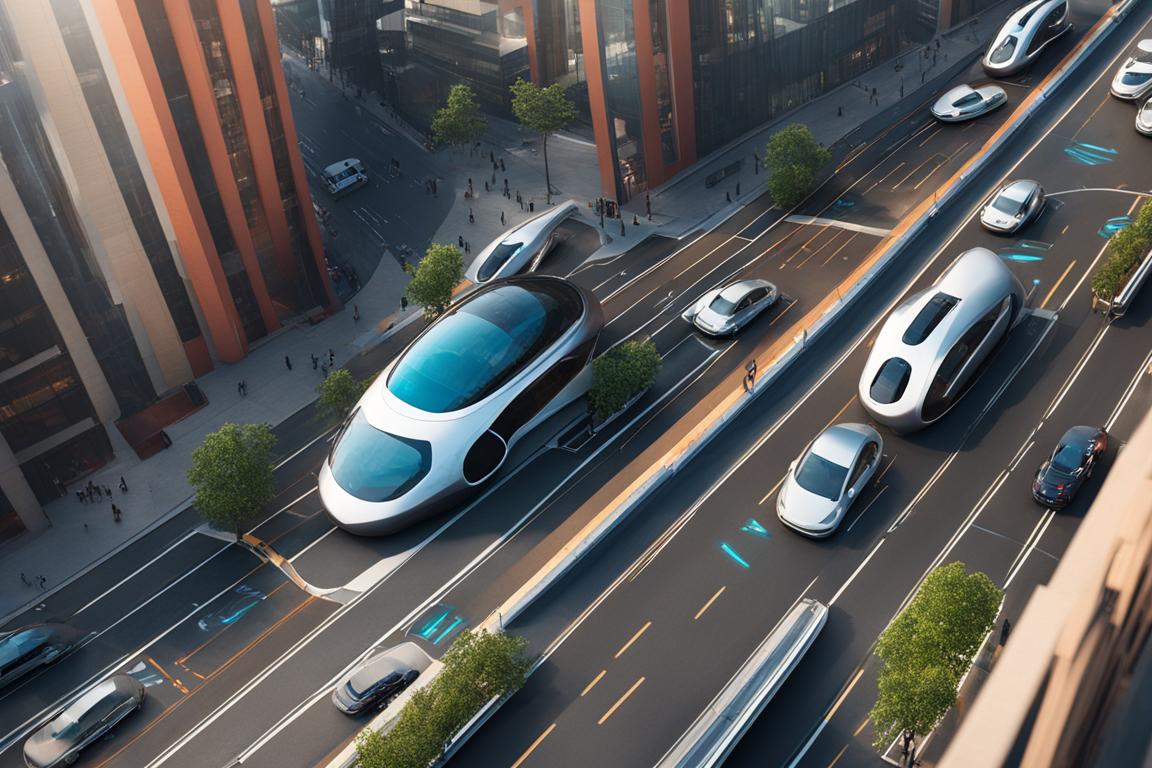
The potential of autonomous driving (AD) to transform transportation and society is widely recognized. McKinsey research shows that AD could create substantial value for the auto industry, generating hundreds of billions of dollars by the end of the decade. AD technology could make driving safer, more convenient, and more enjoyable for consumers, as well as increase productivity and improve mobility options for elderly drivers. The adoption of advanced driver-assistance systems (ADAS) could significantly reduce the number of accidents. In the passenger car market, AD technology could generate between $300 billion and $400 billion in revenue by 2035.
Key Takeaways:
- Autonomous mobility has the potential to transform transportation and society.
- AD technology can make driving safer, more convenient, and enjoyable for consumers.
- ADAS adoption can reduce accidents and increase productivity.
- The passenger car market has significant revenue potential with AD technology.
- By 2035, AD technology could generate $300 to $400 billion in revenue.
The Consumer and Commercial Benefits of Autonomous Driving
Autonomous driving systems offer a wide range of benefits for consumers and the commercial sector. These advanced technologies not only make driving safer but also provide greater convenience and enjoyment for drivers. By taking on the task of navigating the roads, autonomous vehicles free up drivers to focus on other activities, such as work or leisure. This increased productivity and reduced stress levels are highly valued by consumers.
Furthermore, the adoption of autonomous driving technology has the potential to generate significant revenue for the auto industry. Consumers are willing to pay for advanced autonomous features, creating a new market for autonomous vehicles and related services. This demand can contribute to billions of dollars in revenue for car manufacturers and technology companies alike.
It’s not just consumers who benefit from autonomous driving. The commercial sector can also reap the rewards of this technology. Self-driving cars and trucks have the potential to revolutionize the transportation industry, increasing efficiency, reducing costs, and improving overall logistics. Delivery services, ridesharing platforms, and fleet management companies can take advantage of autonomous driving technology to optimize their operations and provide better services to customers.
The Benefits of Autonomous Driving
The benefits of autonomous driving can be summarized as follows:
- Improved safety: Autonomous driving technology has the potential to significantly reduce the number of accidents caused by human error, making our roads safer for everyone.
- Increased convenience: Self-driving vehicles can make commuting more convenient and enjoyable, freeing up time for other activities during the journey.
- Productivity gains: With autonomous vehicles handling the driving tasks, individuals can make use of their travel time to work, relax, or engage in other productive activities.
- Cost savings: Autonomous driving technology can lead to reduced fuel consumption, lower maintenance costs, and potentially lower insurance premiums.
- Environmental benefits: By optimizing driving patterns and reducing traffic congestion, autonomous vehicles can help reduce emissions and contribute to a more sustainable future.
“Autonomous driving technology offers a wide range of benefits for consumers and the commercial sector, including improved safety, increased convenience, and potential cost savings.” – Industry Expert
The Potential Impact of Autonomous Vehicles on the Passenger Car Market
Autonomous vehicles are set to revolutionize the passenger car market, with their potential impact reaching far and wide. McKinsey has developed three scenarios for autonomous passenger car sales: delayed, base, and accelerated. These scenarios are based on varying levels of technology availability, customer adoption, and regulatory support.
In the delayed scenario, only 4% of new passenger cars sold in 2030 would have advanced autonomous driving functions, increasing to 17% by 2035. In the base scenario, 12% of new passenger cars sold in 2030 would have advanced AD technologies, increasing to 37% by 2035. In the accelerated scenario, 20% of passenger cars sold in 2030 would have advanced AD technologies, increasing to 57% by 2035. These figures highlight the potential for significant growth in the adoption of autonomous vehicles.
The introduction of autonomous vehicles into the passenger car market could have a profound impact on various aspects of the industry. From changes in sales and revenue streams to shifts in consumer preferences and behaviors, the passenger car market will need to adapt to fully harness the potential of autonomous driving technology.
| Scenario | Percentage of New Cars with Advanced AD Technologies in 2030 | Percentage of New Cars with Advanced AD Technologies in 2035 |
|---|---|---|
| Delayed | 4% | 17% |
| Base | 12% | 37% |
| Accelerated | 20% | 57% |
These sales scenarios paint a picture of a future where autonomous vehicles become increasingly prevalent on our roads. However, it is important to note that the actual adoption of autonomous vehicles will depend on a multitude of factors, including technological advancements, regulatory support, and consumer acceptance.
Delivering Higher Levels of Automation in Vehicles
Automakers are continually pushing the boundaries of automation in vehicles to meet the growing consumer demand for advanced autonomous features. With the decreasing costs of sensors and high-performance computing systems, vehicles with higher levels of automation, such as Level 3 (L3) and Level 4 (L4) systems, are becoming more accessible and widespread in the private-passenger-car segment. By integrating advanced driver-assistance systems (ADAS) and autonomous driving (AD) technologies, automakers are working towards delivering a safer, more efficient, and more enjoyable driving experience.
The implementation of higher levels of automation in vehicles requires advanced sensor and computing power. These technologies enable vehicles to perceive and interpret their surroundings accurately, make informed decisions, and execute actions autonomously. With the integration of radar, lidar, cameras, and powerful computing systems, vehicles can detect and track objects, analyze data in real-time, and respond to complex driving scenarios.
While the development of L3 and L4 systems involves significant upfront costs, automakers can bridge the gap by offering lower-level autonomous features (L2+). These features, such as adaptive cruise control, lane-keeping assist, and automated parking, provide consumers with a taste of the benefits of automation while maintaining a reasonable price point. As technology continues to advance and costs decrease, higher levels of automation will become more affordable and accessible to a wider range of consumers.

Table: Comparison of Different Levels of Vehicle Automation
| Level | Description |
|---|---|
| L0 – No Automation | The driver has complete control over the vehicle at all times. |
| L1 – Driver Assistance | Includes features like adaptive cruise control and lane-keeping assist, where the vehicle can assist the driver but requires constant attention. |
| L2 – Partial Automation | The vehicle can control speed, acceleration, and steering, but the driver must remain engaged and ready to take over when necessary. |
| L3 – Conditional Automation | The vehicle can perform most driving tasks under specific conditions and can alert the driver to take over when needed. |
| L4 – High Automation | The vehicle can handle most driving tasks under specific conditions and doesn’t require constant driver attention, although a human driver can still take control if necessary. |
| L5 – Full Automation | The vehicle is capable of performing all driving tasks under all conditions, and no human intervention is required. |
Consumer Interest in AD Features
Consumers are highly interested in utilizing AD features in their vehicles. The benefits of increased safety, ease of operation, fuel savings, and more quality time appeal to a wide range of individuals. According to a recent McKinsey consumer survey, nearly one-third of respondents plan to increase their use of micromobility or shared mobility options over the next decade. This indicates a growing interest in exploring alternative modes of transportation. Additionally, almost half of the respondents are open to replacing their private vehicles with other forms of transport, highlighting a willingness to embrace and experiment with autonomous options.
The convenience and safety aspects of AD features are particularly enticing to consumers. With AD technology, drivers have the opportunity to relinquish control of certain tasks and focus on other activities during their commute. This increased productivity and reduction in commuting time are major selling points for AD systems. Furthermore, the potential for improved safety through the elimination of human error resonates with consumers who prioritize their well-being and that of their loved ones.
“I would definitely consider using shared autonomous shuttles. It would save me the hassle of driving and finding parking. Plus, I trust that the technology has been tested for safety.” – Survey respondent
The shift towards autonomous options is not limited to personal vehicles. The survey also found that many trips that would have traditionally been taken by private vehicles can be easily shifted to autonomous alternatives. This presents an opportunity to reduce congestion on the roads and make transportation more efficient overall. Consumers are looking for a seamless and reliable mobility experience, and autonomous vehicles have the potential to deliver just that.
Regulations and Sustainability in Autonomous Mobility
Regulations play a significant role in shaping the future of autonomous mobility. Governments worldwide are enacting measures to reduce vehicle emissions and promote greener transport options. Over 150 cities have implemented measures to control private-vehicle use and promote more sustainable modes of transportation. Consumers are increasingly interested in sustainability and are making changes to support sustainability efforts.
The future of autonomous mobility lies in creating a more intelligent, seamless, and environmentally friendly mobility ecosystem. Governments are also working to address the regulatory challenges associated with autonomous vehicles. These challenges include issues related to safety, privacy, data protection, and legal liability. Clear and consistent regulations are needed to ensure the safe and responsible deployment of autonomous vehicles on public roads.
Sustainability is a key aspect of the autonomous mobility revolution. Autonomous vehicles have the potential to reduce traffic congestion and emissions, leading to improved air quality and a more sustainable transportation system. By promoting the adoption of autonomous vehicles and supporting sustainable transport options, governments and stakeholders can work together to create a future where mobility is not only autonomous but also environmentally friendly.
Regulatory Challenges in Autonomous Mobility
One of the challenges in the field of autonomous mobility is the fragmentation of regulations across different regions and countries. In the United States, for example, regulations vary from state to state, which makes it difficult for manufacturers to develop and deploy autonomous vehicle technology. This regulatory fragmentation hinders innovation and slows down the progress of autonomous mobility.
To address these challenges, regulatory bodies need to collaborate and develop uniform guidelines for autonomous vehicles. This will provide clarity and enable manufacturers to navigate the complex regulatory landscape. Additionally, regulations should address issues such as legal liability, privacy, and data collection to ensure the safe and responsible use of autonomous vehicles.
| Regulatory Challenges in Autonomous Mobility | Impact |
|---|---|
| Fragmented regulations | Slows down innovation and adoption |
| Lack of clarity and uniform guidelines | Creates uncertainty for manufacturers |
| Legal liability | Uncertainty around responsibility in case of accidents |
| Privacy and data protection | Concerns about the collection and use of personal data |
By addressing these regulatory challenges, governments can foster innovation and economic growth in the field of autonomous mobility. They can create an environment that encourages investment in autonomous vehicle technology and facilitates the safe integration of autonomous vehicles into the existing transportation infrastructure. The future of autonomous mobility depends on the development of clear and effective regulations that balance the need for innovation with the need for safety and sustainability.

Disruptive Trends and Technologies in Mobility
In the rapidly evolving landscape of mobility, disruptive trends and technologies are reshaping the way we move from one place to another. These innovative advancements have the potential to revolutionize the mobility ecosystem, providing more efficient, sustainable, and convenient transportation options for consumers. From the rise of micromobility to the emergence of autonomous vehicles, let’s explore some of the key disruptive trends and technologies that are shaping the future of mobility.
1. Micromobility:
Micromobility, which includes electric scooters, bicycles, and other compact vehicles, has gained significant popularity in recent years. These lightweight and eco-friendly modes of transportation offer a convenient last-mile solution, allowing users to easily navigate crowded urban areas and reduce traffic congestion. With the advent of dockless sharing systems and smartphone apps, micromobility has become more accessible and affordable.
2. Shared Mobility:
Shared mobility platforms, such as ride-hailing services and car-sharing programs, have transformed the way people travel. These on-demand services provide an alternative to traditional car ownership and promote a more sustainable use of resources. By pooling passengers and optimizing routes, shared mobility options reduce the number of private vehicles on the road, leading to reduced emissions and improved traffic flow.
3. Autonomous Vehicles:
Autonomous vehicles, or self-driving cars, are poised to revolutionize the transportation industry. These vehicles use advanced technologies, such as artificial intelligence and sensors, to navigate and operate without human intervention. The potential benefits of autonomous vehicles include increased safety, reduced traffic congestion, and improved fuel efficiency. However, the widespread adoption of autonomous vehicles is still facing regulatory and technological challenges.
| Disruptive Trend/Technology | Description |
|---|---|
| Micromobility | Lightweight and eco-friendly modes of transportation, such as electric scooters and bicycles, that provide a convenient last-mile solution. |
| Shared Mobility | Ride-hailing services and car-sharing programs that offer an alternative to traditional car ownership and promote resource optimization. |
| Autonomous Vehicles | Self-driving cars that use advanced technologies to navigate and operate without human intervention, potentially improving safety and reducing congestion. |
These disruptive trends and technologies are reshaping the mobility landscape, offering new possibilities for transportation that are more sustainable, efficient, and user-centric. As they continue to evolve and mature, it is important for policymakers, industries, and consumers to adapt and embrace these innovations to create a future of mobility that is safer, greener, and more connected.

The Benefits and Challenges of Autonomous Vehicles
Autonomous vehicles promise numerous benefits that can revolutionize transportation and society as a whole. One of the key advantages is improved safety. With autonomous technology, the potential to save lives and prevent accidents is significant. Human error is responsible for a large portion of accidents, and autonomous vehicles have the potential to eliminate this factor, making roads safer for everyone.
Another benefit is the potential to reduce traffic congestion. Autonomous vehicles can communicate with each other and optimize traffic flow, minimizing the time spent in traffic jams. This not only saves time for individuals but also reduces fuel consumption and emissions, leading to improved air quality and a more sustainable transportation system.
“The potential to save lives and prevent accidents is significant, as a large portion of accidents are caused by human error.”
However, along with these benefits, there are also challenges that need to be addressed. One of the main challenges is regulatory fragmentation. Autonomous vehicles are regulated by different laws and regulations across 50 states in the United States, making it difficult for manufacturers to develop and deploy autonomous driving technology. Greater clarity and uniform guidelines are needed to enable widespread adoption and ensure the safety of autonomous vehicles.
Legal liability and data protection are also significant challenges. Determining who is responsible in the event of an accident involving an autonomous vehicle can be a complex issue. Additionally, the collection and use of data by autonomous vehicles raise privacy concerns that need to be addressed to ensure consumer trust and confidence in the technology.
| Benefits of Autonomous Vehicles | Challenges of Autonomous Vehicles |
|---|---|
| Improved safety | Regulatory fragmentation |
| Reduced traffic congestion | Legal liability |
| Environmental benefits | Data protection |
In conclusion, autonomous vehicles offer significant benefits in terms of safety, reduced congestion, and environmental impact. However, addressing challenges such as regulatory fragmentation, legal liability, and data protection is crucial for the widespread adoption and success of autonomous driving technology. By overcoming these challenges, we can pave the way for a future where autonomous vehicles play a central role in creating a safer, more efficient, and sustainable transportation system.

The Future of Autonomous Vehicle Regulation
The regulation of autonomous vehicles is a complex and evolving landscape in the United States. As the technology continues to advance, policymakers face the challenge of creating a regulatory framework that ensures safety while fostering innovation and economic growth. Currently, regulations for autonomous vehicles are fragmented across the 50 states, resulting in a lack of consistency and clarity.
To enable manufacturers to develop and deploy autonomous vehicle technology, greater uniformity and clarity in regulations are needed. The National Highway Traffic Safety Administration (NHTSA) plays a crucial role in establishing guidelines and standards for autonomous vehicles. In the coming years, it is expected that the NHTSA will release new rules to address key issues such as legal liability, privacy, and data collection. These rules will provide a foundation for the safe and responsible deployment of autonomous vehicles.
Addressing legal liability is a major concern in the regulation of autonomous vehicles. Determining who is responsible in the event of an accident involving an autonomous vehicle presents a unique challenge. Clear guidelines and standards must be established to allocate liability between the vehicle manufacturer, the technology provider, and the human operator, if there is one. This will provide clarity and ensure that all parties involved understand their responsibilities and legal obligations.
Protecting consumer safety and privacy is another important aspect of autonomous vehicle regulation. As autonomous vehicles collect vast amounts of data, it is crucial to establish robust data protection regulations to safeguard consumer privacy. Additionally, regulations should address cybersecurity concerns to protect autonomous vehicles from potential hacking and malicious attacks. By implementing strict safety and privacy measures, regulators can instill public trust in autonomous vehicles and facilitate their widespread adoption.
| Regulatory Challenges | Impact on Autonomous Vehicle Development |
|---|---|
| Fragmented regulations across 50 states | Creates inconsistency and lack of clarity |
| Legal liability | Challenges in determining responsibility in accidents |
| Data protection and privacy | Ensuring consumer data is safeguarded |
| Cybersecurity | Protecting autonomous vehicles from potential hacking |
The future of autonomous vehicle regulation lies in establishing comprehensive rules and guidelines that balance safety, innovation, and consumer protection. Through collaboration between policymakers, industry stakeholders, and technology experts, the United States can create a regulatory framework that fosters the growth of autonomous mobility while addressing the unique challenges associated with this transformative technology.
The Potential of Autonomous Vehicles for Safety and the Environment
Autonomous vehicles have the potential to revolutionize transportation by significantly improving safety and reducing environmental impact. One of the key advantages of autonomous driving technology is its ability to minimize accidents caused by human error, which account for a large portion of road fatalities and injuries. With advanced sensors and AI-driven systems, autonomous vehicles can detect potential hazards and respond faster than human drivers, potentially saving countless lives on the road.
Moreover, autonomous vehicles can also contribute to the reduction of traffic congestion and the improvement of air quality. Through intelligent routing and optimized driving patterns, autonomous vehicles can help alleviate traffic congestion by reducing the number of unnecessary stops, idling, and sudden braking. This not only speeds up travel times but also helps reduce fuel consumption and emissions, making transportation more efficient and environmentally friendly.
Autonomous driving technology has the potential to minimize accidents caused by human error, saving countless lives on the road.
Furthermore, the potential for autonomous vehicles to provide shared transportation services can further enhance their environmental benefits. By utilizing autonomous vehicles for ride-sharing or pooled commuting, the number of cars on the road can be significantly reduced, leading to decreased congestion and lower emissions. Shared autonomous shuttles and microtransit services can also provide convenient and eco-friendly mobility options, encouraging people to rely less on private vehicles and embrace more sustainable modes of transportation.
Overall, the integration of autonomous vehicles into our transportation system holds immense promise for improving safety and reducing the environmental impact of transportation. As this technology continues to advance and gain wider adoption, we can expect to see significant improvements in road safety, reduced congestion, and a greener and more sustainable future.
Table:
| Benefits of Autonomous Vehicles | Challenges of Autonomous Vehicles |
|---|---|
|
|
Conclusion
In conclusion, the future of autonomous mobility is poised to revolutionize transportation and society. With the potential to create substantial value for the auto industry and enhance safety and convenience for consumers, autonomous driving technology holds great promise. The adoption of advanced driver-assistance systems (ADAS) can significantly reduce accidents and increase productivity. Furthermore, the consumer and commercial benefits of autonomous driving extend beyond personal vehicles, with the potential to impact other industries such as roadside assistance and insurance.
As McKinsey’s research indicates, the passenger car market stands to benefit from the growth of autonomous vehicles. Sales scenarios ranging from delayed to accelerated reveal the varying degrees of technology availability, consumer adoption, and regulatory support. While higher levels of automation in vehicles, such as L3 and L4 systems, are expected to become more commonly available by 2025, lower-level autonomous features (L2+) can bridge the gap and offer consumers a taste of the benefits of automation.
Regulations and sustainability play crucial roles in the development of autonomous mobility. Governments worldwide are enacting measures to reduce emissions and promote environmentally friendly transportation options. Moreover, disruptive trends and technologies are reshaping the mobility ecosystem, with consumers increasingly interested in micromobility and shared mobility. Autonomous vehicles offer a range of benefits, including improved safety, reduced traffic congestion, and environmental advantages. However, challenges such as regulatory fragmentation, legal liability, and data protection need to be addressed for widespread adoption.
In conclusion, the future of autonomous mobility holds immense potential. By addressing regulatory challenges, ensuring safety and privacy, and fostering innovation, the United States can lead the way in the adoption and development of autonomous mobility solutions. The future of transportation is autonomous, promising a safer, more efficient, and more sustainable mobility ecosystem.
FAQ
What are the potential benefits of autonomous driving?
Autonomous driving offers benefits such as increased safety, convenience, and enjoyment for consumers, as well as increased productivity and improved mobility options for elderly drivers.
How much revenue could AD technology generate for the auto industry?
AD technology has the potential to generate between $300 billion and $400 billion in revenue for the passenger car market by 2035.
What scenarios has McKinsey developed for autonomous passenger car sales?
McKinsey has developed three scenarios: delayed, base, and accelerated, based on varying levels of technology availability, customer adoption, and regulatory support.
When can we expect higher levels of automation in vehicles?
Vehicles with higher levels of automation, such as L3 and L4 systems, are expected to be more commonly available in the private-passenger-car segment by 2025.
What is consumer interest in AD features?
Consumers are highly interested in using AD features in their vehicles, recognizing the benefits of increased safety, ease of operation, fuel savings, and more quality time.
How do regulations and sustainability play a role in autonomous mobility?
Governments worldwide are enacting measures to reduce vehicle emissions and promote greener transport options, while consumers are increasingly interested in sustainability and making changes to support sustainability efforts.
What disruptive trends and technologies are shaping mobility?
Disruptive trends such as micromobility and shared mobility options, as well as emerging technologies like autonomous vehicles, roboshuttles, and urban air taxis, have the potential to transform the mobility ecosystem.
What are the benefits and challenges of autonomous vehicles?
Autonomous vehicles offer benefits such as improved safety, reduced traffic congestion, and environmental benefits. However, challenges such as regulatory fragmentation, legal liability, and data protection need to be addressed.
What is the future of autonomous vehicle regulation?
The United States faces challenges in regulating autonomous vehicles due to the fragmentation of regulations across 50 states. Greater clarity and uniform guidelines are needed to enable manufacturers to develop and deploy autonomous vehicle technology.
How can autonomous vehicles contribute to safety and the environment?
Autonomous vehicles have the potential to significantly improve safety by reducing accidents caused by human error. They can also reduce traffic congestion and emissions, leading to a more sustainable and efficient transportation system.