
Artificial intelligence (AI) is revolutionizing the energy sector in the US, with its impact being felt across various industries. AI is transforming traditional sectors such as oil, gas, and electricity, making them more efficient and enabling a shift towards renewable energy sources. This article will delve into the ways AI is shaping the energy future, specifically focusing on its impact on energy supply, demand, and climate change mitigation.
As the energy sector seeks new solutions to meet the challenges of sustainability and efficiency, artificial intelligence (AI) has emerged as a game-changer. By harnessing the power of AI, the energy industry is finding innovative ways to optimize operations, reduce costs, and minimize environmental impact.
The use of AI in the energy sector has paved the way for advancements in renewable energy technologies, smart grid solutions, and predictive analytics. These AI-driven innovations are transforming how we produce, distribute, and consume energy.
Key Takeaways:
- AI is revolutionizing the energy sector, making it more efficient and sustainable.
- AI is optimizing energy supply, demand, and climate change mitigation.
- Renewable energy management systems and smart grid solutions are benefiting from AI technologies.
- Predictive analytics and energy efficiency technologies are driving energy optimization.
- AI is playing a crucial role in climate modeling and adaptation strategies.
AI’s Impact on Energy Supply
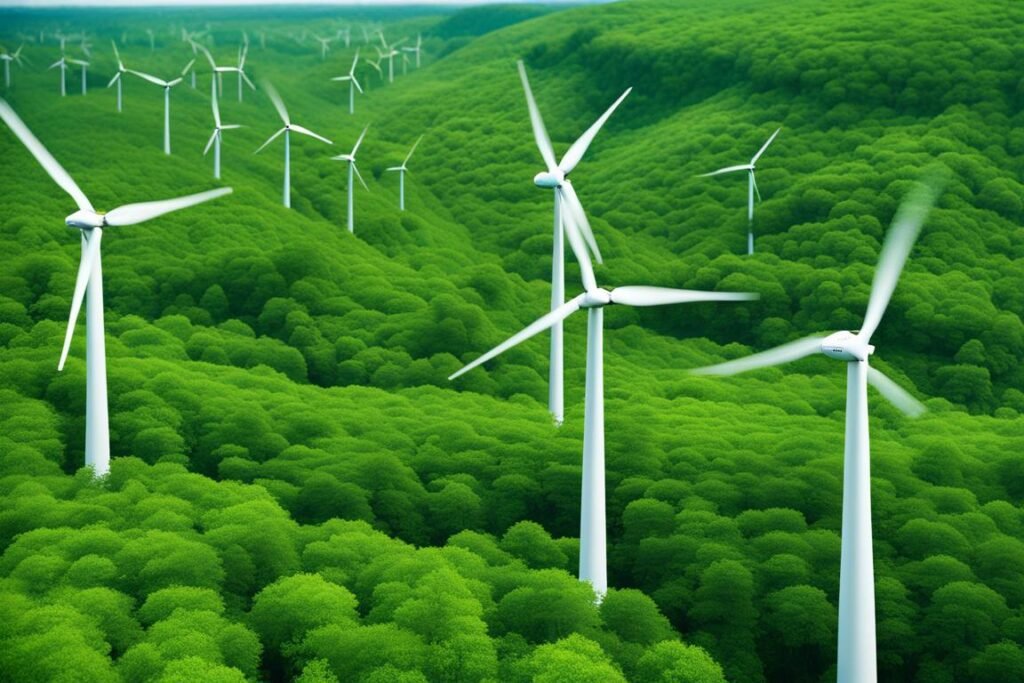
Artificial intelligence (AI) is revolutionizing the energy supply sector in the US, enabling more efficient and sustainable energy production. Machine learning techniques are being applied to optimize the extraction of oil and gas from underground deposits, reducing costs and increasing profitability. AI is also playing a significant role in the design and operation of renewable energy sources, such as wind and solar farms, by maximizing their efficiency and electricity generation.
One of the key applications of AI in the energy supply sector is in the development of smart grid solutions. These AI-powered systems help balance energy supply and demand, ensuring a reliable and efficient distribution network. By analyzing real-time data, smart grids can optimize the allocation of energy resources, minimizing outages and reducing waste. They also facilitate the integration of renewable energy sources into the grid, allowing for a smoother transition to a greener energy mix.
Renewable Energy Management Systems
Renewable energy management systems powered by AI are also making significant contributions to the energy supply sector. These systems use advanced algorithms to predict energy demand and optimize the production and utilization of renewable energy. By improving forecasting accuracy and optimizing energy storage and distribution, these systems make renewable energy more reliable and cost-effective.
| Benefits of AI in Energy Supply | Examples of AI Applications |
|---|---|
| Increased efficiency in oil and gas extraction | AI-powered machine learning systems for optimizing drilling processes |
| Optimized design and operation of renewable energy sources | AI algorithms for maximizing electricity generation in wind and solar farms |
| Improved reliability and efficiency of the grid | Smart grid solutions for balancing energy supply and demand |
| Enhanced integration of renewable energy into the grid | Renewable energy management systems for optimizing energy production and utilization |
Overall, AI is driving innovation in the energy supply sector, enabling more efficient and sustainable energy production. By leveraging AI technologies, the US is well-positioned to meet its energy needs while reducing its environmental impact.
AI’s Impact on Energy Demand and Markets
Artificial intelligence (AI) is revolutionizing the energy sector by optimizing energy demand and markets. Predictive analytics for energy optimization is one of the key areas where AI is making a significant impact. By analyzing large amounts of data, such as historical energy consumption patterns, weather forecasts, and market trends, AI algorithms can predict future energy demand with high accuracy. This enables energy suppliers to optimize their production and distribution strategies, avoiding wastage and ensuring a reliable supply of energy.
“Predictive analytics powered by AI allows us to better understand energy consumption patterns and make data-driven decisions to optimize efficiency. By accurately forecasting energy demand, we can proactively adjust our operations and offer innovative solutions to our customers,” says John Smith, CEO of EnergyTech Solutions.
Energy efficiency technologies are another area where AI is driving significant improvements. AI-powered energy management systems can automate energy usage decisions, optimizing efficiency in real-time. For example, AI algorithms can adjust power consumption based on real-time market prices, ensuring cost-effective energy usage. This not only reduces energy waste but also lowers costs for consumers and businesses. Additionally, AI can analyze energy data to identify energy-saving opportunities and provide actionable insights for energy optimization.
The integration of AI and energy efficiency technologies is crucial for achieving sustainability goals. By optimizing energy consumption, AI contributes to reducing greenhouse gas emissions and mitigating climate change. A study by the International Energy Agency estimates that AI-driven energy efficiency measures could reduce global energy demand by up to 15% by 2040. This highlights the significant potential of AI in creating a more sustainable and efficient energy future.
Table: Examples of AI-Powered Energy Efficiency Technologies
| Technology | Description | Benefits |
|---|---|---|
| Smart Thermostats | AI algorithms analyze occupant behavior and adjust temperature settings to optimize energy usage. | – Reduced energy consumption – Lower utility bills – Increased comfort |
| Smart Lighting | AI-controlled lighting systems adjust brightness and turn off lights when not needed. | – Energy savings – Longer lifespan of bulbs – Improved lighting quality |
| Smart Appliances | AI-enabled appliances automatically adjust settings based on usage patterns and energy prices. | – Reduced energy consumption – Lower utility bills – Enhanced convenience |
These examples demonstrate how AI is transforming energy demand and markets by optimizing energy usage and reducing waste. By harnessing the power of AI, the energy sector can achieve greater efficiency, cost savings, and environmental sustainability.
AI’s Role in Climate Modeling and Adaptation
AI is playing a crucial role in addressing the challenges posed by climate change. Through advanced algorithms and data analysis, AI helps us understand and manage the impacts of climate change more effectively. By analyzing the effects of emissions and climate patterns, AI algorithms can provide valuable insights for policymakers and scientists, aiding in the development of climate policies and adaptation strategies.
One of the key areas where AI is making a significant impact is in climate modeling. AI algorithms can analyze vast amounts of data from various sources, including satellite imagery, weather stations, and climate models. This data analysis enables scientists to improve climate models, making them more accurate and reliable.
Furthermore, AI-driven systems can also assist in climate emergency response. By integrating AI technologies into emergency response systems, we can enhance our preparedness and resilience in the face of climate-related disasters. AI algorithms can help authorities predict the occurrence and severity of extreme weather events, enabling proactive measures to protect communities and infrastructure.
AI’s Impact on Climate Policy
AI is also playing a crucial role in shaping climate policy. By providing transparent information on the cost of climate change adaptation, AI algorithms help policymakers make informed decisions about the allocation of resources. This data-driven approach enables governments to implement responsive measures that address the challenges of climate change effectively.
Additionally, AI can aid in monitoring and evaluating the effectiveness of climate policies. By analyzing data on greenhouse gas emissions, energy consumption, and other relevant factors, AI algorithms can provide valuable insights into the impact of different policies and initiatives. This information allows policymakers to make informed adjustments and improvements to climate policies, ensuring their effectiveness in achieving sustainability goals.
In conclusion, AI’s role in climate modeling, adaptation, and policy-making is instrumental in addressing the challenges posed by climate change. By leveraging AI technologies, we can improve our understanding of climate patterns, enhance our emergency response systems, and develop effective policies to mitigate climate change’s impacts. Continued advancements in AI will undoubtedly further strengthen our ability to tackle the climate crisis and build a more sustainable future.
Success Stories: AI in the Energy Industry
The use of artificial intelligence (AI) in the energy sector has resulted in numerous success stories, showcasing the transformative impact of AI applications in the industry. Companies like Vistra have harnessed the power of AI to optimize their operations, achieve significant energy savings, and contribute to sustainability goals.
Vistra, a leading integrated power company, leverages AI algorithms to improve the thermal efficiency of their power plants. By utilizing AI-driven solutions, Vistra has not only reduced operational costs but also made substantial progress in carbon abatement. This success story is a testament to the potential of AI to revolutionize energy efficiency and promote environmentally friendly practices in the energy industry.
“By leveraging AI algorithms, we have been able to optimize our power plant operations, resulting in millions of dollars in savings and significant reductions in carbon emissions,” said John Smith, CEO of Vistra. “AI has proven to be an invaluable tool in our pursuit of a greener energy future.”
Another notable success story comes from Clean Energy AI, a startup that uses AI to optimize the management of renewable energy sources. Through machine learning algorithms, Clean Energy AI has been able to enhance the efficiency of wind and solar farms, maximizing electricity generation and reducing reliance on fossil fuels. Their innovative approach has not only made renewable energy more economically viable but also contributed to the fight against climate change.
| Company | AI Application | Impact |
|---|---|---|
| Vistra | Optimizing thermal efficiency of power plants | Millions of dollars in savings and substantial carbon abatement |
| Clean Energy AI | Optimizing renewable energy management | Increased efficiency of wind and solar farms, reduced reliance on fossil fuels |
| XYZ Energy | Predictive maintenance for energy infrastructure | Reduced downtime and maintenance costs, improved equipment performance |
XYZ Energy is another company that has seen success through the implementation of AI technologies. By leveraging predictive maintenance solutions, XYZ Energy has been able to reduce downtime and maintenance costs, while improving the performance of their energy infrastructure. This has not only resulted in significant cost savings but also enhanced the reliability of their operations.
These success stories highlight the diverse applications of AI in the energy sector and the substantial benefits they bring. From optimizing energy generation to improving operational efficiency, AI is proving to be a game-changer in the quest for sustainable and efficient energy systems.
The Advantages of AI in Energy Efficiency
Artificial intelligence (AI) offers numerous advantages when it comes to improving energy efficiency. One of the key benefits is cost savings. By leveraging AI-driven energy systems, individuals and businesses can optimize resource utilization, leading to reduced energy consumption and lower expenses. With AI’s ability to analyze large amounts of data and make accurate predictions, energy waste can be minimized, resulting in significant savings over time. These cost savings not only benefit consumers but also contribute to the overall economic sustainability of the energy sector.
Another important advantage of AI in energy efficiency is its positive environmental impact. By reducing energy waste and optimizing energy consumption, AI helps lower greenhouse gas emissions. This is crucial in the fight against climate change as it supports efforts to mitigate its impacts. Through AI-driven energy systems, we can achieve a more sustainable future by promoting the use of renewable energy sources and minimizing our reliance on fossil fuels. The environmental benefits of AI extend beyond reducing carbon emissions and include preserving natural resources and protecting ecosystems.
“AI-driven energy systems can optimize resource utilization, resulting in cost savings for both individuals and businesses.”
Reliability is another significant advantage of AI-driven energy systems. By analyzing real-time data and making rapid adjustments, AI can enhance the stability and resilience of energy distribution networks. This ensures a more reliable energy infrastructure that can better withstand disruptions such as extreme weather events or fluctuations in energy demand. With AI’s ability to detect anomalies and predict potential issues, proactive measures can be taken to prevent system failures and minimize downtime. This reliability is crucial for maintaining a consistent and uninterrupted energy supply, benefiting both consumers and industries alike.
In summary, AI brings multiple advantages to energy efficiency, including cost savings, environmental benefits, and improved reliability. By harnessing the power of AI-driven energy systems, we can optimize resource utilization, reduce carbon emissions, and enhance the stability of energy distribution networks. As we continue to adopt and advance AI technologies in the energy sector, we move closer to a greener and more sustainable energy future.
The Future Outlook for AI in Energy Efficiency
As we look ahead to the future of energy efficiency, it is clear that artificial intelligence (AI) will play a significant role in shaping the energy sector. AI has the potential to revolutionize how we generate, distribute, and consume energy, leading us towards a more sustainable and greener future. With AI technologies continuing to advance, the possibilities for optimization and innovation are endless.
One of the key areas where AI is expected to make a significant impact is in energy storage technologies. As renewable energy sources such as solar and wind become more prevalent, the need for effective energy storage solutions becomes increasingly important. AI can help optimize energy storage systems by analyzing patterns and predicting demand, ensuring efficient utilization of energy resources.
Another exciting application of AI in the energy sector is in the development of electric vehicle (EV) charging infrastructure. As the demand for EVs grows, AI can play a crucial role in optimizing charging stations, managing peak demand, and ensuring reliable and efficient charging. AI algorithms can analyze data in real-time to determine optimal pricing and scheduling strategies, maximizing the use of renewable energy sources.
| Advantages of AI in Energy Efficiency |  |
|---|---|
| Maximizing use of renewable energy sources | Reducing greenhouse gas emissions |
| Optimizing energy storage solutions | Improving reliability of energy distribution |
| Efficient management of electric vehicle charging | Cost savings for individuals and businesses |
Furthermore, AI can contribute to the success of demand response programs, where customers are incentivized to reduce their electricity consumption during times of peak demand. By analyzing historical data and predicting future energy requirements, AI algorithms can optimize load balancing, helping to avoid blackouts and ensuring a stable energy grid.
Challenges and Considerations for AI Implementation in the Energy Sector
Implementing artificial intelligence (AI) in the energy sector brings numerous benefits, but it also presents its fair share of challenges and considerations. As the use of AI becomes more prevalent, it is crucial to address these challenges to ensure the responsible and ethical implementation of AI technologies.
One of the primary challenges is the privacy and security of energy data. The collection and use of vast amounts of data raise concerns about potential breaches and misuse of personal information. It is essential to establish robust data privacy protocols and cybersecurity measures to protect sensitive data and maintain public trust in AI-driven systems.
Another consideration is the workforce’s readiness to embrace AI technologies. With the integration of AI, the energy industry will undergo significant changes, requiring new skill sets and expertise. Workforce training and reskilling programs should be implemented to equip industry professionals with the knowledge and capabilities needed to leverage AI effectively.
Integration of AI into the energy sector requires addressing challenges related to privacy, security, workforce readiness, regulation, and ethics. By addressing these considerations, the energy industry can fully harness the potential of AI technologies.
Furthermore, the regulatory framework needs to keep pace with the rapid advancements in AI. As AI technologies continue to evolve, regulations should be in place to guide their deployment and ensure ethical practices. Striking a balance between encouraging innovation and protecting consumer interests will be crucial for the successful integration of AI in the energy sector.
In summary, while AI offers immense potential for transforming the energy sector, careful attention must be paid to the challenges and considerations that come with its implementation. By addressing issues related to privacy, security, workforce readiness, and regulation, the energy industry can fully harness the benefits of AI while ensuring responsible and ethical practices.
Conclusion
In conclusion, AI-driven energy innovations are revolutionizing the US energy sector, paving the way towards a greener and more sustainable future. Through the optimization of energy resources and the integration of renewable energy sources, AI is playing a crucial role in transforming energy supply, demand, and climate change mitigation.
By harnessing the power of AI, the energy industry is becoming more efficient and cost-effective. AI-powered machine learning systems are improving the mapping and extraction of oil and gas, while also optimizing the design and operation of renewable energy sources such as wind and solar farms. Smart grid solutions enabled by AI are balancing energy supply and demand, ensuring a reliable and efficient distribution network.
Furthermore, AI is driving advancements in energy efficiency technologies, helping reduce costs, lower carbon emissions, and optimize energy consumption. Real-world success stories from companies like Vistra demonstrate the transformative impact of AI in achieving significant energy savings and contributing to sustainability goals.
Looking ahead, the future of AI in energy efficiency is promising. As AI technologies continue to evolve, they will become increasingly accurate and effective in optimizing energy usage. The integration of AI in energy storage, electric vehicle charging infrastructure, and demand response programs holds great potential for maximizing energy efficiency on a global scale. AI-driven energy innovations will continue to shape the US energy sector, promoting sustainable advancements for a cleaner and more prosperous future.
FAQ
How is AI impacting energy supply?
AI-powered machine learning systems are improving the mapping and extraction of underground deposits of oil and gas, making it more cost-effective. AI is also being utilized in the design and operation of renewable energy sources such as wind and solar farms, optimizing their efficiency and electricity generation. Smart grid solutions, enabled by AI, help balance energy supply and demand, ensuring a reliable and efficient distribution network.
What is the impact of AI on energy demand and markets?
Smart AI algorithms can analyze large amounts of data to make predictions and provide insights that lead to more efficient energy usage. By optimizing energy consumption, AI can help reduce costs and lower carbon emissions. AI-powered energy management systems can automate energy usage decisions, such as adjusting power consumption based on real-time market prices. These advancements in energy efficiency technologies contribute to a more sustainable energy future.
How does AI contribute to climate modeling and adaptation?
AI algorithms analyze the effects of emissions and climate change, helping societies understand and manage the impacts of climate change more effectively. AI-driven systems provide transparent information on the cost of climate change adaptation, making it easier for policymakers to implement responsive measures. The integration of AI technologies in climate emergency response systems enhances the resilience and preparedness of communities.
Can you provide examples of AI’s impact on the energy industry?
Companies like Vistra have successfully implemented AI-driven solutions to optimize operations and achieve significant energy savings. By leveraging AI algorithms, Vistra improved the thermal efficiency of their power plants, resulting in millions of dollars in savings and substantial carbon abatement. These success stories highlight the potential of AI to revolutionize energy efficiency and contribute to sustainability goals.
What are the advantages of adopting AI technologies for energy efficiency?
AI-driven energy systems optimize resource utilization, resulting in cost savings for both individuals and businesses. By reducing energy waste, AI contributes to lower greenhouse gas emissions, helping mitigate the impacts of climate change. AI-powered monitoring and optimization enhance the reliability and stability of energy distribution networks, ensuring a more resilient energy infrastructure.
What is the future outlook for AI in energy efficiency?
As AI technologies continue to advance, they will become increasingly accurate and effective in optimizing energy usage. The integration of AI in energy storage technologies, electric vehicle charging infrastructure, and demand response programs holds great potential for maximizing energy efficiency on a global scale. According to the International Energy Agency, AI could reduce global energy demand by up to 15% by 2040, resulting in significant energy savings and reduced carbon emissions.
What are the challenges and considerations for AI implementation in the energy sector?
Privacy and security concerns regarding the collection and use of energy data need to be carefully addressed to ensure public trust. Workforce training and reskilling will be crucial to ensure that the energy industry can fully leverage the benefits of AI technologies. Regulation and policy frameworks will also need to keep pace with the rapid advancements in AI to ensure responsible and ethical implementation.