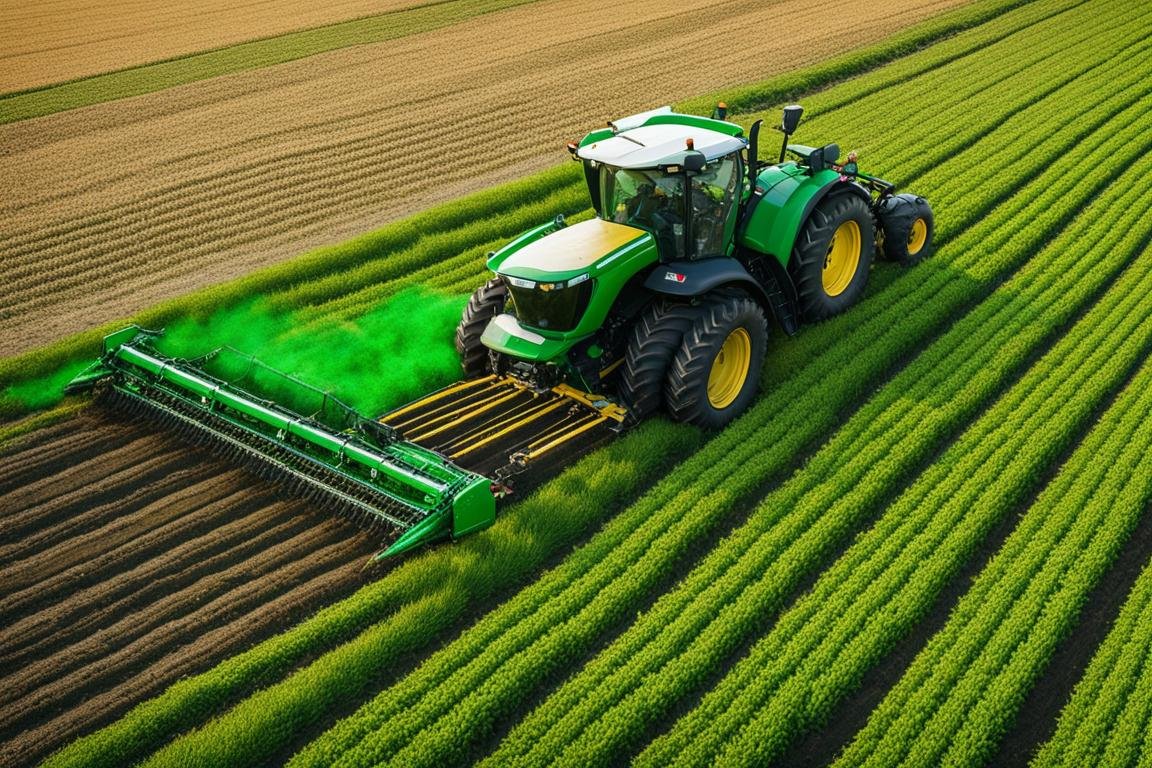
The integration of Artificial Intelligence (AI) in agriculture has emerged as a transformative approach to revolutionize traditional farming practices and address complex challenges in the industry. By harnessing AI algorithms and data-driven models, farmers can optimize resource allocation, enhance productivity, and promote sustainable practices. Precision farming, crop monitoring, yield prediction, pest and disease management, and AI-based irrigation systems are among the key applications of AI in agriculture.
Key Takeaways:
- Agricultural AI utilizes AI algorithms and data-driven models to optimize resource allocation, enhance productivity, and promote sustainable practices in farming.
- Precision farming, crop monitoring, yield prediction, pest and disease management, and AI-based irrigation systems are key applications of AI in agriculture.
- AI-based systems enable precision agriculture, allowing farmers to monitor crop health, soil conditions, and resource requirements.
- By leveraging AI technologies, farmers can make data-driven decisions, optimize resource allocation, minimize environmental impact, and enhance productivity and profitability.
- Data privacy concerns, cost of implementation, data availability and quality, interpretability and trust in AI algorithms, lack of technical expertise, and ethical considerations are challenges that need to be addressed for successful AI integration in agriculture.
The Benefits of Agricultural AI
Agricultural AI offers numerous benefits to farmers, revolutionizing farming practices and improving efficiency in various aspects of agriculture. By harnessing the power of AI, farmers can make data-driven decisions and optimize resource allocation, leading to enhanced productivity and profitability.
AI technologies enable precision agriculture, allowing farmers to monitor crop health, soil conditions, and resource requirements with exceptional accuracy. By integrating real-time data from multiple sources, such as satellite imagery, drones, and IoT sensors, AI algorithms provide valuable insights for optimized resource utilization and improved crop yields.
Furthermore, AI plays a crucial role in pest and disease management. With its ability to identify and classify pests, diseases, and weeds based on visual cues, AI helps farmers detect potential threats early on. This enables targeted interventions, reducing the need for broad-scale pesticide applications and minimizing environmental impact.
| Benefits of Agricultural AI | Description |
|---|---|
| Precision Agriculture | AI enables accurate monitoring of crop health, soil conditions, and resource requirements, leading to optimized resource utilization and improved crop yields. |
| Pest and Disease Management | AI algorithms can identify and classify pests, diseases, and weeds, facilitating targeted interventions and reducing the use of broad-scale pesticide applications. |
| Data-driven Decisions | By leveraging AI technologies, farmers can make informed decisions based on real-time data, optimizing resource allocation and enhancing overall efficiency. |
| Resource Optimization | AI-driven farming technologies help optimize resource utilization, minimizing waste and promoting sustainable practices. |
AI-based irrigation systems are another key application in agriculture. By utilizing data from sensors, weather forecasts, and soil moisture measurements, AI algorithms determine optimal irrigation schedules, promoting water conservation and enhancing water use efficiency.
The benefits offered by agricultural AI extend beyond individual farms. The collective implementation of AI technologies in farming has the potential to transform the entire agriculture industry, ensuring food security and sustainability for future generations.
The Challenges of Implementing Agricultural AI
Implementing Agricultural AI in the farming industry is not without its challenges. From data privacy concerns to technical expertise, several factors need to be addressed to ensure successful integration.
Data Privacy Concerns
One of the key challenges in implementing Agricultural AI is data privacy. Farming involves collecting large amounts of data, including sensitive information related to crop yields, soil conditions, and weather patterns. Farmers need to ensure that this data is securely stored and only accessible to authorized individuals or organizations. Strict data protection measures, including encryption and secure storage systems, are vital to maintain data privacy and prevent unauthorized access.
The Cost of Implementation
Integrating AI technologies into farming practices can be costly. AI systems often require specialized hardware, software, and infrastructure, which may require significant upfront investments. The initial cost of implementing AI solutions, including the purchase of AI-enabled equipment and software licenses, can be a barrier for many farmers, particularly smaller operations with limited financial resources. Finding cost-effective solutions and exploring potential government subsidies or support programs can help address this challenge.
Data Availability and Quality
For AI algorithms to provide accurate insights and recommendations, high-quality and reliable data is essential. However, accessing comprehensive and clean data can be a challenge in the agricultural domain. Inconsistent data collection practices, varying data formats, and limited historical data can affect the performance and accuracy of AI models. Collaboration between farmers, researchers, and technology providers is crucial to ensure data availability and improve data quality in agriculture.
Interpretability and Trust in AI Algorithms
While AI can provide valuable insights and recommendations, the interpretability of AI algorithms remains a challenge. Farmers need to understand how AI models arrive at their conclusions and be able to trust the recommendations provided. Enhancing the interpretability of AI algorithms and building trust in their outputs is essential for farmers to confidently adopt and rely on AI technologies in their decision-making processes.
Lack of Technical Expertise
Agricultural AI integration requires technical expertise and knowledge to implement and maintain AI systems effectively. However, many farmers may lack the necessary skills or resources to handle complex AI technologies. Access to training programs, workshops, and resources that provide guidance on AI implementation can help bridge this gap and empower farmers to leverage AI effectively.
Ethical Considerations
As AI technologies become more prevalent in agriculture, ethical considerations must be taken into account. This includes ensuring fair and equitable access to AI technologies, avoiding biases in data collection and algorithmic decision-making, and considering the social and environmental impact of AI integration. Identifying and addressing these ethical considerations is crucial to ensure the responsible and sustainable use of AI in agriculture.
| Challenges | Summary |
|---|---|
| Data Privacy Concerns | Farmers must ensure the secure storage and authorized access to sensitive farming data. |
| The Cost of Implementation | Initial investments in AI technologies and infrastructure can be a financial burden for farmers. |
| Data Availability and Quality | Access to comprehensive and reliable data is crucial for accurate AI insights. |
| Interpretability and Trust in AI Algorithms | Farmers need a clear understanding of how AI algorithms arrive at recommendations and trust in their outputs. |
| Lack of Technical Expertise | Farmers may lack the necessary skills and knowledge to effectively implement and maintain AI systems. |
| Ethical Considerations | The responsible and sustainable use of AI in agriculture requires addressing ethical considerations. |
The Future of Agricultural AI
As we look ahead, the future of agricultural AI holds tremendous opportunities for sustainable farming practices and the advancement of the agriculture industry. By harnessing the power of AI alongside human expertise and collaboration, we can shape a future where agriculture thrives, ensuring food security and sustainability for generations to come.
Agricultural AI presents exciting prospects for climate resilience in farming. With AI-driven technologies, farmers can better understand and adapt to changing weather patterns, enabling them to make informed decisions about crop selection and resource allocation. By optimizing farming practices based on AI-informed climate data, farmers can mitigate the impact of climate change while maximizing crop productivity.
Collaborative research and policy formulation are also key areas where agricultural AI can contribute significantly. AI technologies can facilitate data sharing and collaborative efforts among researchers, enabling the development of innovative solutions to address complex agricultural challenges. Additionally, AI can assist policymakers in formulating evidence-based policies that support sustainable farming practices, resource conservation, and environmental protection.
The Role of AI in Promoting Sustainable Farming Practices
One of the most significant benefits of agricultural AI is its potential to promote sustainable farming practices. AI technologies empower farmers to optimize resource allocation, minimize waste, and reduce the environmental impact of agriculture. By analyzing real-time data on soil conditions, weather patterns, and crop health, AI algorithms can provide valuable insights that enable farmers to make informed decisions regarding irrigation, fertilization, and pest management. This data-driven approach not only improves crop yields and quality but also minimizes the use of water, fertilizers, and pesticides, thereby reducing environmental pollution and preserving natural resources.
The Future Opportunities of AI in Agriculture
The future opportunities for AI in agriculture are vast and exciting. Continued research and development in AI technologies will lead to further advancements in crop monitoring, pest management, precision farming, and farm automation. AI-powered systems will become even more sophisticated, enabling farmers to gather and analyze data more efficiently, make more accurate predictions, and implement targeted interventions. This will result in improved productivity, reduced costs, and enhanced sustainability throughout the agricultural sector.
In conclusion, the future of agricultural AI holds immense promise. By leveraging AI alongside human expertise and collaboration, we can revolutionize the way we farm, ensuring a more sustainable and prosperous future for the agriculture industry. With advancements in AI technologies, we have the potential to address complex agricultural challenges, promote sustainable farming practices, and secure food security for future generations.
Precision Farming with AI
Precision farming, also known as site-specific crop management, is revolutionizing the agricultural industry by leveraging the power of Artificial Intelligence (AI). By integrating real-time data from multiple sources such as satellite imagery, drones, and IoT sensors, AI algorithms analyze and interpret this data to provide valuable insights on crop health, soil conditions, and resource requirements. This enables farmers to make precise decisions regarding irrigation, fertilization, and pesticide application, resulting in optimized resource utilization and improved crop yields.
AI-based crop management systems play a crucial role in precision farming. These systems enable farmers to monitor and manage their crops more efficiently by harnessing the power of AI. By utilizing machine learning algorithms, these systems provide actionable insights, allowing farmers to address issues such as nutrient deficiencies, weed infestations, and disease outbreaks in a timely manner. This proactive approach helps minimize crop losses and reduce the reliance on broad-scale chemical interventions, leading to more sustainable and environmentally-friendly farming practices.
Furthermore, precision farming with AI not only optimizes resource allocation and improves crop yields, but it also promotes water conservation. AI-based irrigation systems utilize data from sensors, weather forecasts, and soil moisture measurements to determine optimal irrigation schedules. By providing crops with the right amount of water at the right time, these systems promote water use efficiency, minimize water stress on plants, and contribute to sustainable water management in agriculture.
The Benefits of Precision Farming with AI
- Optimized resource utilization
- Improved crop yields
- Minimized environmental impact
- Precise nutrient management
- Reduced reliance on broad-scale chemical interventions
- Water use efficiency and conservation
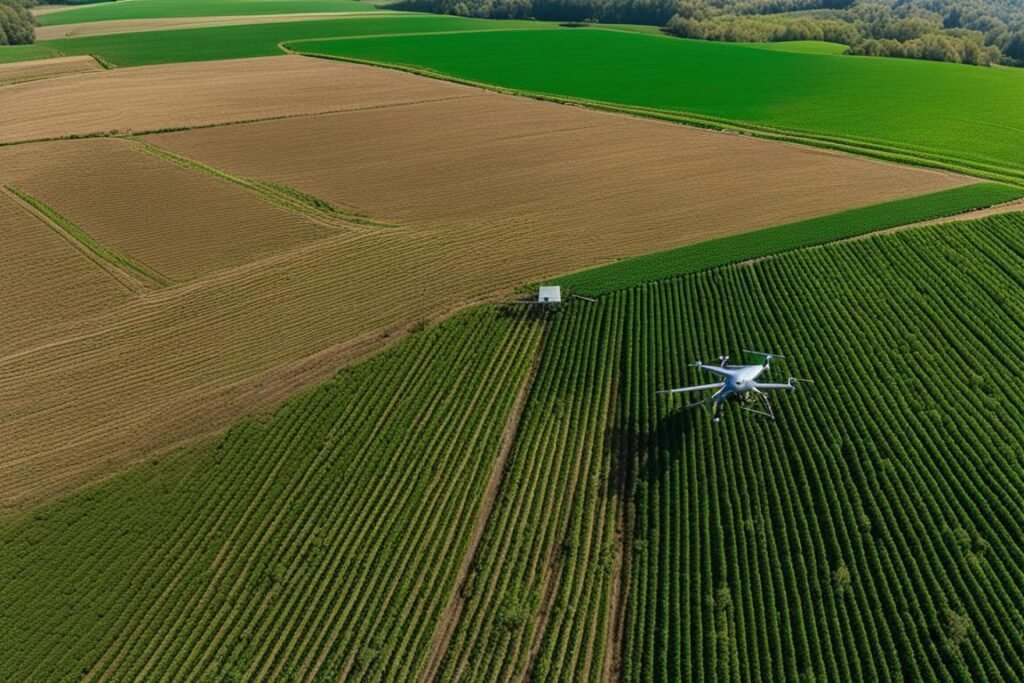
Table: Comparison of Traditional Farming Practices and Precision Farming with AI
| Traditional Farming Practices | Precision Farming with AI | |
|---|---|---|
| Resource Allocation | Uniform application of resources | Optimized allocation based on crop needs |
| Crop Monitoring | Visual inspection | Real-time data analysis for early detection of issues |
| Resource Utilization | Inefficient use of water, fertilizer, and pesticides | Precise application based on crop requirements |
| Yield Prediction | Reliance on historical data and analog forecasting | Accurate prediction based on real-time data and AI models |
| Pest and Disease Management | Broad-scale chemical interventions | Targeted interventions for specific pests and diseases |
Crop Monitoring and Management with AI
Agricultural AI, particularly in the field of crop monitoring and management, has revolutionized the way farmers detect and address crop diseases, nutrient deficiencies, and weed infestations. With the help of AI-powered computer vision techniques, automated crop monitoring allows for early detection of potential threats, ensuring timely action and minimizing crop losses.
AI algorithms analyze images captured by drones or cameras installed in the field, scanning for visual cues and symptoms of diseases, nutrient deficiencies, and weeds. This real-time monitoring enables farmers to take proactive measures, such as precision spraying or localized interventions, which greatly reduces the need for broad-scale pesticide applications. By leveraging AI for crop monitoring, farmers can minimize the use of chemicals while maintaining healthy and thriving crops.
In addition to disease detection, AI-based crop monitoring can also assess soil conditions and optimize resource allocation. Through image recognition algorithms, AI systems can provide valuable insights on soil health, moisture levels, and nutrient availability. This allows farmers to tailor their farming practices and resource usage, leading to improved crop yields and more sustainable agricultural practices.
Benefits of Crop Monitoring with AI
- Early detection of diseases, nutrient deficiencies, and weeds
- Reduced reliance on broad-scale chemical applications
- Optimized resource allocation based on soil conditions and moisture levels
- Improved crop yields and overall farm productivity
- Sustainable farming practices through targeted interventions
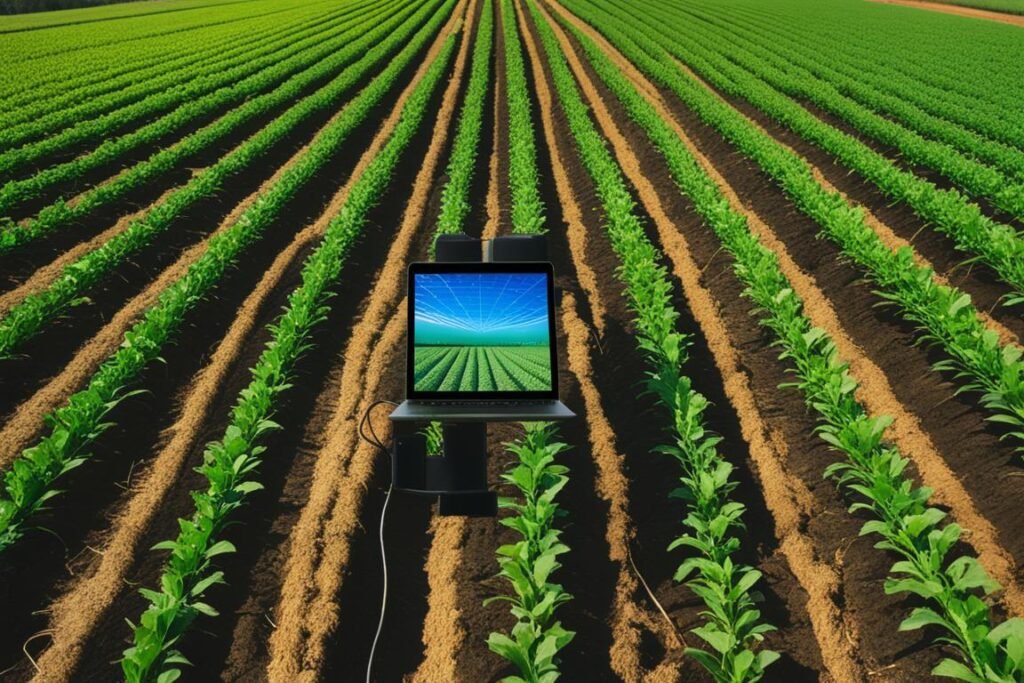
By harnessing the power of AI for crop monitoring and management, farmers can effectively identify and combat potential threats, optimize resource usage, and achieve higher yields while minimizing the environmental impact. This technology plays a crucial role in enabling sustainable and efficient farming practices, ensuring the future viability of agriculture.
| Benefits of Crop Monitoring with AI | Applications of AI in Crop Monitoring | Impact on Farming Practices |
|---|---|---|
| Early detection of diseases, nutrient deficiencies, and weeds | Automated crop monitoring using AI algorithms | Reduced reliance on broad-scale chemical applications |
| Optimized resource allocation based on soil conditions and moisture levels | Image recognition for assessing soil health and moisture levels | Improved crop yields and overall farm productivity |
| Real-time monitoring of crop health using drones and cameras | Sustainable farming practices through targeted interventions |
Yield Prediction with AI
AI is revolutionizing the agricultural industry, not only in precision farming and crop monitoring but also in yield prediction. By utilizing AI algorithms and combining historical data with real-time environmental and crop data, farmers can accurately predict future crop yields. This valuable insight helps farmers optimize their marketing strategies, plan storage and transportation logistics, and manage supply chain operations effectively.
Predicting crop yields is crucial for farmers to make informed decisions about their harvest. By considering various factors such as weather conditions, soil health, and agronomic practices, AI algorithms can provide reliable estimates of expected harvest volumes. Armed with this information, farmers can plan ahead, aligning their marketing strategies to maximize profitability. They can identify potential market demands and adjust their production accordingly, ensuring they meet the needs of their customers.
“AI-driven yield prediction enables farmers to make informed decisions about their harvest, optimize marketing strategies, and maximize profitability.”
Furthermore, yield prediction with AI enhances supply chain management. Farmers can anticipate the quantity of crops they will produce, allowing them to optimize storage facilities and transportation logistics. They can plan the most efficient routes and identify the best timing for shipping to minimize costs and maximize freshness. This level of predictive analytics helps streamline operations, improving the overall efficiency of the agricultural supply chain.
By harnessing the power of AI for yield prediction, farmers can make data-driven decisions to maximize their productivity and profitability. With accurate predictions at their fingertips, they can optimize their marketing strategies, plan for efficient supply chain management, and ensure they meet the demands of the market. AI is undoubtedly transforming the way farmers operate, ensuring a more sustainable and prosperous future for the agricultural industry.
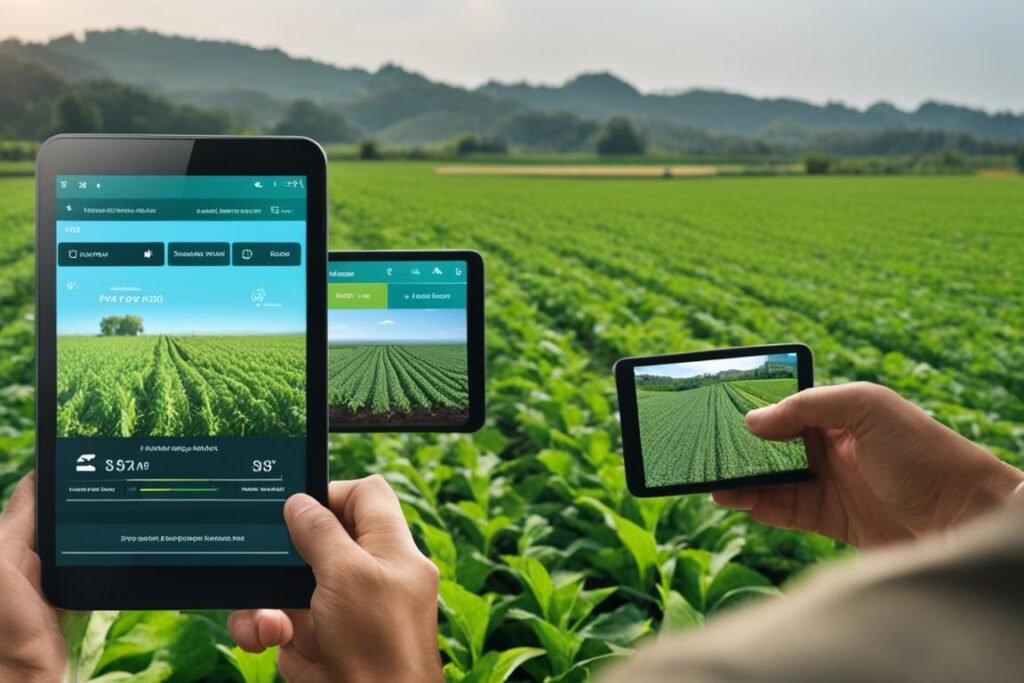
“AI-driven pest and disease management systems enable farmers to detect and address potential threats to their crops with precision and efficiency. By leveraging computer vision and deep learning algorithms, AI can identify pests, diseases, and weeds, allowing farmers to take timely and targeted interventions. This helps minimize crop losses and reduce the need for broad-scale pesticide applications, promoting more sustainable farming practices.”
AI-based Irrigation Systems
AI-based irrigation systems have revolutionized water management in agriculture, allowing farmers to optimize water usage and improve overall water efficiency. By leveraging data from sensors, weather forecasts, and soil moisture measurements, AI algorithms analyze this information to determine the optimal irrigation schedules for crops. This ensures that crops receive the right amount of water at the right time, promoting water conservation and minimizing water stress on plants.
These AI-driven irrigation systems offer significant benefits to farmers. They enable precise water allocation, preventing both over-irrigation and under-irrigation, which can negatively impact crop health and productivity. With accurate water management, farmers can reduce water waste and associated costs, while also minimizing the negative environmental impact of excessive water usage. AI-based irrigation systems contribute to sustainable farming practices by maximizing water efficiency and reducing the overall carbon footprint of agriculture.
Additionally, AI-based irrigation systems provide real-time monitoring and feedback on soil moisture levels, allowing farmers to make data-driven decisions about irrigation practices. By implementing AI-driven technologies, farmers can improve their crop yields and optimize resource allocation, leading to increased productivity and profitability. These systems also provide farmers with valuable insights into the water needs of their crops, empowering them to make informed decisions and adapt their irrigation strategies accordingly.
Overall, AI-based irrigation systems have proven to be a game-changer in agriculture, offering farmers a powerful tool to enhance water management, conserve resources, and promote sustainable farming practices. Continued research and development in this field will further advance the capabilities of these systems, ensuring a brighter and more sustainable future for the agricultural industry.
Benefits of AI-based Irrigation Systems
| Benefits | Explanation |
|---|---|
| Optimized Water Usage | AI algorithms analyze data to determine optimal irrigation schedules, reducing water waste and promoting water conservation. |
| Improved Crop Yields | Precise water allocation based on real-time monitoring leads to healthier crops and higher productivity. |
| Resource Efficiency | By optimizing water usage, farmers can minimize associated costs and reduce the overall carbon footprint of agriculture. |
| Data-Driven Decision Making | Real-time monitoring and feedback on soil moisture levels empower farmers to make informed decisions about irrigation practices. |
| Promotes Sustainable Farming | AI-based systems contribute to sustainable farming practices by maximizing water efficiency and minimizing environmental impact. |
Farm Automation with AI
AI technologies have revolutionized the agricultural sector by introducing automation and autonomous operations. With the help of AI algorithms, robotic systems are now capable of performing tasks such as planting, harvesting, and crop monitoring with precision and efficiency. The integration of AI in farm automation has resulted in reduced labor requirements, increased operational efficiency, and improved overall productivity.
Robotic systems equipped with AI algorithms can accurately assess crop health, analyze soil conditions, and monitor resource requirements. This real-time data enables the robots to make informed decisions and carry out tasks with minimal human intervention. By automating repetitive and labor-intensive processes, farmers can focus on more strategic activities, such as crop planning and yield optimization.
One of the key benefits of farm automation with AI is labor reduction. As the agricultural workforce continues to shrink, farmers are turning to automation to bridge the gap. AI-powered robots are capable of performing tasks 24/7, ensuring that no time is wasted in the field. This leads to increased productivity and cost savings for farmers.
In addition to labor reduction, AI-powered farm automation also improves accuracy and precision. Robots equipped with AI algorithms can precisely plant seeds at optimal depths, ensuring uniformity and minimizing wastage. AI-based crop monitoring systems can detect early signs of diseases and nutrient deficiencies, allowing farmers to take timely action and prevent crop losses.
Overall, farm automation with AI holds great potential for the agriculture industry. It not only reduces labor requirements but also improves operational efficiency and productivity. As the technology continues to advance, we can expect to see further advancements in the field of agricultural automation, leading to a more sustainable and thriving agricultural sector.
Table: Benefits of Farm Automation with AI
| Benefits | Description |
|---|---|
| Labor reduction | AI-powered robots can perform tasks 24/7, reducing the need for human labor and increasing productivity. |
| Improved accuracy and precision | Robots equipped with AI algorithms can carry out tasks with precision, minimizing wastage and ensuring uniformity. |
| Timely detection of diseases and nutrient deficiencies | AI-based crop monitoring systems can detect early signs of diseases and nutrient deficiencies, allowing farmers to take prompt action and prevent crop losses. |
Conclusion
In conclusion, Agricultural AI holds great promise for transforming the agriculture industry. By leveraging AI algorithms and data-driven models, farmers can optimize resource allocation, enhance productivity, and promote sustainable practices. The integration of AI in precision farming, crop monitoring, yield prediction, pest and disease management, and AI-based irrigation systems has already shown significant improvements in agricultural practices.
However, there are challenges that need to be addressed for successful implementation. Data privacy concerns, the cost of implementation, data availability and quality, interpretability and trust in AI algorithms, lack of technical expertise, and ethical considerations are some of the key challenges that farmers and researchers need to collaborate on.
Looking towards the future, AI in agriculture offers exciting opportunities for sustainable farming practices, climate resilience, collaborative research, and policy formulation. By embracing AI alongside human expertise and collaboration, we can shape a future where agriculture thrives, ensuring food security and sustainability for generations to come.
FAQ
What is agricultural AI?
Agricultural AI refers to the integration of Artificial Intelligence (AI) technologies in the field of agriculture. It involves using AI algorithms and data-driven models to optimize farm practices, improve productivity, and promote sustainable farming.
How does agricultural AI benefit farmers?
Agricultural AI offers numerous benefits to farmers. By utilizing AI technologies, farmers can make data-driven decisions, optimize resource allocation, minimize environmental impact, and ultimately enhance their productivity and profitability.
What are the challenges of implementing agricultural AI?
Challenges of implementing agricultural AI include data privacy concerns, the cost of implementation, data availability and quality, interpretability and trust in AI algorithms, lack of technical expertise, and ethical considerations.
What does the future of agricultural AI hold?
The future of agricultural AI holds immense promise. It offers opportunities for sustainable farming practices, climate resilience, collaborative research, and policy formulation. Continued research and development in AI technologies will lead to further advancements in the field of agricultural AI.
How does AI enable precision agriculture?
AI enables precision agriculture by integrating real-time data from multiple sources, including satellite imagery, drones, and IoT sensors. Machine learning algorithms analyze this data to provide valuable insights on crop health, soil conditions, and resource requirements, allowing farmers to make precise decisions regarding irrigation, fertilization, and pesticide application.
How does AI help with crop monitoring and management?
AI-powered computer vision techniques facilitate automated crop monitoring and management. Image recognition algorithms can analyze images captured by drones or cameras installed in the field to detect early signs of diseases, nutrient deficiencies, and weed infestations. This enables farmers to take timely action, preventing crop losses and reducing the reliance on chemical interventions.
How does AI contribute to yield prediction?
AI models trained on historical data, combined with real-time environmental and crop data, can accurately predict crop yields. By considering factors such as weather conditions, soil health, and agronomic practices, AI algorithms provide valuable insights into expected harvest volumes. This information helps farmers optimize marketing strategies, plan storage and transportation logistics, and manage supply chain operations effectively.
How does AI assist with pest and disease management?
AI algorithms can identify and classify pests, diseases, and weeds based on visual cues and symptom analysis. By leveraging computer vision techniques and deep learning algorithms, AI systems can provide early detection of potential threats to crops. This enables farmers to take targeted preventive measures, such as precision spraying or localized interventions, reducing the need for broad-scale pesticide applications.
How do AI-based irrigation systems work?
AI-based irrigation systems utilize data from sensors, weather forecasts, and soil moisture measurements to optimize water usage. Machine learning algorithms analyze this data to determine optimal irrigation schedules, ensuring that crops receive the right amount of water at the right time. This promotes water conservation, minimizes water stress on plants, and enhances overall water use efficiency.
How does AI contribute to farm automation?
AI technologies are revolutionizing farm machinery by enabling automation and autonomous operations. Robotic systems equipped with AI algorithms can perform tasks such as planting, harvesting, and crop monitoring with high precision and efficiency. This reduces labor requirements, increases operational efficiency, and improves overall productivity in the agricultural sector.
What is the role of AI in the future of agriculture?
AI has immense potential in transforming the agriculture industry. By harnessing AI algorithms and data-driven models, farmers can optimize resource allocation, enhance productivity, and promote sustainable practices. By leveraging AI alongside human expertise and collaboration, we can shape a future where agriculture thrives, ensuring food security and sustainability for generations to come.