Artificial intelligence (AI) has revolutionized inventory management, offering businesses advanced solutions to optimize stock control and streamline operations. With real-time data analytics and intelligent forecasting, AI-enhanced inventory management can boost efficiency, reduce costs, and improve sales. This article explores the seven ways AI can enhance inventory management, providing businesses with a competitive advantage.
Key Takeaways:
- AI technology has transformed inventory management, providing advanced solutions for efficiency and cost savings.
- Real-time data analytics and intelligent forecasting improve inventory tracking and control.
- AI-powered demand forecasting enhances decision-making and prevents stockouts or overstocking.
- Case studies of successful AI implementation in inventory management validate its effectiveness.
- Retail businesses benefit from AI-enhanced inventory management, enabling optimal stock control and increased sales.
The Benefits of AI in Inventory Management
AI in inventory management brings unprecedented efficiency and precision. By automating processes, providing insightful analytics, and enabling real-time decision-making, AI transforms inventory management into opportunities for growth and innovation. The benefits of AI in inventory management include:
- Improved data structuring and analysis:
- Increased accuracy in demand forecasting:
- Enhanced efficiency and cost-effectiveness:
- Improved customer satisfaction:
- Increased employee satisfaction:
AI-enhanced inventory management software can organize and analyze large volumes of data, extracting valuable insights to inform decision-making and optimize operations.
AI algorithms can analyze historical sales data, market trends, and external factors to accurately predict future product demand. This allows businesses to optimize their inventory levels, prevent stockouts or overstocking, and improve efficiency.
By automating manual inventory management tasks, AI streamlines processes and reduces human error. This leads to improved efficiency and cost savings, as businesses can allocate resources more effectively.
AI-driven inventory management enables businesses to meet customer demands more effectively by ensuring products are consistently available and reducing delivery delays.
By automating repetitive and mundane tasks, AI frees up employees’ time and allows them to focus on more strategic and value-added activities. This can lead to increased job satisfaction and productivity.
Table: Comparison of Inventory Management Methods
| Inventory Management Method | Advantages | Disadvantages |
|---|---|---|
| Traditional Manual Approach | – Familiarity and control – Low initial cost |
– Time-consuming – Prone to human error |
| AI-Enhanced Inventory Management | – Enhanced efficiency – Accurate demand forecasting – Cost savings |
– Initial implementation cost – Requires training and integration |
| Automated Inventory Management Systems | – Streamlined processes – Reduced human error |
– Limited adaptability – Lack of real-time data analysis |
Implementing AI in inventory management allows businesses to leverage technology to optimize their operations and gain a competitive edge. By harnessing the benefits of AI-enhanced inventory management, businesses can adapt to changing market demands, improve efficiency, and meet customer expectations with greater accuracy and precision.
Next, in Section 3, we will dive deeper into how AI enhances demand forecasting for inventory management.
AI and Demand Forecasting for Inventory Management
One of the key challenges in inventory management is accurately predicting customer demand. This is where the power of artificial intelligence (AI) comes into play. By leveraging AI algorithms and data analytics, businesses can enhance their demand forecasting capabilities and make more informed inventory decisions.
AI can analyze vast amounts of historical sales data, market trends, and external factors to provide accurate insights into future demand patterns. This allows businesses to optimize their inventory levels, preventing stockouts or overstocking, and improving operational efficiency.
With AI-driven demand forecasting, businesses can anticipate changes in customer preferences, respond to market trends, and make data-backed decisions. This not only improves inventory management but also boosts customer satisfaction by ensuring the availability of products when and where they are needed.
Benefits of AI-powered Demand Forecasting:
- Improved accuracy: AI algorithms can analyze complex datasets and identify patterns that human analysts may miss. This leads to more accurate demand forecasts, reducing the risk of stockouts or excess inventory.
- Increased efficiency: AI automates the demand forecasting process, saving time and effort for businesses. This allows inventory managers to focus on strategic decision-making rather than manual data analysis.
- Cost-effectiveness: By optimizing inventory levels based on accurate demand forecasts, businesses can reduce carrying costs and minimize the risk of obsolete or expired stock.
- Enhanced customer satisfaction: Timely and accurate demand forecasting ensures that businesses can meet customer demands, leading to higher customer satisfaction and loyalty.
- Improved supply chain management: AI-powered demand forecasting enables businesses to align their supply chain activities with expected demand, optimizing procurement, production, and distribution processes.
By harnessing the power of AI in demand forecasting, businesses can gain a competitive edge in the market and achieve greater efficiency and profitability in their inventory management processes.
Case Studies: AI in Action for Inventory Management
Real-world examples of AI in inventory management demonstrate the transformative power of this technology. Companies like Amazon and Walmart have successfully leveraged AI algorithms to revolutionize their inventory management processes, resulting in significant cost savings, improved sales, and enhanced customer satisfaction.
Amazon, the world’s largest online retailer, utilizes AI-driven inventory control to optimize its storage and delivery operations. By analyzing vast amounts of data, including historical sales, market trends, and customer behavior, AI algorithms accurately predict demand patterns. This enables Amazon to maintain optimal inventory levels, avoid stockouts, and minimize overstocking. As a result, the company achieves cost savings, increases operational efficiency, and delivers a seamless shopping experience for its customers.
Walmart, a multinational retail corporation, employs AI-enhanced inventory management to optimize its supply chain and streamline operations. By leveraging AI-powered demand forecasting, Walmart can accurately predict customer preferences and optimize its inventory assortment accordingly. This helps to prevent inventory imbalances, reduce wastage, and ensure that popular products are always available to meet customer demand. Walmart’s adoption of AI in inventory management has led to improved efficiency, increased sales, and enhanced customer satisfaction.
These case studies underscore the practical applications and success of AI in inventory management. They serve as a testament to the potential of AI to revolutionize businesses’ inventory management processes, drive profitability, and provide a competitive edge in today’s dynamic retail landscape.
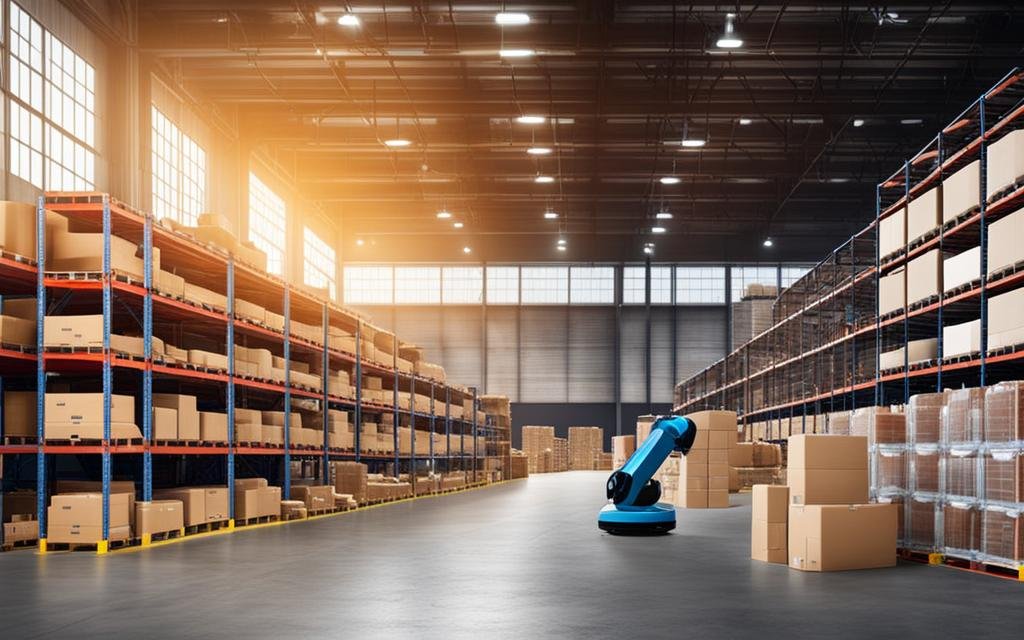
Table: Comparing AI-Enhanced Inventory Management
| Company | Benefits |
|---|---|
| Amazon | Cost savings, improved operational efficiency, enhanced customer satisfaction |
| Walmart | Optimized supply chain, reduced wastage, increased sales, improved customer satisfaction |
AI-Enhanced Inventory Management: Upgraded Approach for Retail Efficiency
AI has revolutionized inventory management in the retail sector, providing businesses with increased efficiency and convenience. By automating tasks, analyzing complex datasets, and providing accurate forecasts, AI enables optimal stock control, cost savings, and improved sales. With advanced inventory management solutions driven by artificial intelligence, retailers can stay ahead of the competition and thrive in a rapidly evolving industry.
One of the key advantages of AI-enhanced inventory management is the ability to automate time-consuming processes. With AI-driven inventory control, retailers can streamline tasks such as order processing, stock replenishment, and demand forecasting. This automation reduces human error, improves efficiency, and frees up staff to focus on more strategic activities.
In addition to automation, AI-powered inventory management solutions provide retailers with valuable insights through data analysis. By leveraging machine learning algorithms, retailers can gain a deeper understanding of market trends, customer behavior, and demand patterns. This data-driven approach allows retailers to optimize their inventory levels, prevent stockouts or overstocking, and make data-backed decisions for better business outcomes.
To further enhance retail efficiency, AI also enables real-time inventory tracking and optimization. By leveraging AI technologies such as RFID and barcode scanning, retailers can have accurate and up-to-date visibility of their inventory across multiple locations. This real-time tracking helps prevent stock discrepancies, improves order fulfillment, and enhances customer satisfaction.

Table: Retail Efficiency Improvements with AI-Enhanced Inventory Management
| Benefits | Description |
|---|---|
| Improved Efficiency | Automated processes and real-time tracking reduce manual errors and save time. |
| Cost Savings | Optimized inventory levels and demand forecasting minimize excess stock and minimize holding costs. |
| Increased Sales | Accurate inventory data and demand analysis enable timely restocking and improved customer satisfaction. |
| Enhanced Customer Satisfaction | Real-time inventory visibility ensures accurate order fulfillment and reduces stockouts. |
| Streamlined Operations | Automation of tasks frees up staff to focus on strategic activities and customer service. |
In summary, AI-enhanced inventory management offers retailers a multitude of benefits, ranging from improved efficiency and cost savings to increased sales and customer satisfaction. By embracing AI-powered solutions, retailers can optimize their inventory control processes, gain valuable insights, and stay ahead in today’s competitive retail landscape.
Leverage Expert Advice and Strategic Insight for AI Implementation
Implementing AI in inventory management requires a strategic approach and expert guidance. To successfully integrate AI into your inventory management processes and drive growth and profitability, it is crucial to leverage expert advice and strategic insight.
Start by identifying your specific needs and objectives. Determine what areas of your inventory management can benefit from AI-enhanced solutions such as advanced inventory management, artificial intelligence inventory solutions, or machine learning inventory management. By understanding your goals, you can choose AI tools that align with your requirements.
Popular AI tools for inventory management include predictive analytics, machine learning algorithms, and automation tools. These tools can help streamline your operations, optimize stock control, and improve overall efficiency. By leveraging the right AI tools, you can make data-driven decisions, enhance inventory accuracy, and stay ahead of the competition.
Expert Guidance and Implementation Process
Implementing AI in inventory management may seem complex, but with expert guidance, the process can be smooth and efficient. Consulting with professionals who specialize in AI-enhanced inventory management can provide valuable insights and recommendations tailored to your business.
“The integration of AI in inventory management has the potential to revolutionize operations and drive significant growth. By leveraging expert advice and strategic insight, businesses can optimize their inventory management processes and reap the benefits of AI-enhanced solutions.”
By working closely with experts, you can create a roadmap for implementation that considers your unique business needs and challenges. This strategic approach ensures that the AI tools and solutions you choose align with your goals and deliver tangible results.
Remember, the implementation of AI in inventory management is an ongoing process. Regular monitoring and analysis of AI-driven systems are essential to ensure optimal performance and continuous improvement. By staying updated on the latest developments and trends in AI-enhanced inventory management, you can position your business for long-term success.
Table: AI Tools for Inventory Management
| AI Tool | Description |
|---|---|
| Predictive Analytics | Utilizes historical data and machine learning algorithms to forecast future demand, optimize inventory levels, and prevent stockouts or overstocking. |
| Machine Learning Algorithms | Continuously learns from data patterns, resulting in more accurate demand forecasting, improved inventory optimization, and enhanced efficiency. |
| Automation Tools | Automates repetitive tasks such as order processing, stock replenishment, and demand monitoring, freeing up time for more strategic decision-making. |

The implementation of AI in inventory management requires careful consideration of your business needs and objectives. By leveraging expert advice and strategic insight, you can choose the right AI tools and solutions that align with your goals. Popular AI tools for inventory management include predictive analytics, machine learning algorithms, and automation tools. These tools can streamline operations, optimize stock control, and improve overall efficiency. Consulting with professionals who specialize in AI-enhanced inventory management can provide valuable insights and recommendations tailored to your business. By working closely with experts, you can create a roadmap for implementation, ensuring that the AI tools you choose deliver tangible results. Regular monitoring and analysis of AI-driven systems are essential to ensure optimal performance and continuous improvement. Stay updated on the latest developments in AI-enhanced inventory management to position your business for long-term success.
Conclusion
AI-enhanced inventory management is a game-changer for businesses seeking advanced solutions to optimize their stock control and streamline operations. By harnessing the power of artificial intelligence, businesses can experience improved efficiency, accuracy, and cost-effectiveness in their inventory management processes. The integration of AI allows for real-time data analytics, intelligent forecasting, and automated decision-making, resulting in increased sales and reduced costs.
With AI-driven inventory control, businesses can optimize their inventory levels, prevent stockouts or overstocking, and make data-driven decisions backed by accurate demand forecasting. This upgraded approach to inventory management not only enhances efficiency but also enhances customer satisfaction by ensuring that the right products are available at the right time.
Implementing AI in inventory management requires a strategic approach and expert guidance. By leveraging expert advice and strategic insight, businesses can choose the right AI tools that align with their objectives and successfully integrate them into their inventory management processes. With AI-Enhanced Inventory Management software, advanced inventory management becomes a reality, enabling businesses to thrive in a rapidly evolving retail environment.
In conclusion, AI-enhanced inventory management empowers businesses with the tools they need to stay ahead of the competition. By optimizing stock control, making data-driven decisions, and improving efficiency, businesses can achieve growth, profitability, and long-term success in today’s dynamic market. Embracing AI in inventory management is a strategic move that no business can afford to overlook.