
Have you ever wondered how companies like Amazon and Netflix know what you want before you do? They use big data analytics to figure it out.
As developers, we can tap into the huge amounts of data from online actions, transactions, and social media. By exploring big data analytics, we can help businesses change digitally and make better decisions with data.
Big data includes everything from databases to social media posts. This data, coming from IoT devices, social media, and more, is huge. It lets businesses improve operations, spot market trends, and make customers happier. For example, companies can make more money and please customers better with smart analytics.
In healthcare, big data can prevent diseases and improve patient care. In finance, it fights fraud and personalizes services. Retailers use it to make marketing better and streamline supply chains. Manufacturers use it for predictive maintenance and optimizing processes. Big data is key for digital transformation in many fields.
But, using big data has its hurdles. We must think about data privacy and security, quality, and how to handle more data. With AI making analytics faster, we’re heading towards quicker decisions and stricter rules for data. We also need AI models that explain their results.
This is a time of big change where data insights can save money, spark new ideas, and create new products. Even small businesses can use cloud analytics to make smart choices. Big data’s potential is huge, and we developers are key to unlocking it.
To learn more about big data’s importance and its future impact on businesses, read this in-depth look.
Understanding Big Data: An Overview
The big data revolution has changed how we use and understand data. It’s important to look at the basics of big data and its importance today.
Volume, Variety, and Velocity
Big data is all about the “3 Vs”: Volume, Variety, and Velocity. Volume means lots of data coming in every day. Only 0.5% of all data is analyzed, offering a big chance for growth.
By 2020, we had 20 to 100 billion connected devices adding to the data. This led to data growing from petabytes to zettabytes.
Variety means different types of data from many sources. Big data can be structured, unstructured, or semi-structured. This variety needs advanced data analytics. Velocity is how fast data comes in. Real-time data from IoT devices helps improve operations and customer experiences.
The Importance of Big Data
Big data is key in our data-driven world. Analyzing it helps find hidden patterns and leads to smarter decisions. For instance, UPS saved 8.4 million gallons of fuel and cut route times by 85 million miles by using sensor data.
Target Corporation used big data to predict when customers were pregnant. This gave them insights into customer behavior and shopping habits.
But big data also has challenges, like privacy issues and the need for quality data. Good big data analytics needs skilled people to handle the fast pace and complex data integration. Yet, with the right approach, big data can give big advantages, like better decisions and risk management.
The Role of Data Engineering in Big Data
Data engineering is key in handling big data. It focuses on collecting and storing data. This lets data scientists, analysts, and developers get insights from the data.
Data Collection and Storage
First, we collect data from places like databases, websites, or IoT devices. Then, we store it well. Data lakes and warehouses help with this.
Data lakes handle structured and unstructured data. Warehouses make old data easy to use for analysis.

Processing and Transformation
After collecting and storing data, we process and transform it. This makes the data clean and ready for analysis.
Tools like data mining and machine learning turn data into insights. Big data engineers use their skills to make this happen.
| Aspect | Details |
|---|---|
| Average Salary | $125,662 |
| Job Growth for Statisticians (2021-2031) | 31% |
| Job Growth for Computer and Information Research Scientists (2021-2031) | 21% |
Leveraging Machine Learning with Big Data
Big data brings us to the power of machine learning. It’s key for finding valuable insights and automating tasks. By looking at patterns and making predictions, we turn big data into smart actions. This changes many industries.
Machine Learning Algorithms
Machine learning algorithms change how we manage big data. They help big companies with lots of info. For example, Amazon and Netflix use them to suggest things you might like.
These algorithms also help in market research and understanding people better. This lets businesses make plans that really fit what people want.
Predictive Analytics and Modeling
Predictive analytics is very important in many areas like healthcare, finance, and online shopping. It uses machine learning to guess what might happen next. This helps make better decisions.
For example, it can spot fake ads online, suggest more products to buy, and check if treatments work. With so much fake activity online, predictive analytics is key to trust and efficiency.
Deep Learning Techniques
Deep learning is a part of machine learning that uses neural networks for tough data problems. It gives us deeper insights into data. This is why we see it in things like Amazon’s Alexa and Apple’s Siri.
Deep learning helps us understand and answer complex questions. It’s all about getting better at handling complex data.
Big Data Technologies: Hadoop and Spark
Apache Hadoop and Apache Spark lead the big data world. They have unique strengths for big data needs. Let’s explore the Hadoop ecosystem and see how Spark adds real-time processing.
Hadoop Ecosystem
The Hadoop ecosystem is key for storing and processing big data. It has four main parts: HDFS, YARN, Hadoop MapReduce, and Hadoop Common. Apache Hadoop is great for tasks that need a lot of data and can handle failures well. It’s perfect for tasks that don’t need quick answers.
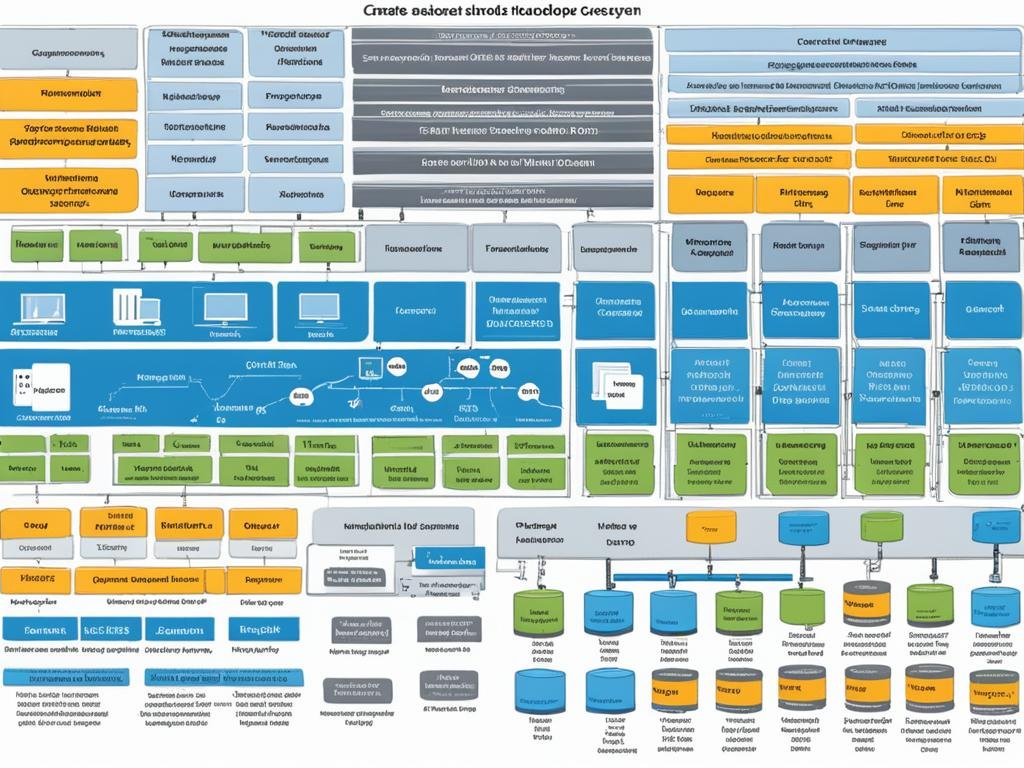
Hadoop is great because it can grow with your data needs. It spreads data across many nodes for easy expansion. Companies like Hadoop for its low cost, flexibility, and speed in handling big data. Hadoop works well with other big data tools, making it a strong choice for complex tasks.
Apache Spark for Real-Time Processing
Apache Spark is all about quick data processing. It’s fast because it keeps data in memory. This cuts down on wait time and makes it great for fast algorithms and streaming data.
Spark has five main parts: Spark Core, Spark SQL, Spark Streaming, MLlib, and GraphX. These let Spark work with many programming languages. It’s a full package for data work, including SQL, machine learning, and streaming.
Companies often use Spark with Hadoop for big data tasks. Choosing between Hadoop and Spark depends on the data and goals. Together, they give developers the tools to work with big data efficiently.
Let’s compare Hadoop and Spark to see what they offer:
| Feature | Hadoop | Spark |
|---|---|---|
| Processing Type | Batch Processing | Real-Time and Batch Processing |
| Fault Tolerance | High | Moderate |
| Latency | High | Low |
| Memory Use | Disk-Based | In-Memory |
| Primary Use Case | Large-Scale Batch Processing | Machine Learning, Stream Processing |
Python for Data Science
Python is now a top choice in the IT world for its ease and power. It’s perfect for those working with data. The language is open-source and has a big community, making it great for data science and stats.
Popular Python Libraries
Python has many libraries that make it great for data work. Pandas is a key tool for handling data sets. It makes things like cleaning and transforming data easy.
NumPy is another big deal for numbers. It helps with fast data processing. Then, for showing data, Matplotlib, Seaborn, and Plotly are key. They help us make graphs that tell stories.
With over 137,000 libraries, Python covers all bases in data science. It has tools for machine learning and deep learning too.
Integrating Python with Big Data Tools
Python works well with big data tools. It uses frameworks like Hadoop and Spark for data tasks. This helps with processing and analyzing big data.
The Anaconda Data Science Toolkit is another big plus. It supports Python and R, making big data projects easier. Plus, it works with tools like Tableau and Power BI, opening up more possibilities.
In short, Python is a top pick for data science because of its ease and library support. It works well with big data, making it a must-have for US developers and data scientists.
Data Visualization Techniques
Turning complex data into easy-to-understand formats is key. We use simple charts and detailed dashboards to show data patterns and trends. This helps us make better decisions with the huge amounts of data in big data analytics.

We focus on making dashboards that help analyze information well. These dashboards put all the important metrics in one spot. They let people who aren’t tech-savvy make smart choices by making data easy to understand. Plus, they update in real time, so we always have the latest info.
When making dashboards, it’s important to know what we want to achieve and who will use it. We must have accurate, full, and consistent data. Picking the right chart is also key, as different charts are best for different types of data.
- Word Clouds: Great for looking at how often words appear in texts.
- Line Charts: Show how values change over time.
- Bar Charts: Good for comparing different values in categories.
- Pie and Doughnut Charts: Show how parts make up a whole, but not great for comparing values.
- Scatterplots: Help us see how two variables relate to each other.
- Histograms: Show how data is spread out over a time or range.
- Bubble Maps: Use bubble sizes to show values in areas.
- Heat Maps: Use colors to show how intense something is in an area.
Tools like connection maps, dot maps, correlation matrices, and tree maps are great for showing different data relationships and distributions. Here’s a quick look at some popular ways to visualize data and what they’re used for:
| Visualization Tool | Application |
|---|---|
| Tableau | Works with many data storage solutions; helps companies like Verizon make better decisions. |
| Google Data Studio | Great for making interactive dashboards that update in real time. |
| Power BI | Offers dynamic ways to see data and tools for business intelligence. |
| QlikView | Known for its data discovery and visualization skills. |
| SAS | Provides advanced analytics, business intelligence, and data management tools. |
| Excel | Very popular for its wide range of charting tools and data analysis. |
| Google Sheets | Great for working together on data analysis and visualization. |
| OWOX BI Smart Data | Specialized in analyzing marketing and e-commerce data. |
At the heart of data visualization is the need for logic, simplicity, and smart color use. These ideas help our dashboards give real value and deepen our understanding of data. By using these methods and tools, we can improve user experiences and make smart business choices.
Data Mining Techniques for Developers
Data mining helps developers find important insights in big data. Gregory Piatetsky-Shapiro first used the term “Knowledge Discovery in Databases” in 1989. Now, it includes techniques like clustering, classification, association, and anomaly detection. These are key for turning raw data into useful knowledge.
Clustering and Classification
Clustering and classification are key in data mining. Clustering groups similar data together. Developers use K-Means, hierarchical, and density-based clustering for this.
This helps find hidden patterns and relationships in data.
Classification puts data into groups we already know. Developers use Decision Trees, SVM, and K-NN for this. Bayesian classification and Classification By Backpropagation also help. These methods are great for making predictions and helping with decisions.
Association and Anomaly Detection
Association finds interesting links between data. It’s used in market basket analysis, catching fraud, and network analysis. By finding patterns in data, developers can learn about consumer habits and likes.
Anomaly detection finds data points that don’t fit the usual pattern. These can be signs of fraud, unusual events, or big changes. Using stats and machine learning, developers can spot these anomalies. This keeps data safe and helps with accurate analysis.
Using these data mining techniques gives developers the tools to handle today’s data challenges. From clustering and classification to finding associations and anomalies, these skills turn data into a powerful tool. They drive innovation and smart decisions in our tech-filled world.
Implementing Predictive Analytics in Projects
Predictive analytics uses past data, algorithms, and machine learning to guess what will happen next. The global market for big data and analytics is set to reach $420.98 billion by 2027. This shows how important predictive analytics is for managing projects today.
Using predictive analytics helps with forecasting and making smarter business decisions. It lets companies see future trends and fix problems early. This means they can plan better for costs and budgets.
For instance, Apache Hadoop helps process big data sets. This lets companies make decisions based on data. You can learn more about this complete guide to predictive analytics and big data.
To use predictive analytics, you need skills in machine learning and data science. Developers should know about AI algorithms and programming languages like R and Python. Tools like TensorFlow and IBM’s Watson Studio help build and use predictive models. For more tips, see this guide on how to implement predictive analytics in your business.