The use of Artificial Intelligence (AI) is critical for sustained exploration of space. AI enables humans to explore further into the solar system and understand its origin and evolution. AI technologies have been incorporated in space robots for increased autonomy in interplanetary exploration missions. The recent AI for Good webinar explored the capabilities and opportunities of AI in space robotics, highlighting its role in unlocking the secrets of the universe.
Key Takeaways:
- AI technology is crucial for sustained exploration of space.
- AI enables increased autonomy in interplanetary exploration missions.
- AI plays a vital role in unlocking the secrets of the universe.
- AI in space robotics offers new capabilities and opportunities.
- The potential of AI in space exploration is immense.
The Role of AI in Space Exploration
Artificial intelligence (AI) technology is revolutionizing space exploration, enhancing our capabilities and accelerating our journey through the cosmos. By harnessing the power of AI, we can process vast amounts of data, make accurate predictions, and learn from previous experiences to gain a deeper understanding of the universe.
One of the key applications of AI in space exploration is in the development of autonomous spacecraft. AI enables these spacecraft to make real-time decisions based on data collected from their surroundings. For example, NASA’s Mars 2020 Perseverance Rover utilizes AI to navigate the Martian surface autonomously, making its own decisions on where to explore and collect scientific data.
AI is the driving force behind the next generation of space robots, allowing them to operate independently and adapt to unforeseen events, furthering our exploration of the solar system and beyond.
AI in Space Robots
AI technology is also playing a significant role in the capabilities of space robots. These robots are equipped with AI systems that enable them to analyze their environment, perform complex tasks, and make critical decisions. For instance, AI allows space robots to conduct scientific experiments, repair equipment, and even assist astronauts during spacewalks.
Furthermore, AI helps in the interpretation and analysis of the vast amounts of data collected by space missions. AI algorithms can quickly identify patterns and anomalies in the data, aiding scientists in their quest for new discoveries. This boosts the efficiency of space missions and allows us to uncover hidden insights about the universe.
AI Applications in Space Exploration
The applications of AI in space exploration go beyond autonomous spacecraft and space robots. AI technology is also used in mission planning, trajectory analysis, and resource management. It assists in optimizing fuel consumption, reducing mission costs, and increasing the overall success rate of space missions.
As we continue to push the boundaries of space exploration, AI will play an increasingly vital role. It will enable us to explore further into the unknown, unravel the mysteries of the cosmos, and pave the way for future interstellar missions.
| AI in Space Exploration | Benefits |
|---|---|
| Autonomous spacecraft | Allows for real-time decision making and adaptability |
| Space robot capabilities | Enables complex tasks, repair assistance, and scientific experiments |
| Data interpretation and analysis | Identifies patterns and anomalies, leading to new discoveries |
| Mission planning and optimization | Maximizes efficiency and success of space missions |
Advancements in Interstellar Travel
Advancements in interstellar travel are propelling us closer to the realization of our long-standing ambition to explore beyond our solar system. Through cutting-edge scientific and engineering technologies, scientists and engineers are pushing the boundaries of space travel, paving the way for future interstellar missions.
One of the key areas of focus in interstellar travel is the development of advanced propulsion systems. These systems aim to revolutionize our ability to travel vast distances by harnessing new and innovative technologies. For example, the Warpgate Drive, a concept under development in projects like Project Adastra, generates intense gravitational fields that warp space and time, enabling faster-than-light travel.
| Advancements in Interstellar Travel | Future of Interstellar Travel | Interstellar Propulsion Systems | Space Travel Beyond the Solar System |
|---|---|---|---|
| Development of advanced propulsion systems | Promising future for humanity | Research into new technologies for interstellar propulsion | Exploration beyond the limits of our solar system |
| Warpgate Drive technology | Unlocking new frontiers | Generation of intense gravitational fields | Pushing the boundaries of human knowledge |
| Advances in spacecraft design and materials | Expanding our understanding of the universe | Exploration of alternative propulsion methods | Exploring distant galaxies and star systems |
These advancements in interstellar travel offer hope for the future of space exploration beyond our solar system. They open up the possibility of establishing interstellar settlements and stations, enabling us to delve deeper into the mysteries of the universe and expand our understanding of the cosmos.
As we continue to push the boundaries of what is technologically feasible, the future of interstellar travel holds immense potential for humanity. With advancements in propulsion systems and spacecraft design, we are on the cusp of a new era of space exploration, where the stars no longer remain out of reach.
Overcoming Challenges of Interstellar Travel
Interstellar travel presents a unique set of challenges that must be overcome in order to successfully explore the vastness of space. One of the main challenges is the communication delays that occur between spacecraft and mission control due to the immense distances involved. These delays can range from minutes to hours, making real-time decision-making impossible. However, advancements in AI technology have enabled spacecraft to operate autonomously, making critical decisions based on real-time data without the need for constant communication with Earth. This autonomy allows for faster response times and increases the overall efficiency of interstellar missions.
Another challenge in interstellar travel is the need for spacecraft to be self-sufficient and adaptable to unforeseen circumstances. AI plays a crucial role in enabling spacecraft to navigate through uncharted territories and adapt to changing conditions. By analyzing data from onboard sensors and making informed decisions, AI-enabled spacecraft can overcome unexpected obstacles and continue their missions without human intervention. This level of autonomy is essential for the success of interstellar travel, where human intervention is limited by the vast distances involved.
AI not only enables spacecraft to operate autonomously but also enhances their ability to communicate with each other and coordinate their activities. Through AI-enabled space missions, spacecraft can collaborate and share information, creating a network of intelligent agents working together towards a common goal. This level of coordination and cooperation is crucial for the success of interstellar missions, where teamwork and efficient resource management are essential. With AI, spacecraft can function as a cohesive unit, maximizing their capabilities and optimizing the use of resources.
The Challenges of Interstellar Travel
| Challenge | Solution |
|---|---|
| Communication Delays | AI-enabled autonomy in spacecraft |
| Adaptability | AI-driven decision-making |
| Coordination | AI-enabled collaboration between spacecraft |
In summary, interstellar travel presents significant challenges that require innovative solutions. AI technology provides the means to overcome these challenges by enabling spacecraft to operate autonomously, adapt to changing conditions, and coordinate their activities. With the continued advancements in AI, the future of interstellar travel holds immense promise, bringing us closer to unlocking the secrets of the universe.
AI Applications in Space Data Analysis
The vastness of space brings with it a tremendous amount of data that scientists and researchers must sift through to extract meaningful insights. This is where the power of Artificial Intelligence (AI) comes into play. AI algorithms have revolutionized space data analysis, enabling us to process and make sense of large amounts of information at an unprecedented speed.
By leveraging AI technology, space missions can now analyze and interpret data collected from telescopes, satellites, and probes, helping us uncover hidden patterns, discover new celestial objects, and gain a deeper understanding of our universe. Whether it’s identifying exoplanets, mapping cosmic structures, or studying the behavior of stars, AI algorithms are instrumental in transforming raw data into actionable knowledge.
“AI algorithms have become our trusted partners in unraveling the mysteries of the cosmos. They enable us to delve deeper into the vast amount of data we collect, opening doors to new discoveries that would have been impossible without their computational power.” – Dr. Astrid Reyes, Lead Space Data Scientist
One example of AI’s impact in space data analysis is its use in processing data from the Kepler Space Telescope. AI algorithms have analyzed the vast amounts of data collected by the telescope, aiding in the discovery of numerous exoplanets, some of which may harbor conditions suitable for life. The ability of AI to quickly analyze and identify subtle patterns has revolutionized our understanding of the exoplanet population and potential habitability beyond our solar system.
| AI Applications in Space Data Analysis | Benefits |
|---|---|
| Exoplanet Detection | Enables the identification of distant planets based on subtle changes in light intensity, leading to the discovery of potentially habitable exoplanets. |
| Galactic Mapping | Allows for the creation of detailed maps of galaxies, enabling scientists to study their structure, evolution, and the distribution of dark matter. |
| Asteroid Classification | Facilitates the identification and classification of asteroids, assessing their potential risks and identifying resources for future space exploration. |
| Stellar Evolution Analysis | Aids in studying the life cycles of stars, understanding their formation, nuclear fusion processes, and predicting their evolutionary paths. |
| Cosmological Simulations | Enables the creation of virtual universes to model the formation and evolution of galaxies, providing insights into the large-scale structure of the cosmos. |
The integration of AI in space data analysis has not only accelerated our scientific progress but has also expanded the horizons of what we can achieve in our quest to unravel the mysteries of the universe. As we continue to advance AI technologies, we can expect even greater breakthroughs in our understanding of the cosmos, paving the way for future space exploration and discovery.
Ethical Considerations of AI in Space Exploration
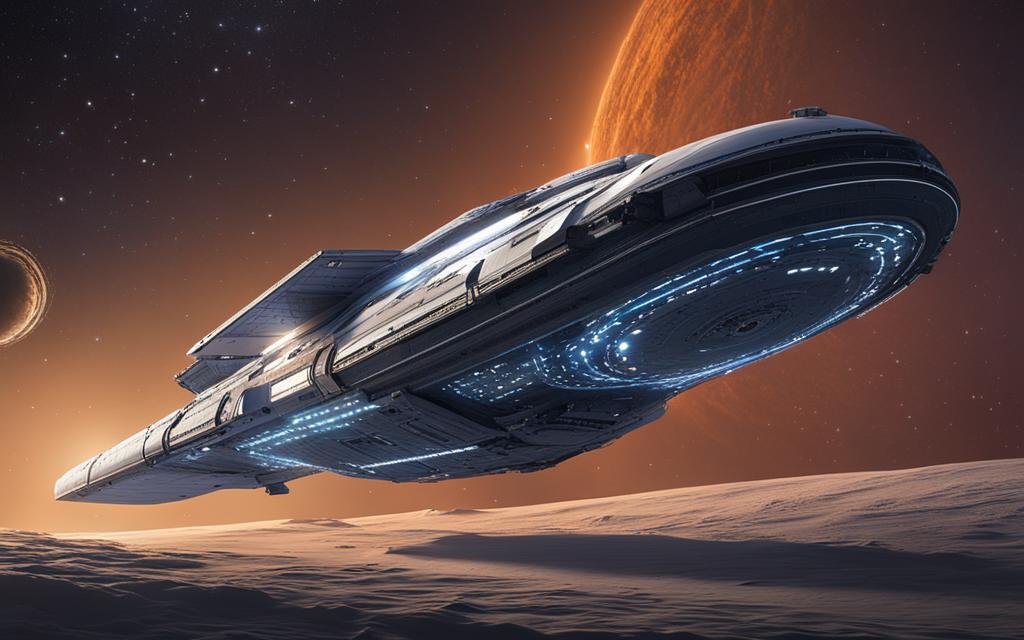
The integration of Artificial Intelligence (AI) in space exploration brings with it a host of ethical implications that must be carefully considered. As we continue to develop and harness the power of AI in interstellar missions, it is crucial to ensure responsible development practices, transparency, and accountability in the deployment of AI systems.
One of the key ethical considerations is the need for transparency in AI systems. It is vital that AI algorithms and decision-making processes are easily understandable and explainable, especially in space exploration where the stakes are high and the consequences significant. Transparency promotes trust and helps mitigate the risk of bias or unintended consequences that may arise from AI technologies.
“The responsible development of AI in space exploration demands that we prioritize the ethical implications of this technology. Transparency and accountability are fundamental principles that should guide our use of AI in interstellar missions.” – Dr. Rebecca Carter, AI Ethics Consultant
Additionally, ensuring accountability in AI systems is essential. This means establishing clear lines of responsibility and oversight for the development, deployment, and use of AI in space exploration. Accountability frameworks must be put in place to address any potential risks associated with AI technologies and to ensure that decision-making processes align with human values and adhere to ethical standards.
| Key Ethical Considerations of AI in Space Exploration |
|---|
| Transparency in AI systems |
| Accountability and oversight |
| Alignment with human values |
| Minimizing bias and discrimination |
| Protecting privacy and data security |
Moreover, efforts should be made to ensure that AI systems used in space exploration are aligned with human values. This means incorporating ethical frameworks that prioritize fairness, equity, and inclusivity. It is vital to minimize bias and discrimination in AI algorithms and decision-making processes to ensure that all individuals, regardless of their background or characteristics, have equal opportunities and access to the benefits of AI technologies.
Lastly, protecting privacy and ensuring data security are critical considerations when employing AI in space exploration. The vast amounts of data collected during interstellar missions must be safeguarded to prevent unauthorized access and misuse. Strict protocols and robust security measures should be in place to protect the privacy of individuals and uphold data integrity.
Conclusion
The ethical implications of AI in space exploration cannot be overlooked. By prioritizing transparency, accountability, and alignment with human values, we can ensure the responsible development and deployment of AI systems in interstellar missions. To navigate the complex challenges and uncertainties of the cosmos, it is imperative that we ethically harness the power of AI, paving the way for a future of responsible and beneficial advancements in space exploration.

The Future of Interstellar Exploration
The future of interstellar exploration holds immense potential for humanity. As advancements in interstellar technology continue to unfold, the dream of establishing interstellar settlements and stations across the Milky Way edges closer to reality. These settlements will serve as hubs of exploration and innovation, propelling us into a new era of human history. With the stars as the new frontier, the spirit of exploration and curiosity will drive us to unlock the limitless potential of the universe.
Interstellar settlements will be more than just scientific outposts; they will be thriving communities where humans will live, work, and conduct research in a new extraterrestrial environment. These settlements will require advanced infrastructure, sustainable resources, and cutting-edge technologies to support human life in the harsh conditions of deep space. Advancements in interstellar technology, such as sustainable energy sources, advanced life support systems, and efficient transportation, will be essential for the success and longevity of these settlements.
Table:
| Advancements in Interstellar Technology | Benefits |
|---|---|
| Advanced propulsion systems | Enables faster and more efficient interstellar travel |
| Artificial gravity simulation | Prevents physiological effects of long-duration space travel |
| Sustainable energy sources | Provides long-term power for interstellar settlements |
| Advanced life support systems | Maintains a habitable environment for humans in space |
| Telecommunications technology | Enables efficient communication across vast distances |
With advancements in interstellar technology, we will be able to explore and study distant star systems, with the possibility of discovering habitable planets and extraterrestrial life. These discoveries will not only expand our understanding of the universe but also provide new opportunities for scientific collaboration and cultural exchange on a galactic scale. Interstellar exploration and colonization will open up avenues for unprecedented knowledge, economic growth, and the preservation of the human species.
As we look towards the future of interstellar exploration, it is important to recognize the challenges that lie ahead. Overcoming the vast distances, developing sustainable technologies, and ensuring the well-being of explorers are just a few of the hurdles we must address. However, with continued advancements in interstellar technology and the unwavering spirit of human curiosity, we can navigate these challenges and embark on a new chapter in our cosmic journey.
The Role of AI in Interstellar Storytelling
AI is not limited to the technical aspects of space exploration but can also play a role in interstellar storytelling. By leveraging AI as a writing partner, authors can tap into its vast capabilities to create compelling narratives that explore the future of interstellar exploration. With AI-assisted creative writing, the possibilities are limitless.
AI can assist writers in creating realistic and evidence-based scenarios of interstellar travel, providing a foundation for creative storytelling. By partnering with AI in the writing process, authors can add their own touch, humanity, and creativity to breathe life into their stories. With AI’s ability to process large amounts of data, analyze trends, and generate insights, it can contribute to the world-building and character development aspects of storytelling, making the narrative more immersive and engaging for readers.
AI can assist writers in creating realistic and evidence-based scenarios of interstellar travel, providing a foundation for creative storytelling.
Furthermore, AI can analyze existing storytelling techniques, identify patterns in successful narratives, and suggest creative approaches that align with established literary principles. This can be particularly valuable for both novice and experienced writers, offering fresh perspectives and new ideas to enhance their storytelling.
The Power of AI and Human Collaboration
The synergy between AI and human creativity holds immense potential in interstellar storytelling. By democratizing the writing process, AI can empower more individuals to engage in creative expression. AI can act as a learning partner, accelerating the learning journey and assisting in generating initial ideas and structures. This partnership between AI and human writers expands the bounds of imagination, enabling the creation of captivating stories that captivate readers and transport them to the far reaches of the cosmos.
| AI in Storytelling | Benefits |
|---|---|
| Enhanced world-building | AI can assist in creating immersive and detailed fictional worlds that align with scientific principles. |
| Character development | AI can provide insights and suggestions for creating complex and relatable characters. |
| Ideation and creativity | AI can generate unique story ideas, plot twists, and creative approaches to enhance storytelling. |
| Efficient research | AI can analyze vast amounts of data, allowing writers to access information and research quickly. |
Image source:
As AI continues to evolve, its role in interstellar storytelling will undoubtedly expand. The combination of human creativity and AI’s analytical capabilities opens up new frontiers for creating captivating narratives that explore the wonders of interstellar travel. With AI as a writing partner, the future of interstellar storytelling is poised to be as limitless and awe-inspiring as the universe itself.
The Power of AI and Human Collaboration
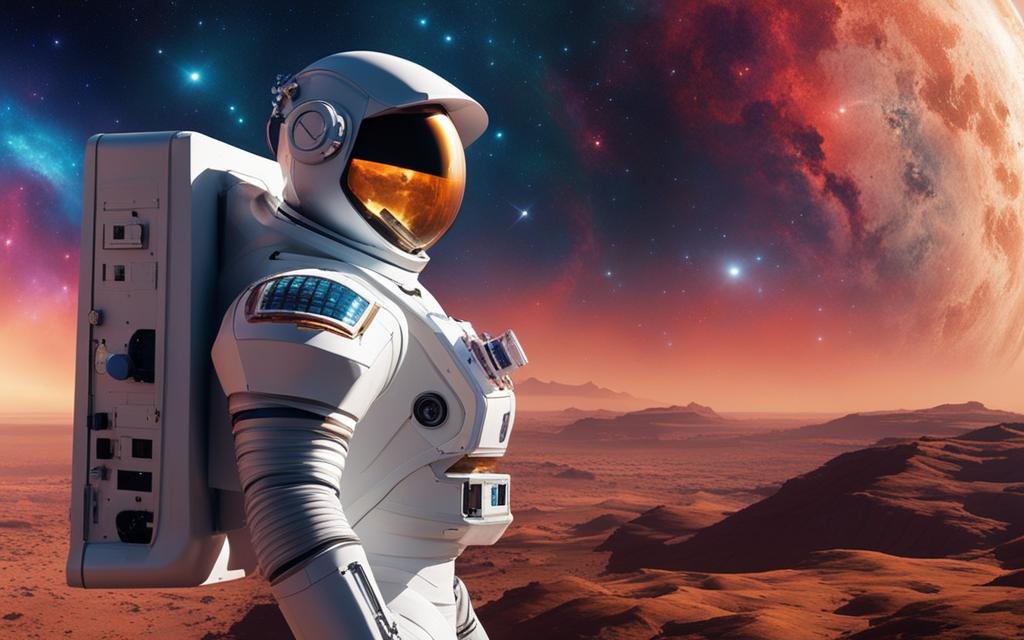
AI-human collaboration is revolutionizing various fields, including space exploration and storytelling. By combining the unique capabilities of artificial intelligence with human creativity and intuition, we are unlocking new possibilities and expanding the boundaries of knowledge. With AI as a learning partner, we can accelerate the learning journey and generate initial ideas and structures that serve as a foundation for creative expression. This partnership between humans and AI democratizes the writing process, allowing more people to engage in creative endeavors and contribute to the future of interstellar exploration.
AI’s role as a learning partner in the writing process is particularly valuable. Through AI-assisted creative writing, authors can access a wealth of data, research, and inspiration to craft compelling narratives about interstellar travel. AI can generate suggestions, offer alternative perspectives, and assist in creating evidence-based and detailed scenarios that captivate readers and transport them into the vast cosmos. Together, AI and human writers can create a synergy that amplifies their individual strengths and produces stories that are both scientifically grounded and deeply engaging.
Democratizing the writing process through AI-human collaboration also empowers individuals who may not have traditional writing backgrounds to express their ideas and contribute to the conversation surrounding interstellar exploration. AI tools can help overcome barriers such as language barriers or lack of formal training, ensuring that diverse voices and perspectives are heard. By making the writing process more accessible, we cultivate a more inclusive and enriched narrative of our collective journey into the unknown.
As we navigate the uncharted territories of the universe, AI-human collaboration will continue to shape the future of interstellar storytelling. It is through this partnership that we can unlock the immense creative potential within ourselves and fuel the collective imagination of humanity. By embracing the power of AI and human collaboration, we can embark on a journey of discovery and inspiration that transcends the limitations of individual abilities and propels us towards a future where the stars are not just distant beacons, but opportunities for exploration and wonder.
The Power of AI and Human Collaboration
| Benefits of AI-human Collaboration | Examples |
|---|---|
| Accelerated learning journey | AI providing research insights and suggestions for creative writing |
| Greater accessibility to the writing process | AI assisting individuals with language barriers or lack of formal training |
| Enhanced creativity and storytelling | AI generating evidence-based and detailed scenarios for interstellar narratives |
Conclusion
In conclusion, AI’s role in interstellar exploration is of paramount importance, shaping the future of space exploration. Through its integration in space robots, AI enables autonomous decision-making and data analysis, allowing for increased efficiency and mission success. With AI’s assistance, spacecraft can navigate uncharted territories and adapt to unforeseen circumstances, overcoming the challenges posed by vast distances and communication delays.
Moreover, AI’s application in space data analysis revolutionizes our understanding of the universe. By processing massive amounts of data quickly and accurately, AI algorithms identify patterns and trends that may lead to groundbreaking discoveries, such as the detection of exoplanets. This capability has transformed the field of space exploration, enabling scientists to uncover the mysteries of the cosmos.
Looking ahead, the future of interstellar exploration will continue to rely on AI. The integration of AI in human spaceflight ensures the safety and well-being of astronauts during long-duration missions. AI-powered systems monitor astronaut health, support scientific experiments, and provide essential companionship in the solitude of space. Together, humans and AI will push the boundaries of exploration, establishing interstellar settlements and unlocking the limitless potential of the universe.