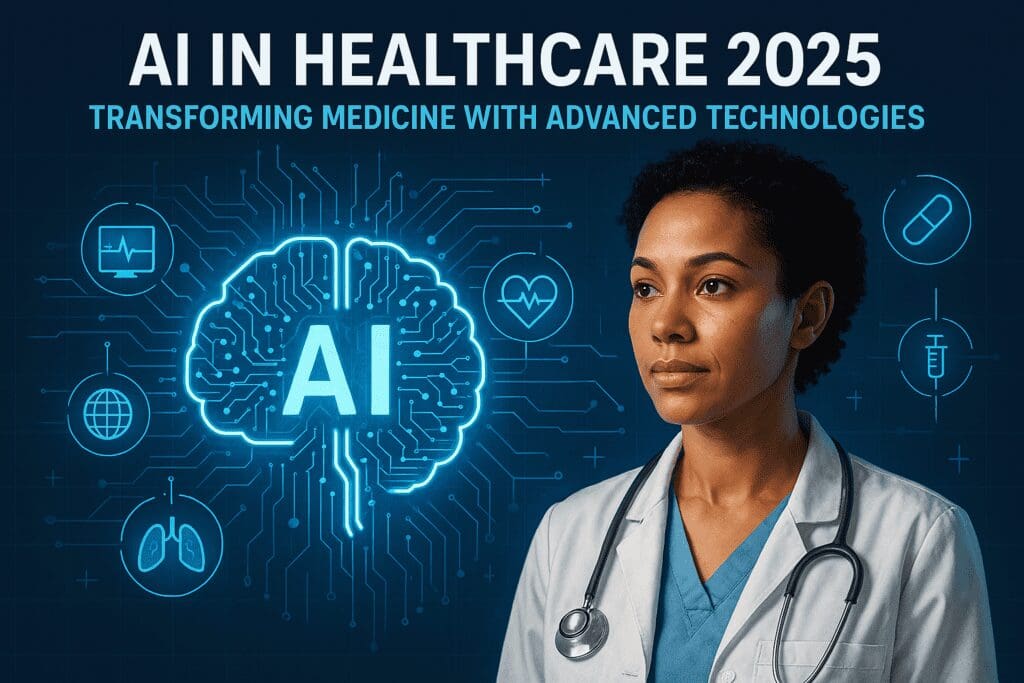
Welcome! Let’s talk about something amazing: AI in healthcare 2025. Artificial intelligence, or AI, is like a super-smart helper for doctors and nurses. It’s changing medicine really fast!
Think of computers that can learn and help make decisions. That’s AI! In this post, we will explore how these smart technologies are making healthcare better.
You will learn about:
Technology is moving super fast, like a race car! AI is becoming a big part of how we take care of people’s health around the world. This change is important for everyone, whether you work with computers or just want to know how healthcare is getting better.
The AI market in healthcare is growing incredibly fast. This means more hospitals and clinics are using these smart tools to help patients. This post will give you a peek into this exciting future.
Overview of AI in Healthcare and its Benefits
So, what exactly is AI in healthcare? Imagine computers and machines using smart programs to help doctors and hospitals. These programs use things like machine learning (where computers learn from information), natural language processing (where computers understand human language), and deep learning (a type of learning using many layers, like a brain) to help out.
The main goal is to make healthcare better. This means helping doctors find out what’s wrong faster, making treatments work better, and helping hospitals run more smoothly.
Current Trends for 2025
As we look towards AI in healthcare 2025, we see some exciting trends:
Better Patient Watching: AI can help watch patients’ health signs all the time, even when they are at home. Special tools can alert doctors if something changes.
Smarter Diagnosis: AI tools are getting really good at looking at medical pictures, like X-rays, and helping doctors spot problems more accurately.
Smoother Operations: Hospitals are using AI to help with tasks like scheduling appointments or managing supplies. This frees up time for doctors and nurses to focus on patients.
One new trend is using “generative AI.” This type of AI can help write down notes about patients automatically, saving doctors lots of time. Another trend is using “machine vision,” where cameras and AI watch patients in real-time (like in hospital rooms) to make sure they are safe, for example, by detecting if a patient might fall.
The rules around using AI in healthcare are also changing to make sure it’s safe and fair for everyone. Making sure patient information is kept private is super important.
These advancements show the many benefits of AI in healthcare. It’s not just about fancy technology; it’s about improving care for real people and making the whole system work better. The number of hospitals and clinics using AI is growing fast, showing how valuable these tools are becoming. Global spending on AI in healthcare is going up because everyone sees how much it can help.
Understanding Machine Learning in Medicine
Let’s dive deeper into machine learning in medicine. Machine learning, or ML, is a special type of AI. It’s like teaching a computer to learn from examples without being programmed for every single step.
Imagine you show a computer thousands of pictures of cats and dogs. With ML, the computer learns to tell the difference on its own by finding patterns in the pictures.
In medicine, ML uses computer programs (called algorithms) and math (called statistical models) to look at huge amounts of health information. This information could be patient records, test results, or medical images. The ML program finds patterns in this data that humans might miss.
What Can ML Do in Medicine?
Machine learning is used in many ways in the medical world:
Predicting Future Health: ML can look at a patient’s health history and predict if they are likely to get a certain disease in the future. This helps doctors take action early. It’s called predictive analytics.
Managing Patients Better: Hospitals can use ML to figure out which patients need help the most or who might need to stay in the hospital longer. This helps manage beds and staff better.
Finding New Medicines: Creating new drugs takes a long time and costs a lot. ML can speed this up by analyzing data to find chemicals or compounds that might work as treatments. This is part of drug discovery.
Spotting Diseases Early: ML algorithms are great at looking at medical images like X-rays, CT scans, and MRIs. They can spot tiny signs of diseases like cancer very early on, sometimes even before a human doctor notices them. For example, ML in radiology (the part of medicine that uses imaging) can find tiny spots or changes in images with amazing accuracy. This helps catch problems when they are easier to treat.
Precision Medicine: A Big Step Forward
One of the most exciting areas is “precision medicine.” This means making treatments just right for each person. Your body is unique, right? Your genes (the instructions inside your cells) and your lifestyle affect how treatments work for you.
ML can look at a person’s genetic information, their lifestyle habits (like diet and exercise), and their medical history. By finding patterns, ML can help doctors choose the very best treatment plan for that specific person. This makes treatments more effective and reduces side effects. By 2025, ML is making precision medicine much more common, helping doctors give truly personalized care based on deep insights from data. This includes recommending treatments based on someone’s unique genetic makeup.
Machine learning is a powerful tool making machine learning in medicine a reality, helping doctors make better decisions, find diseases sooner, and create treatments tailored just for you.
Exploring AI Medical Diagnosis Tools
Finding out what’s wrong with a patient quickly and correctly is super important. This is where AI medical diagnosis tools come in. These are special computer systems designed to help doctors diagnose diseases faster and more accurately.
Think of them as super-smart assistants for doctors. They use advanced AI, especially “deep learning,” which is like having a computer brain with many layers to think about complex problems. They also use “predictive analytics,” which means using data to guess what might happen next.How Do They Work?
These tools work by looking at lots of medical information:
Medical Images: They can analyze X-rays, CT scans, MRIs, and ultrasound images. They look for tiny details that might show a disease.
Pathology Samples: When doctors take a small piece of tissue (like a biopsy) to check for cancer, AI tools can look at slides of this tissue under a microscope. They help pathologists (doctors who study tissues) find cancer cells more easily.
Patient Histories: AI can read through a patient’s past medical records, lab results, and notes to find clues that help with diagnosis.
Amazing Accuracy
AI medical diagnosis tools are becoming incredibly good at their job. For example, some AI systems can look at chest X-rays and find lung nodules (small spots that could be cancer) with up to 94% accuracy! Sometimes, they can even spot things that human eyes might miss. This doesn’t replace doctors, but it gives them extra help to be more confident in their diagnoses.
Real-World Examples
These tools are already being used:
Cancer Diagnosis: Companies like PathAI have created tools that help pathologists diagnose cancer more accurately and consistently. The AI highlights areas on a tissue slide that might be cancerous, helping the doctor make the final decision.
Eye Diseases: AI can scan images of the back of the eye (the retina) to detect signs of diseases like diabetic retinopathy, which can cause blindness if not caught early.
Skin Cancer: You can even find apps that use AI to look at pictures of moles on your skin and tell you if they might be suspicious and need checking by a doctor.
Wearable Devices: Smartwatches and other wearable gadgets can track things like your heart rate or blood sugar levels. AI can analyze this data in real-time to monitor chronic conditions like diabetes or heart problems, alerting you or your doctor if something is wrong.
Using AI medical diagnosis tools means patients can get diagnosed faster. This often means treatment can start sooner, which usually leads to better results. It also helps reduce mistakes and saves costs in the long run. These smart tools are changing how doctors find and treat diseases, making healthcare safer and more effective.
How AI is Used in Hospitals
Now let’s look at how AI is used in hospitals. Hospitals are busy places with lots going on. AI is helping them run better in many different areas, from the front desk to the operating room.
AI tools are being integrated into:
Administrative Tasks: These are the office-type jobs in a hospital.
Operational Processes: This means how the hospital runs day-to-day.
Clinical Work: This is the direct care doctors and nurses give to patients.
Making Hospitals More Efficient
AI can handle tasks that take up a lot of time, freeing up staff to focus on patients:
Scheduling: AI can automate scheduling appointments for patients, tests, or even operating rooms. It can find the best times that work for everyone and manage changes easily.
Managing Resources: Hospitals need to manage beds, equipment, and staff effectively. AI can help predict how many patients might arrive, which wards will be busiest, and where resources are needed most. This prevents overcrowding and waste.
Patient Triage: In busy emergency rooms, AI can help quickly sort patients based on how urgent their condition is. It can analyze symptoms and vital signs to help nurses decide who needs to be seen first. This is called triage.
Improving Patient Care Inside the Hospital
AI is also directly helping with patient treatment and outcomes:
Predicting Outcomes: AI can look at a patient’s data and predict how likely they are to recover well from surgery or treatment. It can also predict the risk of complications. This helps doctors plan care better.
Reducing Readmissions: Sometimes patients get better, leave the hospital, but then have to come back soon after because they get sick again. AI can identify patients who are at high risk of readmission. Hospitals can then give these patients extra support after they go home to help them stay healthy.
Treatment Planning: For complex diseases like cancer, AI can analyze a patient’s specific condition and suggest the most effective treatment options based on the latest research and data from similar patients.
Automating Care Steps: Some hospitals are using AI to manage entire “care episodes.” This means using AI from the moment a patient checks in (intake), through their diagnosis and treatment, all the way to follow-up care. This makes the whole process smoother and more coordinated.
Case Studies: AI in Action
Many hospitals are already seeing great results from using AI. Studies show that hospitals using AI for tasks like managing patient flow or predicting risks often see improvements in efficiency, reduced waiting times, and even better patient health results. For example, AI systems helping manage operating rooms can lead to more surgeries being done each day. AI tools that monitor patients for signs of infection can lead to earlier treatment and faster recovery.
Integrating AI into hospital workflows requires careful planning and training, but the potential for improvement is huge. As we learn more about how AI is used in hospitals, we see it becoming an essential part of modern healthcare delivery, making hospitals smarter, faster, and safer.
The Many Benefits of AI in Healthcare
We’ve seen how AI works in different areas of medicine. Now let’s focus on the benefits of AI in healthcare. Why is using AI such a good thing? There are several key advantages:
1. Enhanced Efficiency
Hospitals and clinics are often very busy. Doctors and nurses have many tasks to do, including paperwork and administrative chores. AI can help by automating many of these routine tasks.
Less Paperwork: AI can help with writing notes, filling out forms, and managing records.
Faster Processes: AI can speed up tasks like scheduling appointments or processing billing information.
Focus on Patients: When AI handles routine jobs, healthcare workers have more time to spend directly with patients, listening to their concerns and providing care. This makes their jobs less stressful and improves the quality of care. Think of it like having a helpful robot assistant that takes care of the boring stuff!
2. Cost Reduction
Healthcare can be very expensive. AI can help lower costs in several ways:
Smoother Operations: By making hospitals run more efficiently (as we saw in the last section), AI reduces waste and saves money on resources.
Cheaper Drug Development: Finding new medicines is costly. AI can analyze data much faster than humans, speeding up the research process and potentially lowering the cost of discovering new drugs.
Fewer Errors: Mistakes in diagnosis or treatment can be costly and harmful. AI tools that help doctors make more accurate diagnoses can reduce the number of expensive, unnecessary tests or incorrect treatments. Catching diseases early with AI also often means treatments are less expensive than if the disease becomes advanced.
3. Improved Patient Care
This is the most important benefit! AI ultimately helps patients get better care and have better health outcomes.
Earlier Diagnosis: AI tools can spot diseases like cancer or heart problems at very early stages, often leading to more successful treatment.
Better Treatment Decisions: AI can analyze vast amounts of medical knowledge and patient data to help doctors choose the best possible treatment plan.
Personalized Care: As we discussed with machine learning, AI enables “precision medicine”. Treatments can be tailored to an individual’s specific genes, lifestyle, and condition, making them more effective.
Constant Monitoring: AI-powered wearable devices and monitoring systems can keep track of patients’ health continuously, allowing for quick action if problems arise. This is especially helpful for people with chronic illnesses.
Predicting Problems: AI can predict which patients might face complications or need extra help, allowing doctors to intervene proactively.
System-Wide Improvements
These benefits of AI in healthcare don’t just help individual patients or doctors; they improve the entire healthcare system. More efficiency means the system can handle more patients. Lower costs make healthcare more affordable. Better patient care leads to a healthier population overall.
AI is not about replacing doctors and nurses, but about giving them powerful tools to do their jobs even better. It’s transforming healthcare delivery into a more efficient, affordable, and effective system for everyone.
Meet the Best AI Healthcare Startups
While big companies and hospitals are using AI, a lot of the exciting new ideas come from smaller, newer companies called startups. These best AI healthcare startups are like inventors, creating cutting-edge tools that push the boundaries of what’s possible in medicine.
Startups play a huge role because they can move quickly, try new things, and focus on solving specific problems using AI. They are key players in bringing AI innovations into clinics and hospitals faster.
Let’s look at a few examples of these innovative companies:
1. Babylon Health
What they do: Babylon Health uses AI to provide virtual healthcare. Imagine talking to an AI-powered chatbot about your symptoms! Their platform offers AI diagnostic assistance, helping people understand their health concerns and guiding them on whether they need to see a doctor. They also offer video calls with real doctors.
Their contribution: They are making healthcare more accessible. You can get health advice or even a consultation from your phone, anytime. Their AI helps sort through symptoms to give initial guidance, making the process faster.
2. Oncora Medical
What they do: Oncora Medical focuses specifically on cancer treatment, particularly radiation therapy. They use AI and data analytics (looking closely at information) to help doctors plan radiation treatments more effectively.
Their contribution: They gather data from past cancer treatments and use AI to learn what worked best for different types of tumors and patients. This helps doctors personalize radiation plans, aiming for better results with fewer side effects. They are pioneering the use of real-world data to improve cancer care.
3. Viz.ai
What they do: Viz.ai uses AI to speed up care coordination, especially in emergencies like strokes. Their AI analyzes brain scans (like CT scans) incredibly quickly. If it detects signs of a large stroke, it automatically alerts the stroke specialist team on their phones.
Their contribution: In stroke cases, every minute counts. By alerting doctors faster than the usual process, Viz.ai helps patients get treatment much sooner, which can dramatically improve their chances of recovery. They use predictive analytics to identify the problem and improve the hospital’s workflow for treating stroke patients efficiently.
These are just a few examples. Many other exciting startups are working on different areas, like using AI for mental health support, discovering new drugs, managing hospital logistics, or creating smarter medical devices.
These best AI healthcare startups show the amazing potential of combining medical knowledge with powerful AI technology. They are not just building tools; they are helping to reshape how healthcare is delivered, making it more personalized, efficient, and effective for patients around the world. Their work complements the efforts of larger institutions, driving innovation across the entire field.
Conclusion: The Future is Here with AI in Healthcare 2025
So, what have we learned? Artificial intelligence is doing amazing things in medicine! As we look at AI in healthcare 2025, it’s clear that this technology is not just a futuristic idea – it’s happening right now and changing healthcare for the better.
We’ve explored how smart computer systems are becoming vital partners for doctors and hospitals.
We saw how machine learning in medicine allows computers to learn from health data, helping to predict diseases and personalize treatments like never before.
We learned about AI medical diagnosis tools that act like super-assistants, helping doctors spot problems on medical images and analyze samples with incredible accuracy, leading to faster diagnoses.
We discovered how AI is used in hospitals not just for patient care, but also to make the hospital itself run more smoothly, from scheduling appointments to managing resources efficiently.
Crucially, we highlighted the many benefits of AI in healthcare. These include making processes faster and more efficient, reducing costs, and most importantly, improving the quality of care patients receive, leading to better health outcomes.
Finally, we met some of the best AI healthcare startups, the innovative companies bringing fresh ideas and powerful tools into the medical field, tackling challenges from virtual diagnosis to emergency stroke care.
The journey of AI in healthcare 2025 is truly transforming medicine. It’s making healthcare smarter, faster, and more tailored to each person’s needs. Understanding these changes helps us appreciate how technology is working to keep us all healthier. The impact of AI is growing every day, promising an exciting future for medicine and patient care worldwide.
What Are Your Thoughts?
We’ve covered a lot about the exciting world of AI in healthcare! Now, we’d love to hear from you.
What do you think about AI in healthcare 2025? Does it excite you or make you curious?
Have you ever seen or used any AI-powered tools in a hospital or clinic setting? Maybe an app or a diagnostic test?
Do you believe AI can really bring the benefits we discussed, like making healthcare more efficient and improving patient care?
Share your thoughts, experiences, and opinions in the comments section below! Your insights help everyone learn more.
And if you want to stay updated on the latest trends in healthcare technology and innovations like AI, don’t forget to subscribe to our blog! We’ll keep bringing you informative posts about the future of medicine.
Joseph
Adam,
a
digital
marketing
veteran
with
over
15
years
of
experience,
is
your
guide
to
the
ever-evolving
digital
era
within
the
niche
of
"Exploring
Cutting-Edge
AI
Tools
and
Websites:
Navigating
the
Digital
Era
and
Uncovering
the
Latest
Technology
Trends."
His
deep
expertise
spans
SEO,
content
marketing,
social
media,
and
data
analytics,
making
him
well-versed
in
the
strategies
that
drive
success
in
this
dynamic
landscape.
Joseph
is
passionate
about
sharing
his
insights
to
keep
you
ahead
in
the
world
of
AI
and
the
latest
technology
trends.
Join
him
on
a
journey
through
the
strategies
and
technologies
that
have
defined
his
career
and
the
exciting
world
of
AI.
Gain
expert
recommendations
from
a
seasoned
professional
thriving
in
this
dynamic
digital
era.