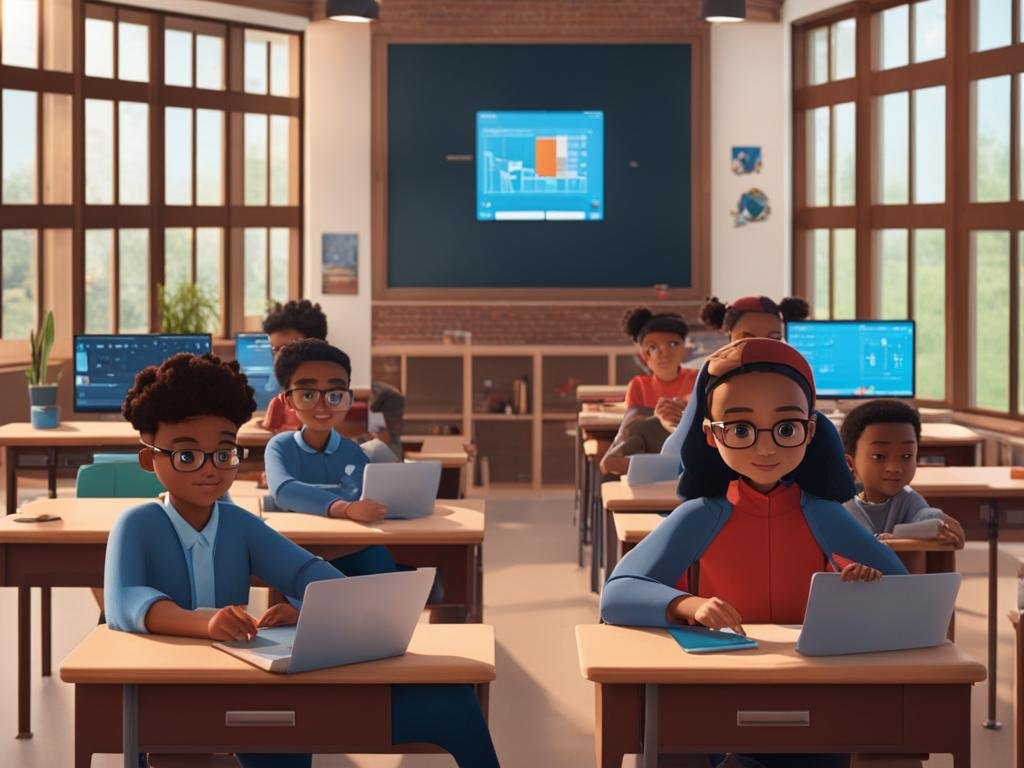
Artificial intelligence (AI) is revolutionizing the education landscape in the United States. This article will delve into the various ways AI is reshaping learning methods, personalizing student experiences, and enhancing educational outcomes across the country. We will explore the potential benefits, challenges, and future of AI in education, based on extensive research and analysis from multiple sources.
Key Takeaways:
- AI in education is transforming learning methods and improving educational outcomes.
- Personalized learning powered by AI tailors instruction to individual students’ needs.
- AI offers opportunities for adaptive learning, chatbots, virtual reality, and data analytics in education.
- Potential challenges include cultural diversity, non-optimal learning methods, and incorrect responses from AI systems.
- The future of AI in education holds promise for advanced intelligent tutoring systems and data-driven decision-making.
Understanding Artificial Intelligence in Education
To comprehend the impact of AI in education, it is important to understand what AI is and how it has evolved over time. AI refers to the capability of machines or computer programs to mimic human intelligence processes and perform tasks that typically require human intellect. The field of AI has a rich history dating back to antiquity but officially emerged as a discipline in 1956. Since then, AI has undergone significant advancements and is now revolutionizing the education sector.
AI in education has the potential to enhance learning methods, personalize student experiences, and improve educational outcomes. By harnessing the power of AI, educators can leverage intelligent technologies to adapt and individualize instruction for each student. Whether it’s deploying adaptive learning platforms, utilizing chatbots to provide instant assistance, or employing data analytics to gain insights into student progress, AI is transforming the way we teach and learn.
The evolution of AI in education has been marked by breakthroughs in machine learning algorithms, natural language processing, and computer vision. These advancements have paved the way for intelligent tutoring systems, automated grading tools, and personalized learning platforms. With AI, educators can create dynamic and interactive learning environments that cater to the unique needs and learning styles of each student. As AI continues to evolve, we can expect even more innovative applications that will shape the future of education.
By understanding the definition and history of AI, we can appreciate its transformative potential in the field of education. As we delve deeper into the current applications of AI in education and explore its impact on learning and teaching, it becomes evident that AI is revolutionizing the educational landscape. From personalized learning experiences to AI-powered teaching assistants, the integration of AI in education holds great promise for improving educational outcomes and preparing students for the future.
Current Applications of AI in Education
Artificial intelligence (AI) is already making a significant impact in the field of education. With the advent of intelligent tutoring systems, automated grading systems, predictive analytics, AI-powered learning platforms, and language learning apps, students and educators are benefiting from enhanced learning experiences and personalized instruction.
Intelligent Tutoring Systems
Intelligent tutoring systems utilize AI algorithms to provide personalized instruction and feedback to students. These systems adapt to individual learning styles and pace, identifying students’ strengths and weaknesses. By analyzing data on student performance, they offer tailored content and resources, ensuring students receive targeted support and guidance throughout their learning journey.
Automated Grading Systems
Gone are the days of manually grading stacks of papers. Automated grading systems powered by AI have automated the grading process, saving educators valuable time and providing faster feedback to students. These systems use machine learning algorithms to assess and evaluate student work, ensuring fairness and consistency in grading.
Predictive Analytics
Predictive analytics in education leverage AI to analyze vast amounts of data and identify at-risk students. By using historical data and various indicators, such as attendance, test scores, and engagement, predictive analytics help educators intervene early and provide targeted support to prevent students from falling behind.
AI-Powered Learning Platforms
AI-powered learning platforms offer personalized learning paths tailored to individual student needs. By incorporating adaptive algorithms, these platforms analyze student progress and adapt the curriculum accordingly. This ensures that students receive content and resources that align with their learning styles and pace, optimizing their learning experience.
Language Learning Apps
Language learning apps harness the power of AI to provide interactive language instruction. With AI algorithms, these apps can simulate conversations, provide instant feedback, and even understand accents and dialects. Students can practice and improve their language skills in a personalized and engaging manner, enhancing their language proficiency.
Table: Current Applications of AI in Education
| Application | Description |
|---|---|
| Intelligent Tutoring Systems | AI-powered systems that provide personalized instruction and feedback to students, adapting to their individual learning styles and needs. |
| Automated Grading Systems | AI algorithms that automate the grading process, saving educators time and providing faster feedback to students. |
| Predictive Analytics | AI-driven analysis of data to identify at-risk students and enable early intervention and targeted support. |
| AI-Powered Learning Platforms | Learning platforms that use AI algorithms to offer personalized learning paths and adapt the curriculum to individual student needs. |
| Language Learning Apps | Apps that utilize AI to provide interactive language instruction, simulating conversations and providing instant feedback to learners. |
Impact of AI on Learning and Teaching
The integration of artificial intelligence (AI) in education has revolutionized the way we learn and teach. AI-enhanced learning experiences have the power to transform traditional classrooms into dynamic and personalized environments. With AI as a teaching assistant, educators can streamline administrative tasks and gain valuable insights to improve their instructional strategies.
AI-Enhanced Learning Experiences:
“AI has the remarkable ability to analyze vast amounts of data and provide personalized content and resources to students. This personalized approach to learning enhances student engagement and deepens understanding.”
By analyzing student data, AI algorithms can identify individual learning needs and preferences. This enables the creation of tailored learning paths that cater to each student’s strengths and weaknesses. Whether through adaptive learning platforms or intelligent tutoring systems, AI enhances the learning experience by delivering content and resources that are specifically aligned with a student’s unique profile.
AI as a Teaching Assistant:
“AI not only assists educators in automating administrative tasks, but also provides valuable data-driven insights that inform instructional decision-making.”
With AI as a teaching assistant, educators can automate tasks such as grading assignments or generating progress reports, freeing up more time for meaningful student interactions. Additionally, AI-powered analytics can provide educators with real-time feedback on student performance, enabling them to identify areas for improvement and tailor their instruction accordingly.
Overall, the impact of AI on learning and teaching is transformative. AI-enhanced learning experiences and AI as a teaching assistant have the potential to revolutionize education by personalizing instruction and empowering educators with valuable insights.
| Benefits of AI in Education | Challenges of AI in Education |
|---|---|
|
|
AI and Personalized Learning
Personalized learning is a prominent trend in education, aiming to tailor instruction and support to individual students’ unique needs and learning styles. With the integration of AI, personalized learning initiatives can be significantly enhanced, offering a more customized and effective educational experience for students.
AI enables personalized learning by leveraging data analytics and machine learning algorithms to analyze vast amounts of information about students’ performance, preferences, and learning patterns. This analysis allows AI systems to identify personalized learning pathways, adapt instructional strategies, and provide targeted interventions and support when needed. By automating the differentiation and individualization process, AI frees up educators’ time and enables them to focus on more personalized and impactful interactions with students.
Moreover, AI-powered platforms and tools can offer adaptive content and resources that align with each student’s specific learning needs. These platforms can provide real-time feedback, recommendations, and scaffolding, ensuring that students receive the right level of challenge and support throughout their learning journey. This personalized approach not only enhances student engagement and motivation but also accelerates learning and improves educational outcomes.
AI and Personalized Learning in Action
“Through the use of AI, we were able to transform our traditional classroom into a personalized learning environment that caters to the individual needs and interests of each student. With AI-powered adaptive learning platforms, our students receive targeted content, practice activities, and assessments that are tailored to their unique learning styles and progress. This has resulted in a significant improvement in student performance and overall satisfaction with their learning experiences.”
In addition to adapting content and instructional strategies, AI can also provide intelligent recommendations for supplementary learning resources and activities that align with students’ interests and preferences. This further enhances student engagement and fosters a deeper connection to the subject matter.
Overall, the integration of AI in personalized learning has the potential to revolutionize education by creating more student-centered and data-informed learning environments. By leveraging AI technology, educators can personalize instruction, provide timely interventions, and empower students to take ownership of their learning journey, ultimately leading to improved educational outcomes and greater success for all.
| Benefits of AI in Personalized Learning | Challenges of AI in Personalized Learning |
|---|---|
|
|
Potential Benefits and Concerns with AI in Education
As AI continues to make its mark in the education sector, there are several potential benefits that can be harnessed. One major advantage is the ability of AI to facilitate adaptive and personalized learning experiences for students. By analyzing vast amounts of data, AI-powered systems can identify individual students’ strengths, weaknesses, and learning preferences, allowing for tailored instruction and content delivery. This personalized approach not only enhances student engagement but also improves learning outcomes.
Another potential benefit of AI in education is the generation of data-driven insights. AI algorithms can analyze student performance data, identify patterns, and provide valuable insights to educators. By understanding student needs and identifying areas for improvement, educators can make informed decisions and tailor their teaching strategies accordingly. This data-driven approach has the potential to revolutionize teaching practices and improve overall educational quality.
However, along with these potential benefits come concerns and risks that need to be addressed. One major concern is the lack of cultural diversity in AI models. If AI systems are not trained on diverse datasets, they may perpetuate biases and inequalities in education. It is crucial to ensure that AI algorithms are developed and trained using diverse and representative data to avoid reinforcing existing inequalities.
Additionally, there is a risk of non-optimal learning methods when relying solely on AI for instruction. While AI can provide personalized learning experiences, it is important to strike a balance between human interaction and technological assistance. The role of teachers in providing guidance, mentorship, and emotional support cannot be undermined. Combining the strengths of AI with human expertise can create a more holistic and effective educational environment.
It is essential to address these concerns and mitigate potential risks to ensure that AI in education truly benefits all learners. By consciously designing AI systems that are unbiased and inclusive, and by maintaining a balance between technology and human interaction, we can maximize the potential benefits of AI in education.

| Benefits of AI in Education | Concerns and Risks of AI in Education |
|---|---|
| 1. Adaptive and personalized learning experiences | 1. Lack of cultural diversity in AI models |
| 2. Data-driven insights for educators | 2. Non-optimal learning methods |
| 3. Enhanced student engagement and learning outcomes |
AI’s Potential Impact on Schools in Underserved Communities
Underserved communities often face significant educational challenges, including limited access to resources, lack of individualized support, and administrative inefficiencies. However, the integration of artificial intelligence (AI) in schools has the potential to address these issues and revolutionize education in underserved communities.
One of the key benefits of AI in underserved schools is the opportunity for personalized learning. AI-powered platforms can analyze data to identify individual student needs, tailor instruction, and provide targeted interventions. This personalized approach ensures that no student falls behind and allows for more efficient and effective learning experiences.
Furthermore, AI can automate administrative tasks, freeing up time and resources for educators to focus on instruction. Virtual teachers and tutors powered by AI can provide additional support, especially in subjects where there is a shortage of qualified teachers. These virtual assistants can offer personalized instruction, answer students’ questions, and provide feedback, enhancing the learning experience and fostering student engagement.
Another significant advantage of AI in underserved communities is increased access to quality education resources. Online platforms and AI-powered tools can provide educational materials, virtual field trips, and interactive learning experiences that may not be available locally. This expanded access to educational resources can level the playing field and offer equal opportunities for all students, regardless of their geographical location or socioeconomic status.
Image source: Alt attribute: AI in Education – Increasing Access
| Benefit | Description |
|---|---|
| Personalized learning | AI-powered platforms analyze data to tailor instruction, ensuring individual student needs are met. |
| Administrative efficiency | AI automates administrative tasks, allowing educators to focus on instruction. |
| Virtual teachers and tutors | AI-powered virtual assistants offer personalized instruction and support in subjects with a shortage of qualified teachers. |
| Increased access | AI provides expanded access to quality educational resources and experiences, bridging the gap for underserved communities. |
The Future of AI in Education
As the field of artificial intelligence (AI) continues to advance, its impact on education is becoming increasingly significant. Emerging trends in AI education technology are reshaping the way we teach and learn, paving the way for a more personalized and effective educational experience. The role of AI in shaping educational strategies is undeniable, as it enables adaptive learning, improves teaching practices, and facilitates data-driven decision-making.
Advancements in AI Education Technology
One of the key trends in AI education technology is the development of advanced intelligent tutoring systems. These AI-powered systems offer personalized instruction and feedback to students, adapting to their individual needs and learning styles. By leveraging machine learning algorithms, intelligent tutoring systems can analyze vast amounts of data to identify knowledge gaps, tailor instructional materials, and provide targeted guidance to students.
Another emerging trend is the integration of AI-powered virtual reality experiences in education. Virtual reality (VR) has the potential to create immersive learning environments, enabling students to explore new concepts and ideas in a realistic and engaging manner. AI algorithms can enhance VR experiences by customizing the content and interactions based on individual student preferences and learning goals.
The Role of AI in Shaping Educational Strategies
AI plays a crucial role in shaping educational strategies by enabling personalized learning. With AI-powered systems, educators can create individualized learning paths that cater to each student’s unique strengths, weaknesses, and interests. By collecting and analyzing data on student performance, AI algorithms can identify areas for improvement and provide targeted interventions to ensure maximum learning outcomes.
In addition to personalized learning, AI also improves teaching practices by automating administrative tasks and providing valuable insights to educators. AI algorithms can streamline tasks such as grading assignments, organizing lesson plans, and managing student records, saving teachers valuable time and allowing them to focus on instruction. Furthermore, AI-generated analytics can provide educators with real-time data on student progress, enabling them to make data-driven decisions and implement effective interventions.
While AI brings numerous benefits to education, it is important to address ethical and pedagogical implications. As AI technology continues to evolve, it is crucial to ensure that it promotes inclusivity, cultural diversity, and equitable access to education. Furthermore, educators and policymakers must navigate the ethical considerations surrounding data privacy, algorithmic bias, and the appropriate use of AI in the classroom.
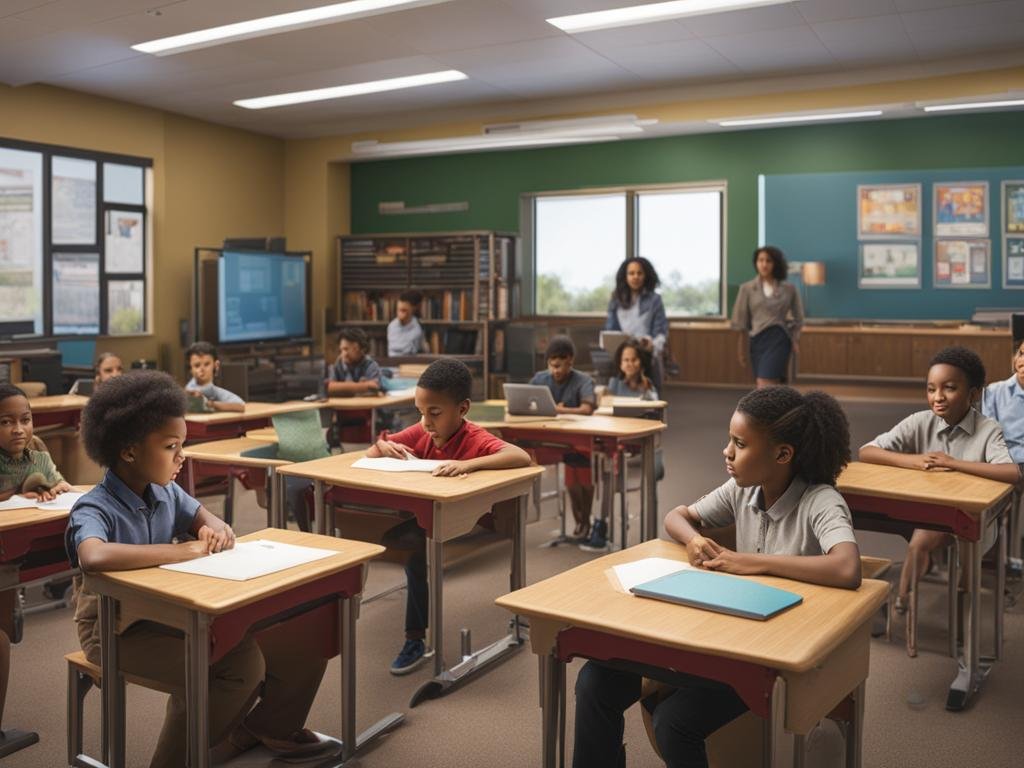
| Emerging Trends in AI Education Technology | Impact on Education |
|---|---|
| Advanced Intelligent Tutoring Systems | Personalized instruction and feedback, adaptive learning |
| AI-Powered Virtual Reality Experiences | Immersive and realistic learning environments |
| Data-driven Decision Making | Real-time analytics for educators, personalized interventions |
Conclusion
As the integration of AI in education continues to gain momentum, the impact of artificial intelligence on learning methods and outcomes in the United States cannot be ignored. AI offers a range of opportunities and benefits, from personalized learning experiences to data analytics and adaptive learning. It has the potential to revolutionize the educational landscape, improve teaching practices, and enhance student engagement and achievement.
However, it is essential to address the potential concerns and risks associated with AI in education. Ensuring cultural diversity in AI models, refining learning methods, and addressing incorrect responses from AI systems are critical areas that require attention. Additionally, considering the motivation of both students and educators is crucial to effectively navigate the implementation of AI in education.
The future of AI in education holds great promise. Emerging trends in AI education technology, such as advanced intelligent tutoring systems and AI-powered virtual reality experiences, will continue to shape educational strategies. As AI evolves, it is important to strike a balance between technological advancements and ethical considerations, ensuring that AI continues to enhance the educational experience for all students.
Overall, the integration of AI in education in the United States presents immense potential. By embracing AI and leveraging its capabilities, we can foster personalized learning, improve educational outcomes, and empower students with the necessary skills for an increasingly digital and interconnected world.
| AI in Education | Artificial Intelligence in Education | Machine Learning in Education | Personalized Learning | Adaptive Learning |
|---|---|---|---|---|
| AI-powered learning platforms offer personalized learning paths | AI enhances learning experiences and serves as a teaching assistant | Machine learning algorithms analyze data to improve instruction | Personalized learning tailors instruction to individual student needs | Adaptive learning adjusts instruction based on student performance |
References
Please refer to the following sources for additional information and research on the impact of AI in education:
1. Research and Practice in Technology Enhanced Learning, Volume 12, Article number: 22 (2017).
2. Lauren Ambrosio (June 21, 2023).
3. Contents from an unidentified source.
These sources provide valuable insights and analysis on how AI is reshaping education in the United States. They cover a wide range of topics, including intelligent tutoring systems, automated grading systems, predictive analytics, AI-powered learning platforms, and language learning apps. By referencing these sources, you can dive deeper into the potential benefits, challenges, and future of AI in education.
FAQ
What is AI in education?
AI in education refers to the integration of artificial intelligence technology and techniques in educational settings to enhance learning methods, personalize experiences, and improve outcomes.
How has AI evolved over time?
AI has a rich history dating back to antiquity but officially emerged as a discipline in 1956. Since then, AI has undergone significant advancements and is now revolutionizing the education sector.
How is AI currently being used in education?
AI is already being utilized in various applications within the education sector, including intelligent tutoring systems, automated grading systems, predictive analytics, AI-powered learning platforms, and language learning apps.
What impact does AI have on learning and teaching?
AI-enhanced learning experiences offer personalized content and resources tailored to students’ needs, improving engagement and learning outcomes. AI also serves as an effective teaching assistant, automating administrative tasks and providing data-driven insights to educators.
How does AI enable personalized learning?
AI analyzes data to identify learning gaps, adapt instruction, and provide customized support, enhancing the effectiveness of personalized learning initiatives by automating differentiation and individualization.
What are the opportunities and challenges with AI in education?
AI in education presents numerous opportunities and benefits, such as increased adaptive learning, data-driven insights, immersive learning experiences, and enhanced accessibility. However, there are also potential concerns and risks, including lack of cultural diversity in AI models and non-optimal learning methods.
How can AI impact schools in underserved communities?
Personalized learning powered by AI can help bridge gaps in understanding and ensure that no student falls behind. AI can also automate administrative tasks, provide virtual teachers and tutors, and increase access to high-quality education resources through online platforms.
What does the future hold for AI in education?
The future of AI in education holds great promise, with emerging trends including the development of more advanced AI education technology, such as intelligent tutoring systems and AI-powered virtual reality experiences.
Where can I find additional information and research on the impact of AI in education?
Please refer to the following sources for additional information and research on the impact of AI in education:
– Research and Practice in Technology Enhanced Learning volume 12, Article number: 22 (2017)
– Lauren Ambrosio (June 21, 2023)
– Contents from an unidentified source